
Global Routes Snarled by Middle East Airspace Closures in April 2026
Military tensions across the Middle East have forced widespread airspace closures, disrupting over 3,000 flights in April 2026. Airlines are rerouting long-haul connections while major hubs face unprecedented operational challenges.

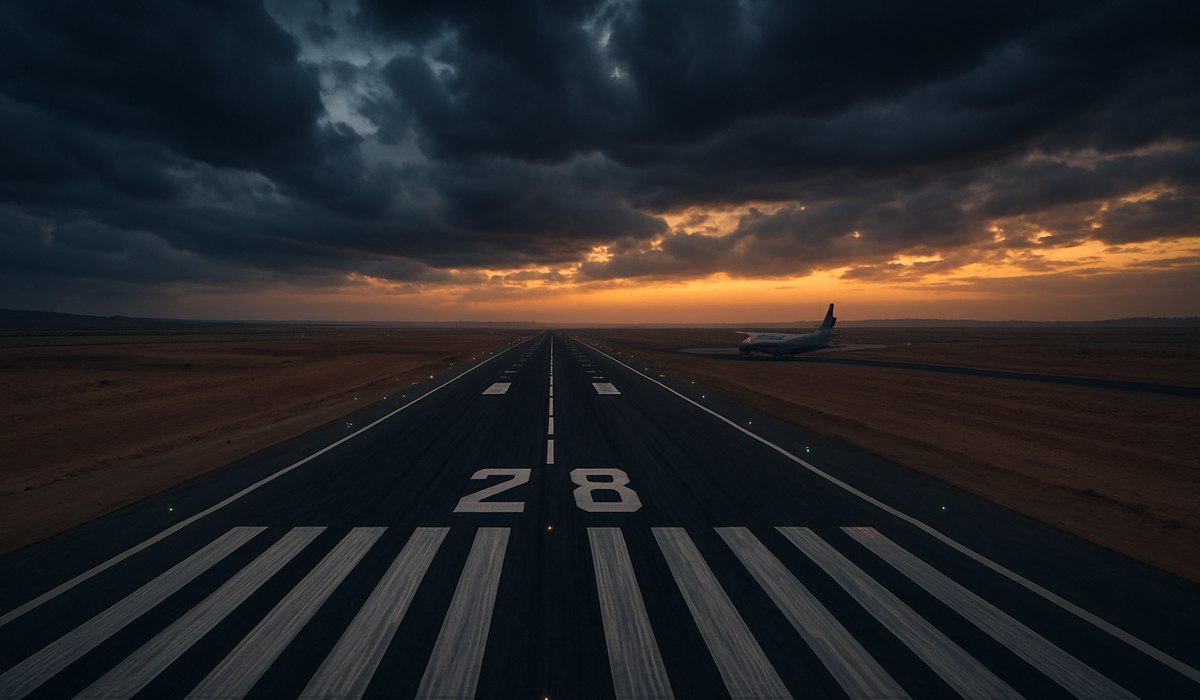
Image generated by AI
Breaking News: Global Routes Snarled by Middle East Tensions
Escalating military tensions across the Middle East have forced widespread airspace closures, leaving global routes snarled and disrupting aviation networks worldwide. Since late February 2026, Iran, Israel, Iraq, Jordan, Qatar, Bahrain, Kuwait, and the United Arab Emirates have implemented extensive flight restrictions. Over 3,000 flights have been cancelled during the initial disruption phase alone, with additional waves of cancellations continuing through April. The closures have created a critical gap in one of the world's busiest aviation corridors, forcing airlines to reroute long-haul connections and implement unprecedented operational adjustments across Europe, Asia, and the Americas.
Airspace Closures Create a Gap in Global Skies
The Middle East serves as a central bridge connecting Europe, Asia, and Africa—a role that has become even more critical since Russian and Ukrainian airspace restrictions limited alternative routing options for international carriers. The latest round of global routes snarled across the region represents a compounding crisis for the aviation industry.
Flight tracking data reveals near-empty radar maps over critical sections of the Gulf and Levant, areas typically crowded with commercial traffic. Airlines that once flew direct routes across Iranian, Iraqi, and Israeli airspace must now navigate around the closed corridors entirely. This means adding significant distance to journeys that were previously optimized for fuel efficiency and passenger comfort.
Industry analysts describe the situation as shifting from an acute shock to a prolonged operational challenge. Military tensions continue to escalate, and authorities have extended or adjusted airspace restrictions multiple times, creating uncertainty for airlines trying to rebuild schedules. The International Air Transport Association has issued multiple advisories warning carriers to maintain heightened vigilance and adjust flight plans accordingly.
For more context on Middle East travel restrictions, consult the U.S. State Department Travel Advisory page.
Major Hubs in Dubai, Doha and Abu Dhabi Hit Hard
The impact of global routes snarled has been most severe at the region's three mega-hubs: Dubai, Doha, and Abu Dhabi. These airports function as giant transfer points, typically funneling millions of passengers annually between continents.
Dubai's Emirates hub faced extended passenger operation suspensions as surrounding airspace restrictions intensified in early April. Limited cargo services and special operations continued, but standard commercial schedules remained drastically curtailed. Terminals were crowded with stranded travelers rebooked on flights days or weeks later, with many passengers facing unexpected overnight stays in airport hotels.
Hamad International Airport in Doha experienced widespread cancellations after Qatari airspace restrictions took effect on February 28. Though authorities later permitted limited emergency and evacuation traffic, standard commercial operations remained severely constrained. As one of the Gulf's most important long-haul connectors, the disruption at Doha has cascading effects across European-Asian routes.
Abu Dhabi International Airport also faced significant operational challenges as surrounding airspace closures limited flight operations. Bahrain and Kuwait similarly experienced restrictions, meaning multiple critical hubs went offline simultaneously.
Travelers accustomed to fast one-stop connections through Gulf hubs are now confronting cancelled journeys, forced rerouting through African or Central Asian corridors, and dramatically extended travel times.
Learn more about Middle East aviation safety advisories at IATA.
Rerouting Adds Hours and Costs to Long-Haul Flights
Airlines worldwide have responded to global routes snarled by extending flight paths and implementing costly rerouting measures. European carriers have suspended services to affected airports and paused overflights of Iranian, Iraqi, Syrian, and Israeli airspace. Instead, aircraft are being routed along longer paths over the Mediterranean, Caucasus, Central Asia, or African corridors.
A single day of intensified restrictions in March produced nearly 200 cancellations and over 800 delays at European airports alone, largely attributed to rerouting requirements and the need for extra fuel stops. These knock-on effects have rippled across departure boards thousands of kilometers away from the conflict zone.
South and East Asian carriers have adopted similar precautions. Airlines based in India, Japan, and other nations have temporarily suspended flights to the United Arab Emirates, Saudi Arabia, Israel, and Qatar. Indian carriers, for example, have cancelled or significantly reduced hundreds of West Asia flights since late February, sharply lowering capacity between the subcontinent and Gulf destinations.
Routes linking Europe and Australia or New Zealand face extended journey times as well. Global routes snarled means passengers are experiencing flight durations increased by 4–8 hours on affected corridors, with corresponding increases in fuel surcharges and ticket prices. Airlines are absorbing massive fuel costs from longer routes while simultaneously managing reduced passenger capacity and increased operational complexity.
Recovery Timeline Remains Uncertain
The aviation industry is watching military developments closely, but no clear end date has been announced for global routes snarled conditions. Industry briefings indicate that airspace restrictions may persist for weeks or even months, depending on diplomatic developments.
Airlines have established contingency planning departments and are coordinating with regional authorities to understand when standard flight paths might be restored. However, escalating tensions suggest no immediate resolution is likely. Some analysts project that even if military hostilities decrease, it may take additional weeks for regulatory authorities to formally reopen airspace corridors.
During this period, expect continued schedule disruptions, higher fares on rerouted flights, and reduced flight frequency on Europe-Asia connections. The aviation industry is adapting to what may become a new operational normal for the foreseeable future. Airlines are making significant capital investments in fuel and infrastructure to manage longer routes, costs that may eventually pass to consumers through higher ticket prices.
For real-time flight status and route changes, monitor your airline's official website or contact their customer service desk directly.
Key Aviation Disruption Data Table
| Metric | Details |
|---|---|
| Initial Flight Cancellations | 3,000+ flights cancelled in first disruption phase |
| European Delays (Single Day) | 800+ delays at European airports in March |
| European Cancellations (Single Day) | 200 cancellations at European airports in March |
| Affected Countries | Iran, Israel, Iraq, Jordan, Qatar, Bahrain, Kuwait, UAE |
| Major Hubs Impacted | Dubai, Doha, Abu Dhabi |
| Route Extension | 4–8 additional hours on Europe-Asia connections |
| Additional Fuel Costs | Significant per-flight increase due to longer routing |
| Timeline Since Onset | Late February 2026 through April 2026 (ongoing) |
What This Means for Travelers
The situation of global routes snarled creates urgent considerations for anyone planning Middle East or Europe-Asia travel:
-
Expect Extended Journey Times: Book flights with significantly larger connection windows. A journey that once required 8 hours now may take 14–18 hours due to longer routing and additional fuel stops.
-
Anticipate Higher Fares: Airlines are implementing fuel surcharges and dynamic pricing on rerouted flights. Compare prices across multiple carriers and book directly with airlines for transparency on surcharge structures.
-
Verify Airport Status Before Booking: Confirm whether your destination airport is operating at full capacity. Many travelers are being rebooked to alternative hubs, creating unexpected itinerary changes.
-
Consider Alternative Routing: If traveling between Europe and Asia, evaluate flights via Istanbul, Athens, or African hubs rather than Gulf stopovers. These alternatives may offer better availability, though with longer total journey times.
-
Obtain Travel Insurance with Flexibility Clauses: Purchase comprehensive coverage that protects against airline-caused delays and route changes. Standard policies may not cover military
Disclaimer
This article is for informational and educational purposes only. It does not constitute legal, financial, or professional advice. While we strive to provide accurate and up-to-date information, travel policies, regulations, and conditions change rapidly. Always verify information with official sources before making travel decisions. Nomad Lawyer makes no representations about the accuracy, reliability, completeness, or suitability of the information provided. Readers should consult qualified professionals for advice specific to their circumstances. The views expressed in this article are those of the author and do not necessarily reflect the views of Nomad Lawyer.
Preeti Gunjan
Contributor & Community Manager
A passionate traveller and community builder. Preeti helps grow the Nomad Lawyer community, fostering engagement and bringing the reader experience to life.
Learn more about our team →