
Global Premium Economy Race: How Upgraded Cabins Drive High-Value Tourism Across 13 Nations 2026

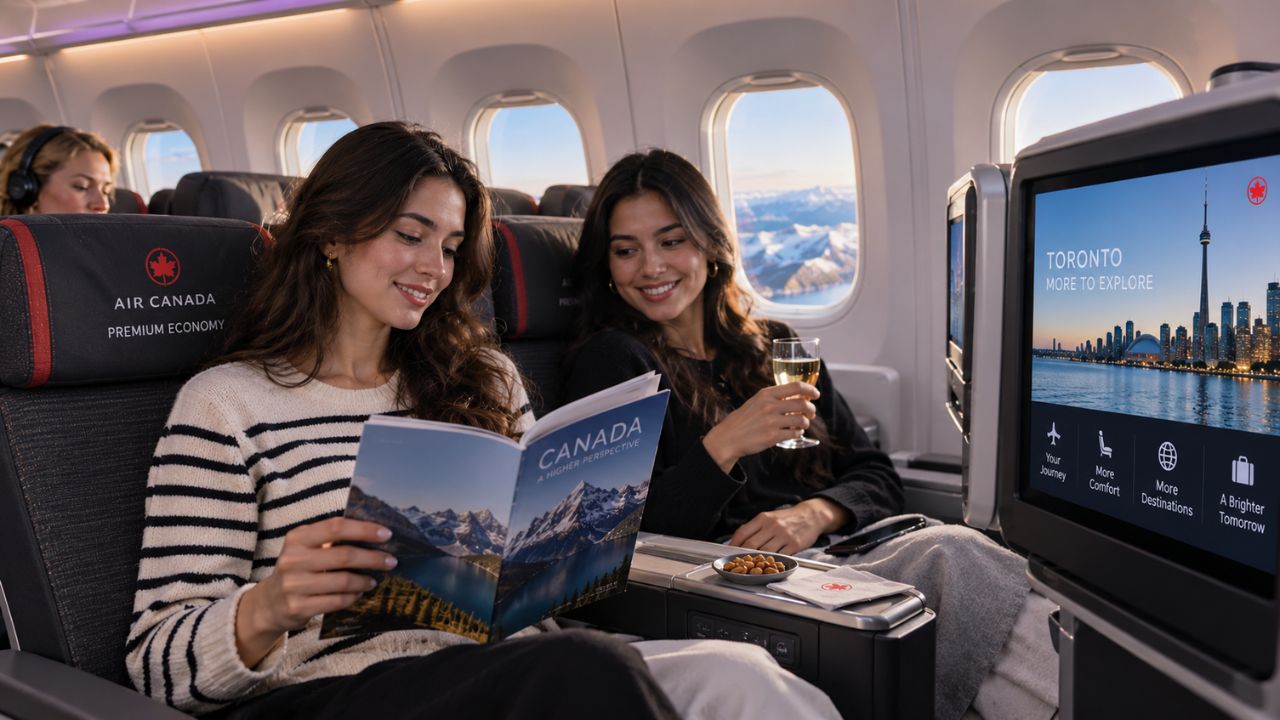
Global carriers across 13 major tourism powers—including France with 100 million visitors, Spain with 93.8 million, and the United States with 72.4 million—are turning Premium Economy cabins into a primary battleground to attract high-value international travelers. With expanded legroom, curated gastronomy, and enhanced privacy bridging the divide between standard coach and multi-thousand-dollar business suites, the in-flight journey is now functioning as a decisive destination marketing tool.
The international aviation sector is witnessing an aggressive cabin upgrade cycle across flag carriers in Europe, North America, the Middle East, and Asia. Rather than competing purely on base ticket prices, airlines representing Germany, France, the United States, the United Kingdom, the United Arab Emirates, Canada, the Netherlands, Switzerland, Spain, Finland, Austria, Italy, and Poland are deploying retrofitted intermediate cabins to capture the expanding segment of travelers who demand physical comfort without paying executive lie-flat fares.
This strategic alignment between aviation hard products and national tourism boards reflects a broader realization: the onboard physical experience directly influences destination selection, visitor energy, and discretionary expenditure upon arrival.
The Local Trend Revealed: Mapping Inbound Tourism to Airline Cabin Strategy
The scale of international visitor flows demonstrates why national flag carriers are investing heavily in intermediate premium seating. In 2024, the world's leading tourism economies recorded historic inbound volumes that relied heavily on long-haul transit:
| Destination Country | Flag Carrier Driving Premium Cabin Competition | 2024 International Visitor Volume | Strategic Tourism & Economic Focus |
|---|---|---|---|
| France | Air France | Around 100 million visitors | World’s #1 destination; luxury, cultural heritage & culinary tourism |
| Spain | Iberia | Around 93.8 million tourists | Major European leisure hub; transatlantic links to US & Latin America |
| United States | United Airlines | Around 72.4 million visitors | Business travel, cultural metropolises & national park exploration |
| Italy | ITA Airways | Around 57.7 million arrivals | High-yield heritage circuits, artisan fashion & culinary travel |
| United Kingdom | Virgin Atlantic | Around 39 million inbound visits | Transatlantic tourism gateway supported by London connectivity |
| Germany | Lufthansa | Around 37.5 million overnight visitors | Frankfurt & Munich hubs driving business, cultural & Alpine travel |
| Austria | Austrian Airlines | Around 26 million arrivals | Imperial Vienna heritage, classical music & winter Alpine sports |
| Netherlands | KLM | Around 20 million+ visitors | Amsterdam Schiphol gateway driving European cultural city breaks |
| Canada | Air Canada | Around 19.9 million arrivals | Transpacific & European transit supporting urban and Indigenous tourism |
| Poland | LOT Polish Airlines | Around 19 million foreign tourists | Central European gateway expanding Warsaw long-haul connectivity |
| UAE (Dubai) | Emirates | Around 18.72 million overnight visitors | Luxury lifestyle, global shopping & high-end stopover tourism |
| Switzerland | SWISS | Around 18 million+ overnight foreign stays | Ultra-luxury Alpine resorts, private banking & wellness clinics |
| Finland | Finnair | Around 3.7 million foreign visitors | Helsinki hub connecting Europe with key East Asian cultural markets |
In Europe, the power battle between Germany and France illustrates two divergent philosophies. Lufthansa is anchoring its strategy on engineering and space aboard its Airbus A350 fleet, providing German engineering precision, wider seat dimensions, integrated leg rests, and enhanced personal storage. This infrastructure supports Germany’s 37.5 million overnight visitors, attracting affluent travelers from the United States, the United Kingdom, the Netherlands, Switzerland, and Austria who combine commercial engagements with regional wine and castle tours.
Conversely, Air France leverages cultural soft power aboard its widebody aircraft. Competing for France's 100 million annual visitors, the French flag carrier treats Premium Economy as a preview of French gastronomy, offering champagne welcomes, menus curated by Michelin-starred chefs, and refined amenity kits. This approach directly appeals to American, British, German, Belgian, and Spanish travelers heading to Paris, the Côte d'Azur, and regional wine châteaux.
Across the Atlantic, United Airlines' Premium Plus features privacy headrest wings, dedicated power supplies, and upgraded meal services to defend its share of 72.4 million international visitors arriving into New York, California, Florida, and Hawaii. In Canada, Air Canada deploys its upgraded long-haul cabins across European and Asian routes, funneling 19.9 million international visitors toward national parks, premier ski resorts, and community-led Indigenous tourism experiences.
In the Middle East, Emirates utilizes its Premium Economy cabin—featuring cream leather upholstery, wood-grain finishes, and generous 40-inch seat pitch—to channel 18.72 million overnight visitors into Dubai's luxury shopping, dining, and stopover circuits.
Cultural & Environmental Value: Supporting Regional Communities and Slower Travel
For cultural tourists, arriving in a destination well-rested changes the nature of travel itself. Passengers who bypass standard economy exhaustion do not lose their first 48 hours to debilitating jet lag; they hit the ground ready to engage with local communities, explore historic districts, and spend capital in neighborhood economies.
From an environmental standpoint, Premium Economy represents an efficient spatial compromise. While lie-flat business class suites occupy significant floor space—resulting in a higher carbon footprint per passenger kilometer—Premium Economy seats provide 38 to 40 inches of pitch in a space-efficient layout. This allows airlines to increase revenue density while offering passengers sustainable comfort.
Furthermore, carriers like Air Canada and Air France are using these cabin programs to highlight regional heritage. In Canada, long-haul travelers are increasingly introduced to Indigenous-owned operators through in-flight media partnerships with the Indigenous Tourism Association of Canada (ITAC), encouraging visitors to spend beyond primary urban centers in remote First Nations territories. In Spain, Iberia’s transatlantic cabins highlight regional olive oils and artisanal cheeses from Extremadura and Andalusia, creating direct market exposure for rural agricultural producers.
Visitor Insider Tips: Securing Maximum Value in Premium Economy
Travelers planning long-haul journeys can utilize tactical booking strategies to secure optimal seating and amenities:
- Identify Genuine Premium Economy vs Economy Plus: Understand the distinction between dedicated Premium Economy cabins and simple extra-legroom coach seats. Dedicated cabins (such as Air France Premium, Lufthansa Premium Economy, KLM Premium Comfort, or United Premium Plus) feature physically wider seats in a separate cabin partition, upgraded catering, noise-canceling headsets, and dedicated baggage allowances, rather than standard economy seats with an extra two inches of legroom.
- Bulkhead Seat Strategy: When selecting seats in Premium Economy, target the front bulkhead row. These seats feature fold-out calf and footrests that provide significantly better ergonomic support than the foot pedals installed on seatbacks in subsequent rows, allowing for genuine restorative sleep on 10-to-14-hour transcontinental flights.
- Target Strategic Upgrade Bidding: Many network carriers (including Lufthansa, Air Canada, and Virgin Atlantic) open dynamic upgrade auctions 48 to 72 hours prior to departure. Submitting an upgrade bid slightly above the minimum threshold often secures a Premium Economy seat for a fraction of the original ticket price differential.
- Shoulder-Season Travel Windows: Book long-haul flights during spring (April to May) or autumn (September to October). During these shoulder months, transpacific and transatlantic Premium Economy fares drop by 25% to 35% compared to peak midsummer rates, coinciding with pleasant weather, fewer crowds, and lower lodging tariffs in destinations like France, Italy, and Japan.
- Baggage and Priority Perks: Take advantage of the secondary perks included with most Premium Economy fares, such as SkyPriority or Star Alliance priority check-in, expedited security lanes, and an extra 23kg checked bag allowance. Bypassing main terminal lines significantly reduces pre-flight cortisol levels, preserving physical energy for on-the-ground exploration.
Tourism Outlook: The Journey as the Destination
The intensifying global competition across intermediate cabins signals a lasting transformation in international tourism marketing. Destinations are no longer assessed solely on their monuments, beaches, or culinary scenes; they are judged by the accessibility, dignity, and comfort of the transit required to reach them.
By elevating the mid-tier flying experience, airlines and national tourism boards are cultivating an enduring demographic of high-value cultural travelers. As long-haul travelers demand greater personal well-being and value, the nations that provide seamless, comfortable air connectivity will lead the global travel economy throughout the decade ahead.
Related Travel Guides
Disclaimer
This article is for informational and educational purposes only. It does not constitute legal, financial, or professional advice. While we strive to provide accurate and up-to-date information, travel policies, regulations, and conditions change rapidly. Always verify information with official sources before making travel decisions. Nomad Lawyer makes no representations about the accuracy, reliability, completeness, or suitability of the information provided. Readers should consult qualified professionals for advice specific to their circumstances. The views expressed in this article are those of the author and do not necessarily reflect the views of Nomad Lawyer.
Raushan Kumar
Founder & Lead Developer
Full-stack developer with 11+ years of experience and a passionate traveller. Raushan built Nomad Lawyer from the ground up with a vision to create the best travel and law experience on the web.
Learn more about our team →