
Global Flight Disruption Crisis Exposes Critical Aviation Infrastructure Gaps in 2026
Spring 2026 brings cascading global flight disruptions across North America, Europe, and Asia Pacific. Weather, staffing shortages, and capacity constraints reveal systemic vulnerabilities in aviation infrastructure.

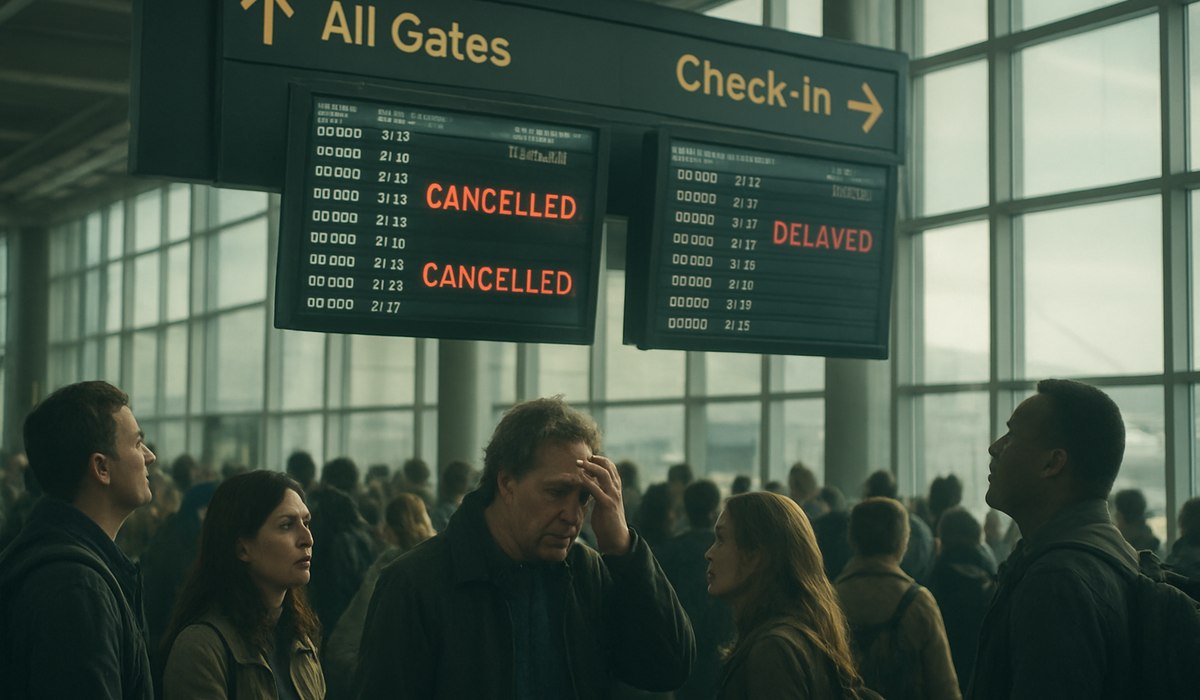
Image generated by AI
Spring 2026: A Perfect Storm Across Three Continents
Global aviation is experiencing unprecedented operational strain as a perfect storm of weather, workforce shortages, and capacity constraints triggers cascading disruptions across North America, Europe, and Asia Pacific. Southwest Airlines reported hundreds of daily delays at major hubs including Chicago Midway, New York LaGuardia, and Los Angeles International throughout March and April 2026. On March 11 alone, Asia Pacific recorded 774 flight cancellations and over 2,100 delays due to monsoon rains and early-season typhoon activity. That same day, the global flight disruption affected more than 2,300 cancellations and 18,000 delays worldwide, underscoring how regional crises rapidly become international catastrophes. Meanwhile, European carriers face persistent bottlenecks from severe weather patterns and infrastructure congestion, while geopolitical tensions in the Middle East have forced airlines to reroute long-haul flights along costlier, more congested corridors.
The Domino Effect—How Regional Disruptions Go Global
When disruption strikes a major aviation hub, consequences ripple across continents within hours. European aviation data shows that weather events affecting central hubs like Paris or Frankfurt create cascading delays throughout the entire network. A single day of adverse conditions can generate millions of minutes of air traffic flow management delays. Late March 2026 disruptions in Asia impacted more than 3,000 flights in a single day—a figure that reflects years of underinvestment in maintenance infrastructure, technical staffing, and spare aircraft capacity across the industry.
The global flight disruption challenge intensifies when multiple factors converge simultaneously. Weather-related air traffic flow management delays accounted for nearly half of all network delay minutes during peak 2025 summer operations. When staffing shortages coincide with severe weather, airports lose their ability to absorb disruptions. In North America, federal air traffic control staffing shortfalls triggered more than 2,000 delays during government shutdowns in late 2025, forcing airlines like United and American to voluntarily reduce schedules at congested facilities.
Systemic Vulnerabilities Exposed by Recent Crisis Events
Aviation infrastructure has reached a critical breaking point. Eurocontrol assessments reveal that convective storms force aircraft onto longer routes and reduce sector capacity for hours, while European labor disputes amplify the problem. A July 2025 French air traffic controller strike canceled 40 percent of Paris flights, affecting tens of thousands of passengers and forcing major rerouting across neighboring airspace.
Geopolitical factors now compound infrastructure weaknesses. Closure of Middle East airspace corridors due to regional conflict has forced long-haul traffic between Europe, Asia, and Africa onto alternate routes, adding fuel costs, flight times, and congestion pressure on already-strained networks. Airlines rerouting from disrupted corridors compete for capacity on alternative paths, creating bottlenecks in North African, Central Asian, and Indian Ocean flight paths.
Technology vulnerabilities represent another critical weak point in operational resilience. Alaska Airlines experienced separate technology outages in July and October 2025 that triggered hours-long ground stops and hundreds of flight cancellations. These digital failures cascade through crew scheduling, aircraft positioning, and passenger management systems, creating recovery delays lasting days after initial IT resolution.
What Airlines and Airports Must Do to Build Resilience
Recovery from the global flight disruption crisis requires coordinated, systemic action across multiple stakeholders. Airlines must immediately invest in spare aircraft capacity and cross-fleet crew flexibility to absorb weather-related disruptions without mass cancellations. Airports need to hire and retain air traffic control personnel—Newark Liberty and other major facilities cannot continue operating under chronic controller shortages that force voluntary schedule reductions.
Eurocontrol, the FAA, and regional aviation authorities must enhance coordination on weather prediction and proactive traffic management. Early implementation of flow management delays prevents the cascade effect that transforms regional weather into global disruption. Technology providers must harden systems against both cyber incidents and ordinary IT failures through redundancy and real-time failover protocols.
Digital infrastructure investment is non-negotiable. Airlines must abandon legacy booking and operational systems vulnerable to cascading outages. Cloud-based reservation systems with geographic redundancy, separate from network infrastructure used for flight operations, reduce the likelihood that a single technology failure disrupts thousands of flights. Industry-wide cybersecurity standards for aviation technology providers should include penetration testing and incident response requirements.
Traveler Action Checklist
If you're flying during periods of global flight disruption, follow these essential steps:
-
Monitor your flight status 48 hours before departure using FlightAware or your airline's app, checking for weather alerts and congestion warnings at your origin and destination airports.
-
Verify your airline's disruption policies on the U.S. DOT consumer website before booking, comparing rebooking options and meal/hotel provisions across carriers.
-
Book flights arriving before 2 p.m. whenever possible, as afternoon thunderstorms and late-day traffic flow management restrictions cause disproportionate evening cancellations.
-
Pack essential medications, documents, and one outfit in your carry-on in case your checked baggage is delayed or your flight is canceled mid-journey.
-
Arrive at the airport 3 hours early during peak disruption periods (March–May, July–September) to accommodate unexpected security line length from diverted passengers.
-
Document all flight disruptions with screenshots of cancellation notices and delay notifications to support compensation claims under DOT regulations.
-
Contact your airline's customer service immediately after learning of cancellation or extended delay, securing rebooking on competing carriers before alternative flights fill.
-
Review your credit card's travel insurance for flight delay reimbursement, as airline-provided meal vouchers often fall short of actual expenses during prolonged disruptions.
Key Data: Global Flight Disruption Impact Summary
| Metric | Impact | Region | Date |
|---|---|---|---|
| Daily cancellations (single day peak) | 774 confirmed, 2,300 estimated globally | Asia Pacific (leads), North America, Europe | March 11, 2026 |
| Daily delays (single day peak) | 2,100+ confirmed, 18,000 estimated globally | Multi-continental cascade effect | March 11, 2026 |
| Late March disruption event | 3,000+ flights affected in single day | Asia Pacific primary origin | Late March 2026 |
| Weather-related delay minutes | ~50% of total network delay minutes | Europe (Eurocontrol data) | 2025 summer season |
| Paris ATC strike cancellations | 40% of Paris flights canceled | Europe (France hub impact) | July 2025 |
| Technology outage cancellations | Hundreds per incident, multi-day recovery | North America (Alaska Airlines) | July & October 2025 |
| ATC staffing-related delays | 2,000+ delays in single day | North America (federal shutdown) | Late 2025 |
What This Means for Travelers
The global flight disruption crisis of spring 2026 signals a fundamental mismatch between aviation network design and operational capacity. Travelers should expect increased cancellations and delays through May 2026 as weather patterns peak and staffing shortages persist. Book flights with maximum flexibility, avoiding tight connections through European hubs or Middle East corridors where geopolitical factors continue disrupting routes.
Airlines will likely implement voluntary capacity reductions at affected airports, reducing available seats and increasing fares for remaining flights. Book early when possible and maintain travel insurance that covers airline bankruptcies and extended disruptions. Check FlightAware daily for real-time disruption tracking at your departure and arrival airports. The FAA and U.S. DOT provide additional resources and passenger rights guidance at their official sites.
Expect resid
Kunal K Choudhary
Co-Founder & Contributor
A passionate traveller and tech enthusiast. Kunal contributes to the vision and growth of Nomad Lawyer, bringing fresh perspectives and driving the community forward.
Learn more about our team →