
Global Business Travel Surge 2026: How Seven Powerhouse Cities Capture $108 Billion in Corporate Spending
A groundbreaking GBTA study reveals that seven leading cities command $108 billion in business travel spending, generating a 1.59 local economic multiplier across hotels, dining, and transit.

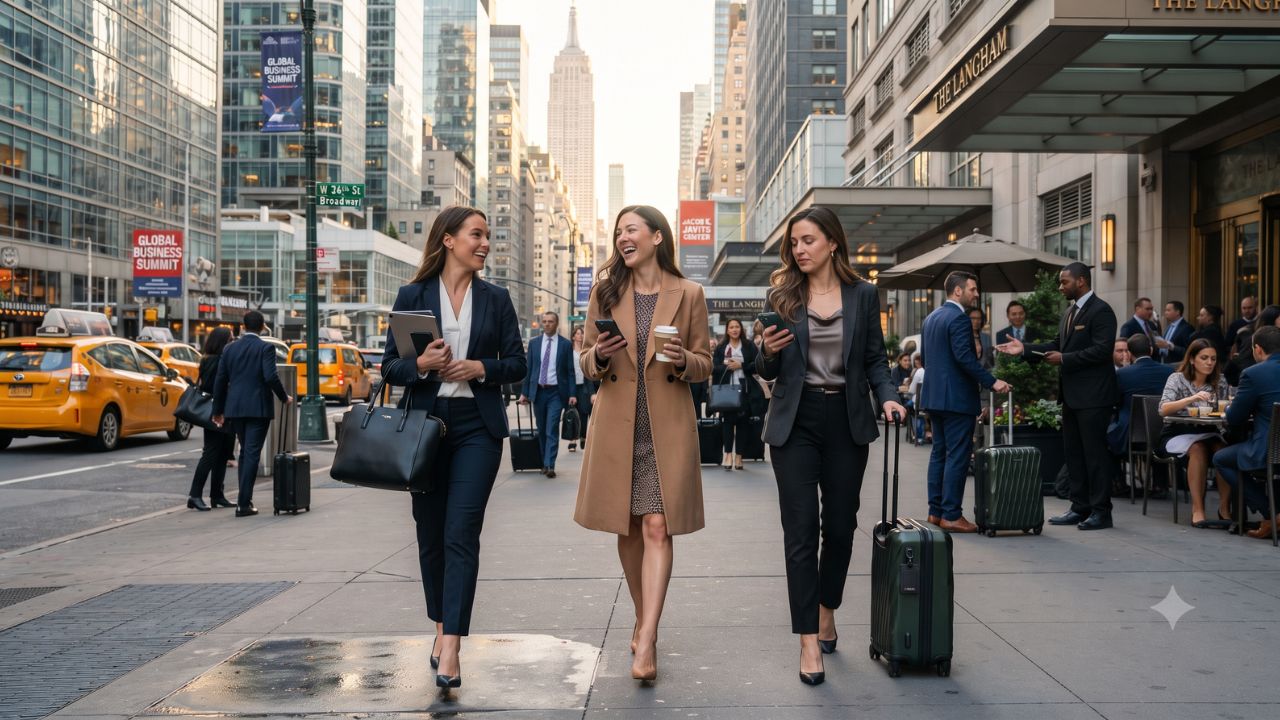
Just seven global cities account for over US$108 billion in annual corporate travel expenditures—capturing 61% of all business visitor spending measured across twenty-five leading worldwide commercial hubs. According to comprehensive economic data published by the Global Business Travel Association (GBTA), every single dollar spent by a business traveler generates roughly US$1.59 in secondary sales for local hotels, neighborhood eateries, and regional transit systems.
The $108 Billion Corporate Corridor: Seven Cities Driving Global Commerce
The convergence of international corporate summits, trade exhibitions, and "bleisure" extensions (combining business trips with leisure weekends) has transformed corporate mobility into a primary economic growth engine. Across the 25 leading business markets analyzed by GBTA, US$178 billion in corporate travel expenditure generated US$93 billion in direct local GDP, produced approximately US$55 billion in municipal tax revenues, and supported 1.4 million jobs.
Global corporate travel expenditure is projected to hit a record US$1.71 trillion across 1.84 billion trips in 2026. Notably, total spending is forecast to expand by 7.2% against a 1.3% growth in trip volume, demonstrating that higher accommodation, aviation, and hospitality costs are elevating the average investment per itinerary.
Leading this financial influx are seven powerhouse metropolitan areas that each exceeded US$10 billion in corporate expenditures.
| Global City | Annual Business Travel Spending | Key Economic & Tourism Milestones |
|---|---|---|
| New York City | US$21.2 billion | 12.8M business arrivals expected; $84.7B total economic impact |
| Tokyo | US$20.7 billion | Premier Asian finance & technology summit capital |
| London | US$15.0 billion | European corporate headquarters & international legal hub |
| Shanghai | US$14.2 billion | Industrial trade fairs & East Asian supply chain forums |
| Paris | US$13.6 billion | Business accounts for 24% of Île-de-France regional tourism |
| Los Angeles | US$12.2 billion | Creative media, entertainment tech & Pacific Rim trade |
| Chicago | US$11.6 billion | 65 future citywide conventions secured; 11.9M room nights |
New York City stands as the world's leading destination for corporate expenditures, generating US$21.2 billion. Data from New York City Tourism + Conventions shows the city welcomed 12.6 million business travelers in 2025—projected to rise to 12.8 million in 2026 alongside 66.3 million total visitors—supporting 38.1 million hotel room nights sold and 397,000 local jobs.
What Makes Business and Bleisure Dynamics Different Across the Big Seven
The structure of corporate travel varies distinctly across the seven dominant markets. In Chicago, meetings and conventions anchor municipal development. According to Choose Chicago, hotel room demand rose 2.3% to 11.9 million room nights, backed by 65 secured future citywide conventions representing 2.8 million future room nights. Under Illinois Department of Revenue statutes, municipal hotel occupancy taxes are funneled directly back into civic promotion and convention center modernization.
In Europe, Paris has integrated business tourism into 24% of all visitor activity across the Île-de-France region. In 2026, Paris je t’aime and Choose Paris Region inaugurated a dedicated single-window concierge for international conferences exceeding 500 participants, focusing on artificial intelligence, financial technology, healthcare sciences, and sustainable engineering.
Meanwhile, Tokyo (US$20.7 billion) and London (US$15.0 billion) continue to leverage high-speed intercity transit and dense financial districts to capture extended corporate stays that flow directly into historic theater districts and culinary centers.
Visitor Insider Tips
- Extend Business Stays for Weekend Bleisure Rates: When booking corporate hotel room blocks in Manhattan, the City of London, or Chicago's Loop, inquire about Thursday-to-Sunday shoulder extensions, which often carry discounted leisure rates.
- Utilize City-Wide Tap-and-Go Transit Networks: Avoid airport taxi congestion by using contactless payment on the OMNY system in New York, the Elizabeth line in London, or the Tokyo Metro with digital Pasmo cards.
- Book Corporate Dining Outside Primary Convention Zones: Walk four to five blocks away from major exhibition halls—such as Chicago's McCormick Place or Paris Expo Porte de Versailles—to find neighborhood bistros offering authentic regional dishes at standard local prices.
- Leverage Dedicated MICE Concierge Desks in Paris: Event planners organizing group gatherings with over 500 delegates should register with Choose Paris Region to unlock subsidized group transport passes and streamlined venue permitting.
- Track Municipal Hotel Tax Exemptions: In select US states like Illinois and New York, continuous corporate stays extending beyond 30 to 90 consecutive days may qualify for state and local hotel occupancy tax exemptions.
Cultural and Environmental Context
The evolution of modern corporate travel places heightened emphasis on environmental responsibility and community integration. International conference organizers are increasingly mandating zero-landfill catering, renewable-powered convention centers, and mass-transit venue connections.
By encouraging delegates to explore local neighborhood economies, municipal tourism boards ensure that corporate expenditures support independent culinary artisans, neighborhood cultural foundations, and heritage preservation outside central financial districts.
FAQ: Global Business Travel and Bleisure Trends 2026
Which city generated the highest business travel spending in the world?
New York City ranked first globally with US$21.2 billion in corporate travel spending, followed closely by Tokyo at US$20.7 billion.
What is the economic multiplier for business travel spending?
According to GBTA research, every dollar spent by a business traveler generates approximately US$1.59 in total economic output for local businesses.
What is the total global forecast for business travel in 2026?
Global corporate travel spending is projected to reach a record US$1.71 trillion across approximately 1.84 billion trips in 2026.
How does Chicago utilize its hotel taxes from corporate visitors?
The Illinois Department of Revenue allocates Chicago municipal hotel tax receipts directly toward convention promotion, special event development, and civic tourism infrastructure.
From high-rise boardrooms in Tokyo to historic convention halls in Paris, corporate travelers are proving that global commerce and authentic cultural exploration go hand in hand.
Related Travel Guides
Disclaimer
This article is for informational and educational purposes only. It does not constitute legal, financial, or professional advice. While we strive to provide accurate and up-to-date information, travel policies, regulations, and conditions change rapidly. Always verify information with official sources before making travel decisions. Nomad Lawyer makes no representations about the accuracy, reliability, completeness, or suitability of the information provided. Readers should consult qualified professionals for advice specific to their circumstances. The views expressed in this article are those of the author and do not necessarily reflect the views of Nomad Lawyer.
Preeti Gunjan
Contributor & Community Manager
A passionate traveller and community builder. Preeti helps grow the Nomad Lawyer community, fostering engagement and bringing the reader experience to life.
Learn more about our team →