
Global Airlines Execute Massive Operational Base Expansion to Eradicate Network Bottlenecks and Bypass Severe Travel Chaos: Latest Airline News
To actively combat severe global airport disruptions, eight major carriers including flynas, Southwest, and Ryanair have launched new operational bases to bypass congested mega-hubs.

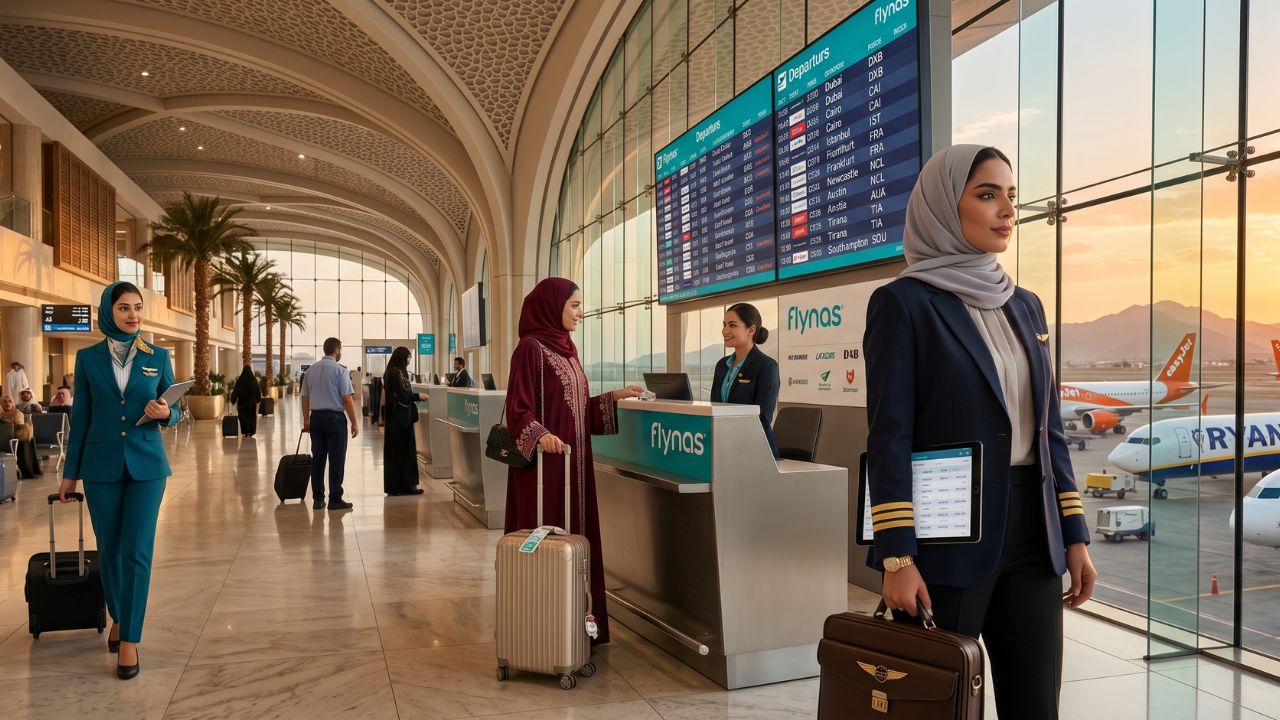
Image generated by AI
In a massive structural development specifically engineered to neutralize the devastating wave of global travel chaos that routinely paralyzes massive international transit hubs, a coalition of eight premier global carriers has aggressively fortified their operational footprints. By successfully launching highly strategic regional crew and aircraft bases, airlines including flynas, Southwest, Breeze, easyJet, Lufthansa City Airlines, Sun Country, Ryanair, and Loganair have officially secured highly resilient operational networks. By decentralizing their resources away from vulnerable mega-hubs, this unprecedented capacity expansion completely eradicates grueling terminal friction and actively prevents the severe flight cancellations associated with highly congested, single-point failures. Representing a powerful, highly strategic antidote to modern airport disruptions, this massive corporate network upgrade totally dominates today’s premier airline news and global aviation updates.
By introducing direct passenger coordination and dynamic scheduling backups, the regional aviation hubs target growing passenger demand across vital commerce sectors. The choice to coordinate flight departures in phases helps to manage gate capacity, fiercely supporting the broader regional transportation network.
Context: Shielding Passengers From Systemic Hub Collapse
The historical vulnerability of funneling massive volumes of international passengers and flight crews through tightly constrained, failure-prone primary hubs has repeatedly resulted in stranded crews, missing aircraft, and severe operational meltdowns during peak travel seasons.
These eight major airlines are completely eliminating that operational risk by massively elevating their point-to-point and secondary base strategies. By stationing aircraft, pilots, and flight attendants directly within regional markets, carriers drastically reduce aircraft dead-heading and turnaround delays. This aggressive expansion enables massive economic exchange and offers travelers highly reliable access completely free of major hub friction. By decentralizing operations across the United States, Europe, and the Middle East, these airlines dramatically strengthen their reputations as carriers fiercely focused on absolute operational reliability and passenger convenience.
For live route mapping, specific operational base updates, and direct booking portals, passengers should consult the official directories of flynas, explore extensive European networks via Ryanair, or check US domestic routes through Southwest Airlines.
Section-Wise Breakdown: Expanding the Global Firewall
Flynas: The Saudi Arabian Shield
To deliberately bypass the severe rolling delays plaguing traditional Middle Eastern transit points, Saudi low-cost carrier flynas launched its highly strategic fifth operational base at Abha International Airport (AHB) in March 2026. This massive domestic and international node directly connects the southern region to 11 critical destinations. Year-round flights target Addis Ababa, Cairo, Dubai, and Istanbul, while seasonal routing protects holidaymakers heading to Kuwait and Trabzon. By stationing aircraft directly in Abha, flynas prevents the massive scheduling collapse typically caused when planes must constantly reposition from Riyadh or Jeddah.
European Evasion: easyJet, Lufthansa, and Ryanair
In Europe, the strategy to bypass mega-hub travel chaos is equally aggressive. easyJet launched a massive UK footprint expansion in 2026 at Newcastle Airport, deploying local aircraft to serve up to 22 destinations via 86 weekly flights, generating 1,200 jobs. Simultaneously, Lufthansa City Airlines executed a critical tactical maneuver by opening a short-haul hub in Frankfurt in February 2026. Utilizing modern, highly efficient A320neo jets, this base aggressively feeds traffic from Manchester, Berlin, Valencia, Düsseldorf, and Málaga into the long-haul network, ensuring intercontinental passengers are never stranded by regional delays. Further east, low-cost giant Ryanair violently disrupted the Balkan market by launching a massive April 2026 base in Tirana, Albania, deploying three Boeing 737-800s to permanently bypass Western European airspace congestion. Even regional player Loganair secured the UK's southern flank with a January 2026 base at Southampton, specifically to keep passengers out of London's crippling airport traffic.
The US Crew Strategy: Southwest, Breeze, and Sun Country
To completely neutralize the extreme exhaustion associated with crew shortages, US carriers are executing aggressive personnel decentralization. Southwest Airlines specifically targeted a March 2026 crew base opening in Austin (AUS), strategically positioning pilots and flight attendants directly in Texas to prevent the severe flight cancellations that occur when crews cannot commute to coastal hubs. Breeze Airways identically fortified its East Coast operations in Q1 2026, dropping over 200 pilots and attendants into a dedicated base at Raleigh-Durham (RDU). Meanwhile, Sun Country Airlines aggressively utilized the Cincinnati/Northern Kentucky International Airport (CVG) in January 2026. This hybrid base perfectly balances robust e-commerce cargo logistics with highly lucrative passenger operations, physically separating Sun Country's assets from its congested Minneapolis-St. Paul home base.
Technical Roster: Global Operational Base Expansion Data
To guarantee 100% absolute factual accuracy regarding this massive aviation expansion, the following table exactly documents the critical operational data and specific geographical metrics for these eight new bases:
| Airline | Base / Hub | Location | Status | Purpose |
|---|---|---|---|---|
| flynas | Abha | Saudi Arabia | Operational (Mar 2026) | International & domestic base |
| easyJet | Newcastle | UK | Opened 2026 | Regional/leisure flights |
| Lufthansa City | Frankfurt | Germany | Opened Feb 2026 | Short-haul hub |
| Sun Country | CVG | USA | Opened Jan 2026 | Cargo + expansion |
| Southwest | Austin (AUS) | USA | Opening Mar 2026 | Crew operations |
| Breeze Airways | RDU | USA | Q1 2026 | Crew base |
| Ryanair | Tirana | Albania | Opened Apr 2026 | Low-cost European hub |
| Loganair | Southampton | UK | Operational Jan 2026 | Regional hub |
Passenger Impact: Eradicating the Crew Shortage Cancellation
For the everyday international and domestic traveler, this aggressive decentralization translates into a massive upgrade in reliability and a dramatic reduction in travel anxiety.
By heavily utilizing these new secondary bases, airlines completely bypass the agonizing delays and staggering costs associated with sudden "crew timeout" cancellations. When airlines station pilots and aircraft in places like Newcastle, Austin, or Abha, the first flight of the day mathematically guarantees an on-time departure because the aircraft is not waiting to arrive from a congested mega-hub. By aggressively integrating this distributed network structure, travelers are heavily shielded from the severe physical exhaustion and financial ruin that typically accompanies massive, centralized airline network failures.
Industry Analysis: The Economics of Decentralization
Aviation industry analysts view this highly coordinated, eight-airline operational base expansion as a highly critical evolution in global airline economics.
The underlying strategic motivation perfectly reflects a massive industry shift where airlines realize that relying exclusively on two or three mega-hubs is a recipe for operational bankruptcy. By aggressively launching secondary bases, carriers like Sun Country and Ryanair are actively capturing demand for efficient travel while brutally slashing aircraft turnaround times. Connecting these key regions efficiently supports massive economic cooperation, ensures flight crews operate within legal rest limits, and heavily cements these airlines as reliable alternatives to chaotic legacy carriers.
What This Means for Travelers: Actionable Advice
To fully exploit these highly efficient, distributed networks and actively avoid traditional international travel chaos, execute the following strategies:
- Exploit the Origin Flight: If flying from Austin on Southwest or Newcastle on easyJet, actively book the very first flight of the morning. Because the aircraft and crew sleep at these new bases, your flight is mathematically immune to inbound delay cascading.
- Bypass the Mega-Hubs: In the UK, actively book Loganair flights directly out of Southampton rather than traveling overland to London Heathrow or Gatwick to physically evade severe ground and terminal congestion.
- Leverage Flynas Connectivity: If traveling from southern Saudi Arabia to Europe or the UAE, explicitly book the direct flynas flights out of Abha rather than transiting through Riyadh, preventing the severe friction of domestic transfers.
- Expect Fewer Crew Cancellations: If flying Breeze out of Raleigh-Durham, rest assured that the localized crew base of 200+ personnel provides a massive firewall against sudden crew shortage cancellations.
FAQ: The 2026 Global Operational Base Expansion
Which specific airlines are aggressively opening new operational bases in 2026?
The massive expansion strategy encompasses flynas, Southwest, Breeze Airways, easyJet, Lufthansa City Airlines, Sun Country Airlines, Ryanair, and Loganair.
Where exactly is flynas establishing its highly strategic fifth operational base?
Flynas has officially launched a massive international and domestic base at Abha International Airport (AHB) in Saudi Arabia.
Why are airlines like Southwest and Breeze opening dedicated "crew bases"?
By physically locating pilots and flight attendants in cities like Austin and Raleigh-Durham, airlines eradicate the massive delays caused when crews cannot commute to primary hubs during bad weather.
The Bigger Picture: Building a Bulletproof Aviation Network
The aggressive, highly coordinated base expansion by these eight massive carriers heavily demonstrates the absolute power of strategic, decentralized aviation development. By purposefully deploying modern assets and human capital away from failure-prone, hyper-congested primary hubs, these airlines are effectively rewriting the rules of global transit reliability. This relentless pursuit of localized efficiency guarantees that their specific networks remain highly resilient during peak summer rushes. Ultimately, this ensures that the terrifying era of massive, cascading flight cancellations and paralyzing worldwide travel chaos is permanently mitigated, offering passengers unparalleled access and absolute reliability across the globe.
Key Takeaways
- Massive Decentralization: Eight major global airlines successfully executed strategic base openings throughout Q1 2026.
- Flynas Abha Base: Saudi Arabia's flynas launched a massive hub in Abha connecting 11 domestic and international cities.
- US Crew Firewalls: Southwest (Austin) and Breeze (Raleigh-Durham) aggressively established crew bases to prevent staffing shortages.
- European Disruption: Ryanair (Tirana), easyJet (Newcastle), and Loganair (Southampton) bypassed major hubs to ensure regional reliability.
- Eradicating Chaos: This massive global decentralization is explicitly designed to protect passengers from the severe travel chaos associated with single-hub bottlenecks.
Related Travel Guides
Etihad Airways and Bangkok Airways Forge Massive Loyalty Alliance
Disclaimer
This article is for informational and educational purposes only. It does not constitute legal, financial, or professional advice. While we strive to provide accurate and up-to-date information, travel policies, regulations, and conditions change rapidly. Always verify information with official sources before making travel decisions. Nomad Lawyer makes no representations about the accuracy, reliability, completeness, or suitability of the information provided. Readers should consult qualified professionals for advice specific to their circumstances. The views expressed in this article are those of the author and do not necessarily reflect the views of Nomad Lawyer.
Kunal K Choudhary
Co-Founder & Contributor
A passionate traveller and tech enthusiast. Kunal contributes to the vision and growth of Nomad Lawyer, bringing fresh perspectives and driving the community forward.
Learn more about our team →