
Germany’s Rail Travel Enters a New Digital Era as Daktronics and Ströer Install The Whale Display at Hamburg Central Station, Turning the Country’s Busiest Passenger Hub into a Smart Information and Advertising Landmark
Hamburg Central Station digital display update: Daktronics and Ströer install 342 sq m LED screen to boost rail tourism

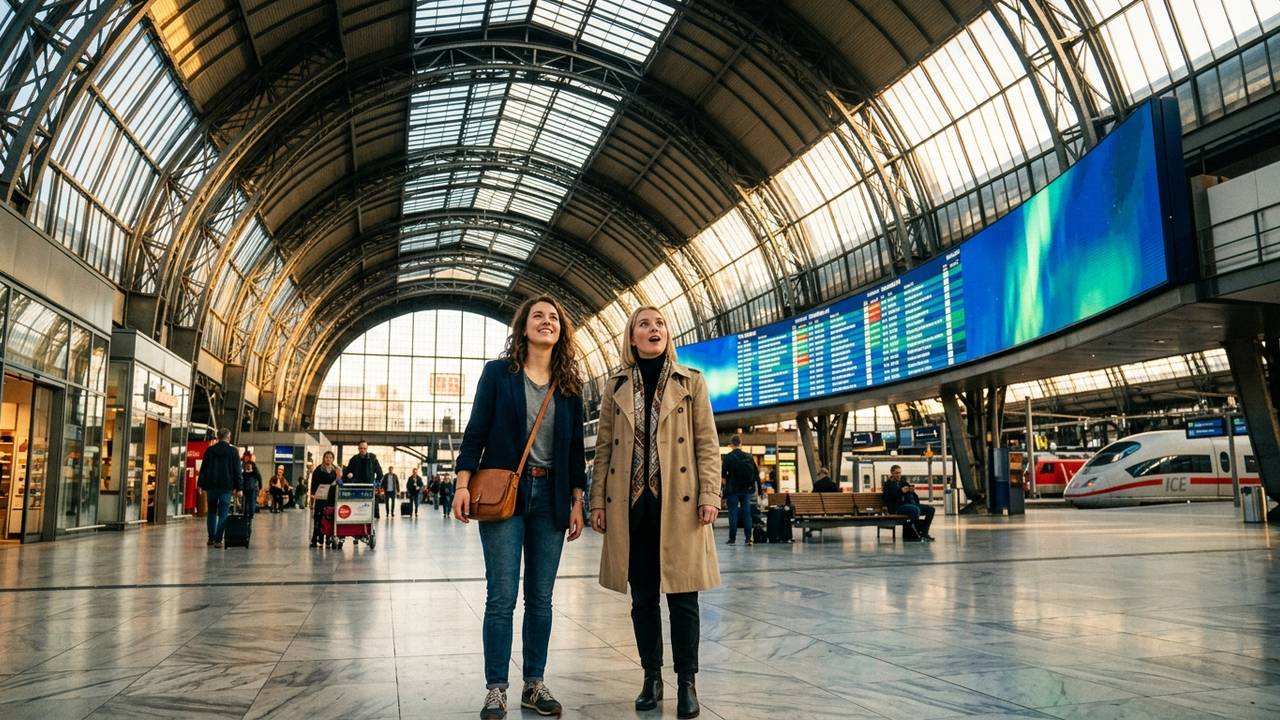
Image generated by AI
[Hamburg, June 21, 2026] — Hamburg Central Station is positioned to redefine the intersection of transport logistics and digital media as Daktronics and Ströer prepare to install "The Whale," a massive 342-square-meter LED display projected for completion in 2026. Situated on the north concourse of Germany's busiest rail hub, the installation will serve a daily audience exceeding 550,000 passengers and support approximately 720 train movements with a dynamic blend of real-time travel data, commercial advertising, and digital art. This infrastructure upgrade marks a strategic shift in how Germany integrates large-format digital out-of-home (DOOH) technology into high-traffic mobility ecosystems, offering tourism operators, airlines, and destination marketers a high-visibility gateway for passenger engagement.
Daktronics and Ströer Partner to Install 342-Square-Meter Display at Hamburg Central Station
The collaboration unites a leading American display technology manufacturer with one of Germany's dominant media and outdoor advertising groups. The project places a 38-meter-wide by 9-meter-high screen on the north side of the station, creating a dominant visual anchor within the concourse. The display features a 10-millimeter pixel spacing, a technical specification that ensures high-resolution content remains legible to passengers navigating the busy indoor environment.
Content delivery is structured to balance operational utility with commercial exposure. The system supports 10-second moving-image formats with up to 20 repetitions per hour. This cadence allows for frequent campaign exposure while maintaining a rhythm that aligns with the flow of commuter traffic. The installation is integrated into Ströer's Public Video Giant network, signaling a broader organizational commitment to digital public-space media and the transition from static station signage to programmable, dynamic inventory.
Hamburg Central Station Transforms into Digital Mobility Landmark
The selection of Hamburg Central Station underscores the commercial and functional value of high-footfall transport nodes. As Germany's busiest passenger railway station, the hub handles more than half a million travellers daily. This volume creates a high-frequency audience comprising commuters, domestic visitors, rail tourists, business travellers, and international passengers connecting across Northern Europe and beyond.
The station serves as a critical convergence point for mobility networks. It links long-distance rail with local and urban systems, including eight mainline railway lines, four urban railways, six underground platforms for local traffic, and the S1 link to Hamburg Airport. This network density positions the display to reach travellers at key decision points. Passengers are actively checking departures, searching for platforms, waiting for onward connections, and moving toward hotels, offices, cruise transfers, and attractions. The scale of the installation leverages this concentration of movement to deliver time-sensitive updates and destination content with maximum impact.
The Whale Display Specifications and Daily Passenger Metrics
The technical and operational parameters of the installation highlight its potential as a unique travel media asset. The combination of physical scale, location prestige, and content flexibility creates a rare infrastructure opportunity within the rail sector.
| Development Element | Verified Detail | Strategic Meaning for Travel and Tourism |
|---|---|---|
| Country focus | Germany | Positions Germany as the central market for the development |
| City focus | Hamburg | Strengthens Hamburg's role as a mobility and visitor gateway |
| Location | Hamburg Central Station | Places the screen inside Germany's busiest passenger railway station |
| Display name | The Whale | Creates a recognisable large-format digital landmark |
| Display area | 342 sq m | Gives campaigns and travel information strong concourse visibility |
| Physical size | 38 m wide by 9 m high | Enables large-scale visual storytelling for brands and destinations |
| Pixel spacing | 10 mm | Supports high-visibility LED content in a large indoor station setting |
| Daily station audience | More than 550,000 travellers | Gives advertisers access to repeated high-volume passenger movement |
| Train movement | Around 720 local and national trains per day | Extends reach across commuter, domestic and onward rail segments |
| Planned content | Travel information, advertising and digital art | Blends operational communication with commercial and experiential content |
| Booking format | 10-second moving-image content with up to 20 repetitions per hour | Supports frequent short-form campaign exposure in a busy travel environment |
| Completion timing | 2026 | Adds a current travel technology milestone for Germany in 2026 |
Integration with Deutsche Bahn Networks and Airport Links
The installation operates within the context of Germany's extensive rail passenger base. Official figures from Deutsche Bahn indicate 1.867 billion rail passengers in 2024, averaging 5.1 million daily across the national network. Hamburg Central Station functions as a vital gateway within this broader ecosystem, amplifying the reach of digital content through its connection to regional and national flows.
The station's role in multimodal travel enhances the display's relevance for airlines and airports. The S1 S-Bahn connection to Hamburg Airport facilitates air-rail journeys for both international and domestic passengers. This link allows the display to support messaging across transfer paths, connecting station footfall with route awareness and airport access promotions. As European travellers increasingly combine transport modes for city breaks, business itineraries, and cruise add-ons, a digital presence in a transfer-heavy hub provides visibility across these integrated travel products.
MICE Tourism and Event Marketing Benefits for Hamburg
Hamburg holds a strong position in the meetings, incentives, conferences, and exhibitions (MICE) sector due to its hotel infrastructure, waterfront identity, and business economy. The Whale display adds a new communication layer to this ecosystem by providing event organisers and destination marketers with a high-impact channel in the city's primary arrival hub.
MICE travellers often arrive in concentrated waves aligned with conferences, trade shows, and cultural gatherings. These groups require rapid orientation, local mobility information, and brand recognition. A large concourse display can highlight city events, sponsor campaigns, convention messaging, and local partner promotions. For delegates, the initial visible city message upon arrival influences perception. For event owners and venue operators, the screen extends marketing reach beyond digital channels into a high-footfall physical gateway, capturing attention during transfer windows and dwell periods.
Commercial Use Cases for Hotels and Tour Operators
The display offers tactical applications for travel brands seeking to convert high-intent audiences already present in the destination. The audience is mobile, often spending on transport and leisure, and looking for immediate options. This environment supports short lead-time travel decisions and impulse-led local spend.
| Travel Business Segment | Practical Use Case | Why The Whale Matters |
|---|---|---|
| Hotels | Promote short-stay offers and event-linked packages | Reaches travellers already entering or moving through Hamburg |
| Attractions | Push museum, harbour, theatre and family products | Targets leisure visitors at a high-intent arrival point |
| Tour operators | Advertise city tours, regional day trips and themed itineraries | Converts waiting time into destination discovery |
| Rail and mobility providers | Display service updates, rail passes and onward transport prompts | Improves passenger decision-making inside the hub |
| Airlines and airports | Promote air-rail access, airport links and route awareness | Connects station footfall with multimodal journey planning |
| Cruise operators | Support pre- and post-cruise city messaging | Engages passengers before harbour transfer or after arrival |
| MICE organisers | Highlight conferences, exhibitions and delegate services | Adds visibility at a natural delegate movement point |
| Retail and food operators | Promote station and nearby offers | Captures demand during dwell time and transfer windows |
Strategic Shifts in Digital Out-of-Home Advertising
The project reflects a broader industry transition toward dynamic, programmable media in transport environments. Ströer's portfolio demonstrates a deep investment in digital public-space media, with The Whale serving as a flagship asset for moving-image content in high-footfall locations. This shift enables operators to adjust messaging based on time of day, event schedules, holiday periods, or sudden operational requirements.
For B2B travel companies, the station screen provides a physical route to a hard-to-ignore audience. It supports seasonal campaigns, event-led travel promotions, cruise-related messaging, and regional tourism products. The display allows travel brands to reach passengers who may not be actively searching online at that moment but are physically present and receptive to destination discovery. This capability strengthens the value proposition for tour operators, hotel groups, and attraction promoters seeking premium city gateway exposure.
Flexibility and Operational Utility in High-Traffic Environments
Visibility and adaptability are critical in large stations where travellers make decisions under pressure. The Whale display is planned to show departure and arrival times alongside other travel information, enhancing passenger flow and orientation. The larger LED canvas makes time-sensitive data easier to notice from a distance, improving the overall passenger experience.
Operational flexibility allows the content to shift rapidly in response to demand patterns. Morning commuter movement differs significantly from weekend tourism flows. Public holidays, major trade fairs, concerts, sports events, and cruise turnaround days can alter passenger behaviour substantially. A dynamic display platform can carry functional information during peak movement periods and transition to commercial messaging or event wayfinding during waiting phases. This dual utility gives the asset a broader infrastructure value than traditional fixed advertising boards.
Benchmark for Global Rail Infrastructure Modernization
The Hamburg installation establishes a benchmark for how transport hubs can evolve into real-time communication platforms without compromising their primary mobility function. Major travel gateways worldwide are increasingly adopting large-format digital infrastructure. Airports implemented similar strategies earlier with digital walls and branded arrival zones; rail stations in dense European cities are now following suit as rail remains central to daily movement and tourism.
For Germany, the project demonstrates how large-format DOOH can become more common across major railway concourses, particularly where transport, retail, events, and tourism demand overlap. The development suggests a future where rail stations function more like digital travel marketplaces. Passengers will encounter live information, discover products, view destination campaigns, and engage with brands within the same physical space. As global travel growth becomes more multimodal, high-footfall rail hubs in Europe, Asia, and North America may adopt this model, creating a new competitive layer in travel marketing where the central station concourse becomes as influential as airport terminals or booking platforms for destination influence.
Related Travel Guides
Disclaimer
This article is for informational and educational purposes only. It does not constitute legal, financial, or professional advice. While we strive to provide accurate and up-to-date information, travel policies, regulations, and conditions change rapidly. Always verify information with official sources before making travel decisions. Nomad Lawyer makes no representations about the accuracy, reliability, completeness, or suitability of the information provided. Readers should consult qualified professionals for advice specific to their circumstances. The views expressed in this article are those of the author and do not necessarily reflect the views of Nomad Lawyer.
Raushan Kumar
Founder & Lead Developer
Full-stack developer with 11+ years of experience and a passionate traveller. Raushan built Nomad Lawyer from the ground up with a vision to create the best travel and law experience on the web.
Learn more about our team →