
Germany Overtakes US as Top Study Travel Destination for Indian Students in 2026

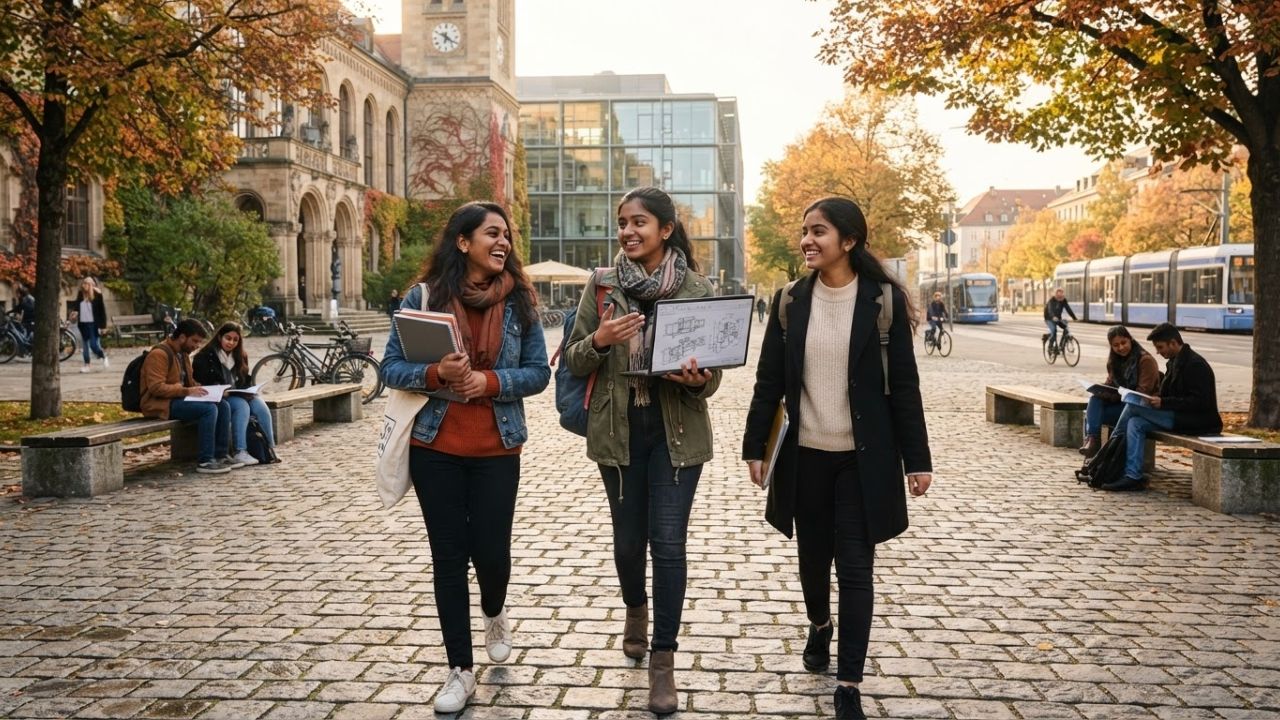
Germany has officially surpassed the United States as the premier international study travel destination for Indian students in 2026, driven by zero or minimal tuition fees at public universities, clear post-graduation employment pathways, and high-demand engineering sectors.
For generations, the United States stood as the undisputed first choice for Indian scholars venturing abroad, propelled by prestigious institutional rankings and expansive alumni networks. However, escalating American tuition fees, high living expenses, and tightening visa rules have triggered a historic re-evaluation. Today's Indian students are prioritizing tangible returns on educational investment, manageable living costs, and predictable transitions into long-term professional employment.
Data from international education exchanges and regional admissions offices highlight a fundamental realignment: Indian applicants are shifting from prestige-driven decisions toward career-oriented educational journeys across continental Europe.
The Local Trend Revealed: Affordability and Employment Transform Inbound Student Travel
Germany’s ascension reflects an education system tailored to pragmatic career builders. While private universities in North America require heavy financial liabilities, the majority of German public universities charge zero tuition fees for domestic and international students alike, requiring only modest administrative semester contributions (Semesterbeitrag).
| Strategic Factor | Germany | United States |
|---|---|---|
| Direct Education Cost | Minimal semester fees at most public universities | Premium tuition often exceeding $30,000–$60,000 annually |
| Living & Healthcare Expenses | Regulated student living costs and statutory health plans | High metropolitan rents and variable healthcare costs |
| Core Academic Focus | Applied engineering, automotive tech, AI, and green energy | Broad academic spectrum with high theoretical emphasis |
| Post-Study Search Rights | 18-month post-study residence permit to secure employment | Time-restricted OPT subject to H-1B lottery quotas |
| Demographic Labor Need | High demand for skilled engineers and IT specialists | Competitive job market with employer sponsorship barriers |
| Primary Applicant Priority | Debt-free education with immediate European career entry | Prestige, institutional rankings, and research funding |
Engineering and Digital Innovation Powering the Shift
Germany's industrial heritage serves as a powerful magnet for Indian talent. Close integration between technical universities (Technische Universitäten) and industrial manufacturers enables students to participate in paid working student contracts (Werkstudent) and practical master’s theses inside operating corporate facilities.
Key academic fields driving student enrollment include:
- Mechanical & Automotive Engineering: Direct access to innovation hubs in Baden-Württemberg and Bavaria, pioneering electric mobility and automated logistics.
- Artificial Intelligence & Data Science: Rapidly expanding research facilities in Berlin, Munich, and Darmstadt addressing industrial digitalization.
- Renewable Energy & Sustainability: Cutting-edge research programs focusing on hydrogen technology, wind engineering, and solar micro-grids.
- Computer Science & Digital Infrastructure: Strong corporate demand across Frankfurt and Hamburg for software architects and cybersecurity specialists.
Outreach Beyond Indian Megacities
The appeal of German education travel is no longer confined to affluent families in Mumbai, Delhi, or Bengaluru. Candidates from tier-2 and tier-3 Indian cities are evaluating study destinations through return-on-investment metrics. By avoiding multi-million rupee bank loans, scholars from emerging economic hubs are accessing European academic qualifications without bearing lifelong personal debt.
Pan-European Education Mobility Expands Options
Germany's success is anchoring a broader European trend, as international scholars look across the continent for specialized academic training:
- France: Attracting applicants through state-subsidized tuition, prestigious business grandes écoles, and aerospace research clusters in Toulouse.
- Finland: Drawing international technologists with high-ranking innovation ecosystems and English-taught software programs.
- Spain & Italy: Gaining popularity in architecture, luxury management, design arts, and emerging renewable energy specializations.
Together, these nations present a formidable collective alternative to traditional English-speaking study destinations like the US, United Kingdom, Canada, and Australia.
Community and Eco-Focus: Sustainable Student Living and Integration
International education in Germany is intertwined with civic responsibility and environmental conservation:
- Nationwide Transit Access: German students utilize subsidized regional transit passes (including integration with the nationwide Deutschlandticket network), enabling zero-emission rail and bus travel between university campuses, research centers, and historic regional towns.
- Revitalizing Regional University Towns: By choosing institutions in cities like Aachen, Karlsruhe, Dresden, and Freiburg im Breisgau rather than concentrating solely in high-cost capitals, international students inject vitality and spending directly into regional community economies.
- Neighborhood Civic Integration: The German Student Union (Deutsches Studierendenwerk) and local academic clubs (Vereine) support grassroots cultural exchanges, pairing incoming Indian scholars with local residents for language partnerships and volunteer initiatives.
Practical Realities: Housing and Language Considerations
While Germany provides unmatched academic value, incoming scholars must navigate specific operational hurdles:
- Language Acquisition: Although hundreds of postgraduate courses are taught entirely in English, proficiency in the German language (minimum B1/B2 level) remains essential for securing off-campus internships, mastering technical interviews, and navigating civic administration.
- Metropolitan Housing Shortages: Primary hubs such as Berlin, Munich, and Frankfurt experience acute shortages of student apartments. Securing a spot in subsidized dormitories (Studentenwohnheime) requires submitting early applications through local student service organizations.
Local Insider Tips for Student Travelers and Visiting Families
- Off-Peak Intake and Arrival Window: Travel in late August or early September for the winter semester (or March for the summer semester). Arriving four to six weeks prior to official lectures allows time to complete municipal residence registration (Anmeldung), open a blocked bank account, and secure housing before peak orientation rushes.
- Cultural Etiquette: Academic environments demand punctuality (Pünktlichkeit). Arriving five minutes before scheduled seminar presentations or professor appointments is expected. Adhere strictly to residential quiet hours (Ruhezeit) from 22:00 to 06:00 and all day Sunday.
- Local Culinary Specialty: Take advantage of the university Mensa (student cafeteria), which serves wholesome meals like Käsespätzle, seasonal lentil stews, and fresh salads for €3 to €5 with a student card. On the street, sample freshly baked soft pretzels (Laugenbrezeln) from local neighborhood bakeries.
- Under-the-Radar Spot: Explore Tübingen, a classic university town nestled on the Neckar River in southwest Germany. Rent a traditional wooden punt (Stocherkahn) to view centuries-old timber-framed university halls from the water away from heavy tourist corridors.
Long-Term Tourism and Mobility Outlook
The migration of Indian students to Germany represents a durable transformation in global educational mobility. By harmonizing state-funded higher education with high-demand industrial sectors and transparent post-study immigration pathways, Germany has established a resilient framework that prioritizes human capital over exorbitant tuition fees.
As bilateral education partnerships expand, Germany's universities and regional tech hubs will continue drawing international talent, permanently redefining the geographic trajectory of global academic travel.
Related Travel Guides
Canada Tourism Surges as Global Visitors Shift Away From US Holidays
China Targets Global Tourism Powerhouse Status by 2030 with US$1.8 Trillion Revenue Goal
Europe Youth Rail Pass and Visa Reforms for International Scholars 2027
Disclaimer
This article is for informational and educational purposes only. It does not constitute legal, financial, or professional advice. While we strive to provide accurate and up-to-date information, travel policies, regulations, and conditions change rapidly. Always verify information with official sources before making travel decisions. Nomad Lawyer makes no representations about the accuracy, reliability, completeness, or suitability of the information provided. Readers should consult qualified professionals for advice specific to their circumstances. The views expressed in this article are those of the author and do not necessarily reflect the views of Nomad Lawyer.
Raushan Kumar
Founder & Lead Developer
Full-stack developer with 11+ years of experience and a passionate traveller. Raushan built Nomad Lawyer from the ground up with a vision to create the best travel and law experience on the web.
Learn more about our team →