
FS Group Orders 19 High-Speed Frecciarossa Trains for Paris-London Route Launch in 2029
Italy's FS Group invests €2 billion in Hitachi Rail for 19 ETR 1000 trains to launch a premium Paris-London high-speed service by 2029, challenging short-haul aviation.

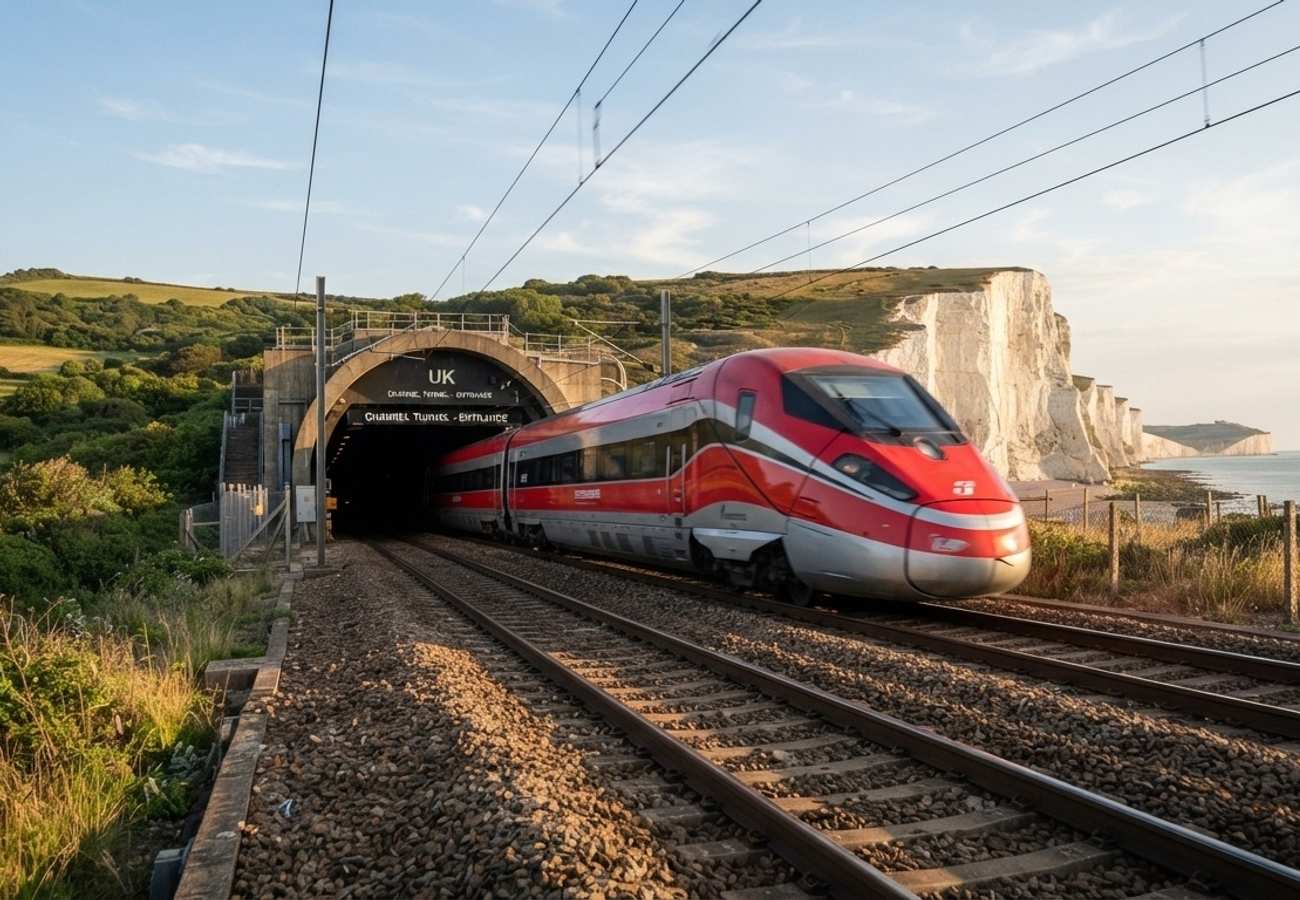
Image generated by AI
Italy’s FS Group is investing €2 billion to deploy 19 high-speed trains on the Paris-London corridor by 2029, directly challenging short-haul aviation on one of Europe's busiest transit routes.
Expansion of International High-Speed Rail Connectivity
The FS Italiane Group, through its subsidiary Trenitalia France, has formalized a contract with Hitachi Rail to design and manufacture a new fleet of high-speed trains. This strategic move marks Italy's first major expansion into the Channel Tunnel market, aiming to integrate the United Kingdom more deeply into the European land transit network.
The project is not merely a capacity increase but a strategic pivot toward premium international rail. By introducing the ETR 1000 Frecciarossa platform to the Paris-London route, FS Group intends to offer a viable, lower-carbon alternative to the short-haul flights that have historically dominated this corridor.
Beyond the London-Paris link, these assets will reinforce existing high-speed connections between Paris and key hubs including Lyon, Milan, and Marseille. This creates a seamless transit spine from the UK through France and into the heart of Italy.
Technical Specifications and Investment Parameters
The deployment of 19 trainsets requires navigating complex cross-border technical requirements. The ETR 1000 must maintain compatibility with the varying safety standards, electrical systems, and operational rules of France, the Channel Tunnel, and the UK.
| Project Element | Specifications |
|---|---|
| Lead Operator | Trenitalia France (FS International) |
| Manufacturer | Hitachi Rail |
| Train Model | ETR 1000 Frecciarossa |
| Fleet Size | 19 high-speed trainsets |
| Total Investment | Approximately €2 billion |
| Service Launch Date | 2029 |
| Key Routes | Paris–London, Paris–Lyon, Paris–Milan, Paris–Marseille |
| Maintenance Hub | Maisons-Alfort Pompadour (Near Paris) |
| Employment Impact | ~2,000 jobs (France, Italy, UK) |
Traveler Logistics Guide: Navigating the New Corridor
From a ground-level perspective, the entry of a second premium operator into the Channel Tunnel market will significantly alter how travelers plan multi-city European itineraries.
Booking and Connection Strategy When these services launch in 2029, the most efficient way to utilize the network will be through "open-jaw" ticketing. Rather than returning to a primary hub, travelers can now move linearly: London $\rightarrow$ Paris $\rightarrow$ Milan. To optimize this, look for integrated booking platforms that allow for single-ticket transfers between Trenitalia and other European operators.
Optimal Layover and Transit Times For those connecting in Paris, the transition between the northern terminals (Eurostar) and the southern high-speed lines requires careful timing. We recommend a minimum layover of 3 hours to account for security checks and the physical transfer between stations if the service does not utilize a single terminal.
Customs and Digital Policies Travelers should prepare for evolving digital border requirements. By 2029, the integration of ETIAS (European Travel Information and Authorisation System) for non-EU citizens will be standard. Ensure your digital travel credentials are linked to your rail booking to expedite the border checks required when exiting the UK and entering the Schengen Area.
Infrastructure and Regional Impact Assessment
The establishment of a new maintenance facility at Maisons-Alfort Pompadour indicates that FS Group is building a permanent operational footprint in France rather than a transient service. This facility will serve as the technical heartbeat for the fleet, ensuring reliability and rapid turnaround times.
The broader economic impact is expected to manifest in two primary ways:
- Labor Market: The creation of 2,000 jobs across three nations emphasizes the scale of the operational requirements.
- Tourism Flow: By removing the friction of airport transfers and security queues, the "city-to-city" model encourages longer, multi-destination trips. International visitors from North America and Asia may shift from "hub-and-spoke" travel (returning to one city) to "linear" travel (visiting three or four capitals in one sequence).
This investment aligns with European Union directives to integrate passenger transport networks and reduce reliance on carbon-intensive short-haul aviation.
The shift toward premium rail transforms the Paris-London route from a simple transit link into a high-comfort gateway for all of Western Europe.
Related Travel Guides
Disclaimer
This article is for informational and educational purposes only. It does not constitute legal, financial, or professional advice. While we strive to provide accurate and up-to-date information, travel policies, regulations, and conditions change rapidly. Always verify information with official sources before making travel decisions. Nomad Lawyer makes no representations about the accuracy, reliability, completeness, or suitability of the information provided. Readers should consult qualified professionals for advice specific to their circumstances. The views expressed in this article are those of the author and do not necessarily reflect the views of Nomad Lawyer.
Raushan Kumar
Founder & Lead Developer
Full-stack developer with 11+ years of experience and a passionate traveller. Raushan built Nomad Lawyer from the ground up with a vision to create the best travel and law experience on the web.
Learn more about our team →