
France Deploys Battery-Powered Regional Train Retrofits Across Occitanie and Sud Regions in 2026
France has transitioned battery-powered regional trains from prototypes to revenue service, utilizing a 41 million euro retrofit program to decarbonize secondary rail lines without costly overhead electrification.

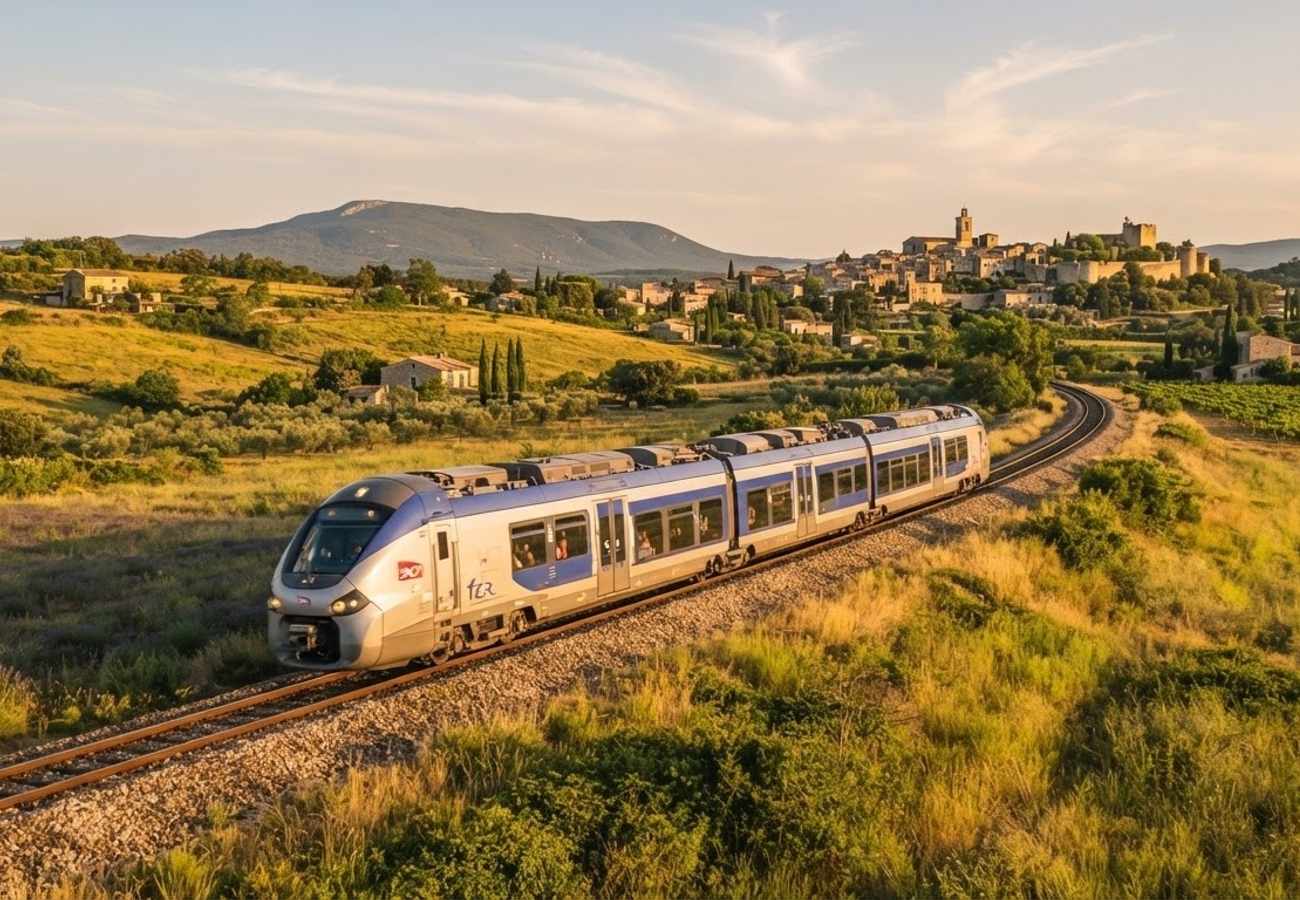
Image generated by AI
France has officially transitioned battery-powered regional trains from pilot phases to full revenue service as of August 2026. By retrofitting existing diesel fleets, the state is bypassing multibillion-euro electrification costs while eliminating local emissions on secondary lines.
The shift marks a strategic pivot in how France manages its regional rail network. Rather than investing in expensive overhead catenary systems for low-traffic routes, the government and rail operators are focusing on mobile energy assets. This approach allows for the decarbonization of "small lines" without the massive civil engineering projects typically required for full electrification.
Deployment in Occitanie and Sud Regions
At the end of August 2026, the first converted TER (Transport Express Régional) trains entered regular passenger service. These units are currently operating on non-electrified stretches in two primary areas: the Nîmes–Vauvert line in Occitanie and the Avignon–Carpentras route in the Sud Region.
The operational model is seamless for the passenger; the trains function as standard electric units under existing catenary lines and automatically switch to onboard battery power when entering non-electrified segments. This eliminates diesel exhaust in peri-urban and rural areas while maintaining direct service connectivity.
Financial and Technical Specifications
The rollout is part of a national initiative valued at approximately 41 million euros. This program is co-financed by five French regions in partnership with SNCF Voyageurs. To maximize cost-efficiency, the program utilizes "smart retrofits" rather than the purchase of new rolling stock.
Alstom has led the technical conversion of the Autorail à Grande Capacité (AGC) fleet. By replacing traditional diesel engines with lithium traction batteries, Alstom has transformed bi-mode trains (overhead/diesel) into fully electric bi-mode trains (overhead/battery).
| Parameter | Specification |
|---|---|
| Total Program Value | 41 Million Euros |
| Primary Rolling Stock | AGC (Autorail à Grande Capacité) |
| Conversion Type | Diesel-to-Battery Retrofit |
| Key Routes (2026) | Nîmes–Vauvert & Avignon–Carpentras |
| Regulatory Clearance | Granted April 2026 |
| Charging Method | Dynamic (under catenary) & Stationary (layovers) |
Infrastructure Impact Assessment
The decision to prioritize retrofits over infrastructure installation is driven by the high cost of catenary electrification, which can reach millions of euros per double-track kilometer when accounting for substations and clearances.
SNCF internal assessments indicate that a vast majority of regional services under 80 kilometers can be operated via battery power, provided they have access to electrified sections or terminal charging points. By focusing investment on the rolling stock rather than the tracks, France can redeploy these assets as passenger demand shifts, providing a flexibility that fixed infrastructure cannot offer.
This strategy is a core component of the SNCF 2023–2032 strategic plan, which evaluates battery, hybrid, and hydrogen solutions to phase out diesel traction by the 2030s.
Traveler Logistics Guide: Navigating the New TER Network
From a ground-level perspective, the introduction of battery-powered TER units does not change the booking process, but it does improve the transit experience.
Booking and Connections Passengers should continue to use the official SNCF Connect app or website. While the battery trains are "seamless," those planning tight connections in hubs like Nîmes or Avignon should allow for standard 15-20 minute transfer windows. The battery-powered units maintain the same scheduling as the diesel trains they replace, so no adjustment to itinerary planning is required.
Onboard Experience The most immediate change for travelers is the absence of diesel engine noise and exhaust fumes, particularly during station dwells and in rural corridors. These trains are significantly quieter, making them more suitable for business travelers and tourists.
Digital Transit Policies While France continues to modernize its ticketing, travelers are encouraged to utilize digital QR codes for boarding to expedite the process at smaller, unstaffed regional halts. For those visiting the Occitanie region, check for integrated regional passes that cover both the TER and local bus networks to maximize mobility.
Future Scaling and the OPTER Program
The success of the 2026 rollout provides a blueprint for the OPTER midlife renovation program, which covers roughly 40 percent of the total TER fleet. This creates a natural window for Alstom and SNCF to integrate battery upgrades during scheduled overhauls.
The next two to three years will be critical for gathering data on battery degradation, real-world energy density, and maintenance costs. If these metrics remain stable, the retrofit model may be exported to other European networks facing similar challenges with secondary, low-frequency lines.
France is proving that the path to net-zero rail is not always through the tracks, but through the trains themselves.
Related Travel Guides
Disclaimer
This article is for informational and educational purposes only. It does not constitute legal, financial, or professional advice. While we strive to provide accurate and up-to-date information, travel policies, regulations, and conditions change rapidly. Always verify information with official sources before making travel decisions. Nomad Lawyer makes no representations about the accuracy, reliability, completeness, or suitability of the information provided. Readers should consult qualified professionals for advice specific to their circumstances. The views expressed in this article are those of the author and do not necessarily reflect the views of Nomad Lawyer.
Preeti Gunjan
Contributor & Community Manager
A passionate traveller and community builder. Preeti helps grow the Nomad Lawyer community, fostering engagement and bringing the reader experience to life.
Learn more about our team →