
France Joins Germany, Netherlands, Estonia, Slovenia, Portugal, Spain, and More Nations as Greece’s Over Two Million Vacant Properties Spark Safety, Security, Housing Market, and Travel Concerns Across Europe
Greece's 2.2 million vacant homes spark housing crisis concerns across France, Germany, Spain, and Portugal, driving up

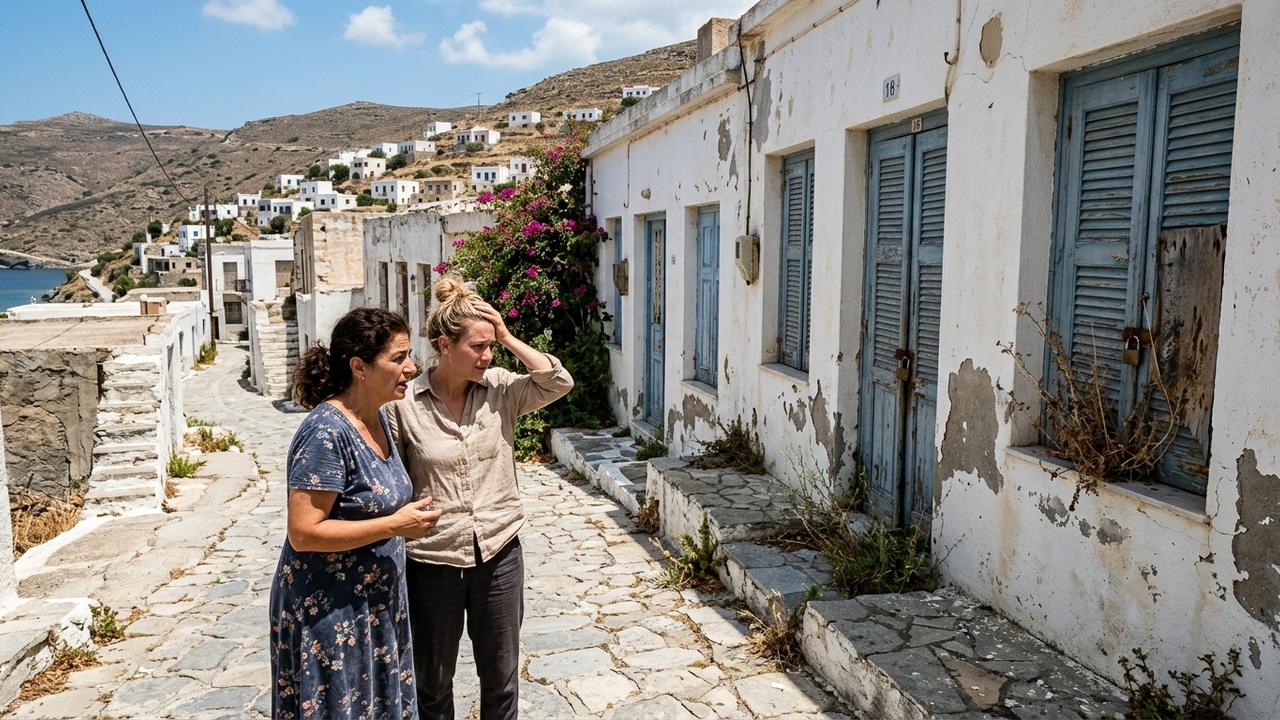
Image generated by AI
[Brussels, June 25, 2026] — A critical housing imbalance is sweeping across Europe as new data reveals that Greece is grappling with more than 2.2 million vacant properties, sparking a continental debate on urban instability and market inefficiency. This systemic failure to utilize existing housing stock is now being mirrored in France, Germany, the Netherlands, Estonia, Slovenia, Portugal, and Spain, where underused homes are contributing to skyrocketing rental prices and severe shortages in major metropolitan hubs.
Structural Failures in European Housing Distribution
The current crisis is not characterized by a lack of physical structures, but rather a failure in how existing assets are managed and distributed. Industry observers indicate that a significant portion of the European housing stock remains inactive due to a complex web of administrative hurdles, legal disputes over inheritance, and the high cost of renovations.
While total housing numbers may appear stable or growing on paper, the actual availability of these units for long-term residents has plummeted. This disconnect has created a distorted market where supply exists in theory, but accessibility is restricted in practice, leaving millions of citizens struggling to find affordable accommodation.
Greece Faces Massive Housing Inefficiency with 2.2 Million Vacant Units
Greece has emerged as the epicenter of this trend, with national housing data confirming that over 2.2 million homes are currently vacant. A staggering number of these properties are not listed for sale or rent, effectively removing them from the economic cycle.
Despite an overall increase in the country's total housing stock over the last decade, the long-term rental market has contracted. This mismatch has placed immense pressure on urban centers like Athens and Thessaloniki, where property values are surging even as the number of available homes for permanent residents continues to shrink.
France and Germany Struggle with Urban Demand Pressures
France has joined the growing list of nations addressing housing underutilization. While its vacancy rates may not reach the extreme levels seen in Greece, French authorities are seeing a similar trend in high-density urban zones. In major cities, the gap between available stock and resident demand is widening, particularly in areas where tourism intersects with residential living.
Germany presents a different but related challenge. The nation is experiencing a severe shortage of affordable urban housing driven by high population concentration and labor mobility. Reports suggest that while housing exists, it is not distributed effectively across demand centers, leading to prolonged waiting lists and inflated property costs in primary cities.
Netherlands and Estonia Navigate Divergent Vacancy Patterns
In the Netherlands, the crisis manifests as extreme competition for limited urban space. Cities like Amsterdam are facing severe bottlenecks where the demand for rental properties far exceeds the accessible supply. Unlike the Greek model of mass vacancy, the Dutch situation highlights a critical lack of availability in high-demand metropolitan zones, reinforcing the broader European trend of market imbalance.
Conversely, Estonia is dealing with a fragmented housing landscape. In rural areas and smaller towns, vacancy rates are high due to migration toward cities and seasonal usage patterns. This creates a dual-pressure system where urban centers are overcrowded while rural housing remains largely underutilized, contributing to the overall inefficiency of the national housing network.
Slovenia and Portugal Combat Regional and Seasonal Imbalances
Slovenia is reporting a significant disconnect between its national housing capacity and geographic demand. While there is sufficient housing on a national scale, rural properties often sit empty while urban centers face acute shortages. This regional imbalance mirrors the structural failures observed in Greece, where assets exist but are not activated for the market.
Portugal's challenges are closely tied to the tourism industry. In coastal regions and popular tourist hotspots, a high volume of properties are used seasonally, remaining vacant for large portions of the year. Simultaneously, the rental markets in Lisbon and Porto remain incredibly tight, as residential stock is increasingly converted into short-term tourist accommodations.
Spain Experiences Tourism-Driven Rental Shortages
Spain continues to face intense pressure in cities such as Madrid and Barcelona. The primary driver here is the systemic shift of residential properties into the short-term rental market to cater to tourists. While Spain does not share the same scale of absolute vacancy as Greece, the structural tension is identical: the housing stock is present, but it is not accessible to the permanent population.
Comparative Overview of European Housing Pressures
| Country | Primary Housing Challenge | Market Driver | Impact Area |
|---|---|---|---|
| Greece | Extreme Vacancy (2.2M+ units) | Legal/Administrative Barriers | Athens, Thessaloniki |
| France | Urban Underutilization | High-Density Demand | Major Metropolitan Hubs |
| Germany | Affordable Stock Shortage | Population Concentration | Primary Urban Centers |
| Netherlands | Urban Bottlenecks | Intense Competition | Amsterdam & Metro Areas |
| Estonia | Rural-Urban Divergence | Seasonal/Migration Patterns | Rural Towns vs. Cities |
| Slovenia | Regional Imbalance | Geographic Misalignment | Urban Centers |
| Portugal | Seasonal Vacancy | Tourism-Driven Usage | Lisbon, Porto, Coasts |
| Spain | Short-Term Rental Shift | Tourism Market Pressure | Madrid, Barcelona |
Analysis of Urban Safety and Security Risks
Beyond the economic impact, the prevalence of unused housing is creating secondary risks for city planners. Industry sources indicate that large clusters of vacant properties can lead to urban deterioration and a decline in neighborhood stability.
In several European districts, underpopulated areas are seeing a reduction in local activity, which can compromise security and put additional strain on the remaining city infrastructure. Authorities are now beginning to link housing efficiency directly to urban safety and the long-term stability of city planning.
Implications for Travel and Urban Mobility
The housing crisis is now bleeding into the travel sector. As residential homes are converted into short-term rentals or left vacant, the cost of accommodation for both travelers and long-term visitors is rising.
In tourism-heavy nations like Spain, Portugal, and Greece, this has led to seasonal housing saturation and a decrease in the availability of mid-to-long-term stays. This shift is altering the mobility patterns of the workforce and the accessibility of cities for visitors, as the intersection of tourism demand and residential supply becomes increasingly volatile.
The collective evidence from these eight nations suggests that Europe is facing a structural crisis of activation. The solution no longer lies solely in new construction, but in the regulation and redistribution of existing assets to ensure urban stability and market security.
Related Travel Guides
Disclaimer
This article is for informational and educational purposes only. It does not constitute legal, financial, or professional advice. While we strive to provide accurate and up-to-date information, travel policies, regulations, and conditions change rapidly. Always verify information with official sources before making travel decisions. Nomad Lawyer makes no representations about the accuracy, reliability, completeness, or suitability of the information provided. Readers should consult qualified professionals for advice specific to their circumstances. The views expressed in this article are those of the author and do not necessarily reflect the views of Nomad Lawyer.
Preeti Gunjan
Contributor & Community Manager
A passionate traveller and community builder. Preeti helps grow the Nomad Lawyer community, fostering engagement and bringing the reader experience to life.
Learn more about our team →