
Japan Luxury Tourism: Four Seasons Hotel Kyoto Launches Autumn Reflections Afternoon Tea From September 1 to November 30 2026 — Visiting Pastry Chef Yusuke Aoki and Executive Sous Chef Takashi Harada Serve Shine Muscat Tart, Chestnut Savarin, and Wagyu Beef Puff Pastry Against Views of the 800-Year-Old Shakusui-en Garden at JPY 7,000 Weekdays: New Update
Four Seasons Hotel Kyoto is strengthening Japan's autumn luxury tourism offering with the Autumn Reflections Afternoon Tea — a limited-time seasonal dining experience running from 1 September to 30 November 2026 at EMBA KYOTO GRILL Lounge, developed by award-winning visiting pastry chef Yusuke Aoki in collaboration with Executive Sous Chef Takashi Harada, featuring Shine Muscat Tart Feuilletée with almond sponge and vanilla cream, Chestnut Savarin with traditional French baba and maple-leaf chocolate decoration, Smoked Salmon Galette with pear and mascarpone, and Wagyu Beef and Raisin Puff Pastry with red wine braised beef, all served against views of the 800-year-old Shakusui-en pond garden at JPY 7,000 per person on weekdays and JPY 7,800 on weekends and public holidays.

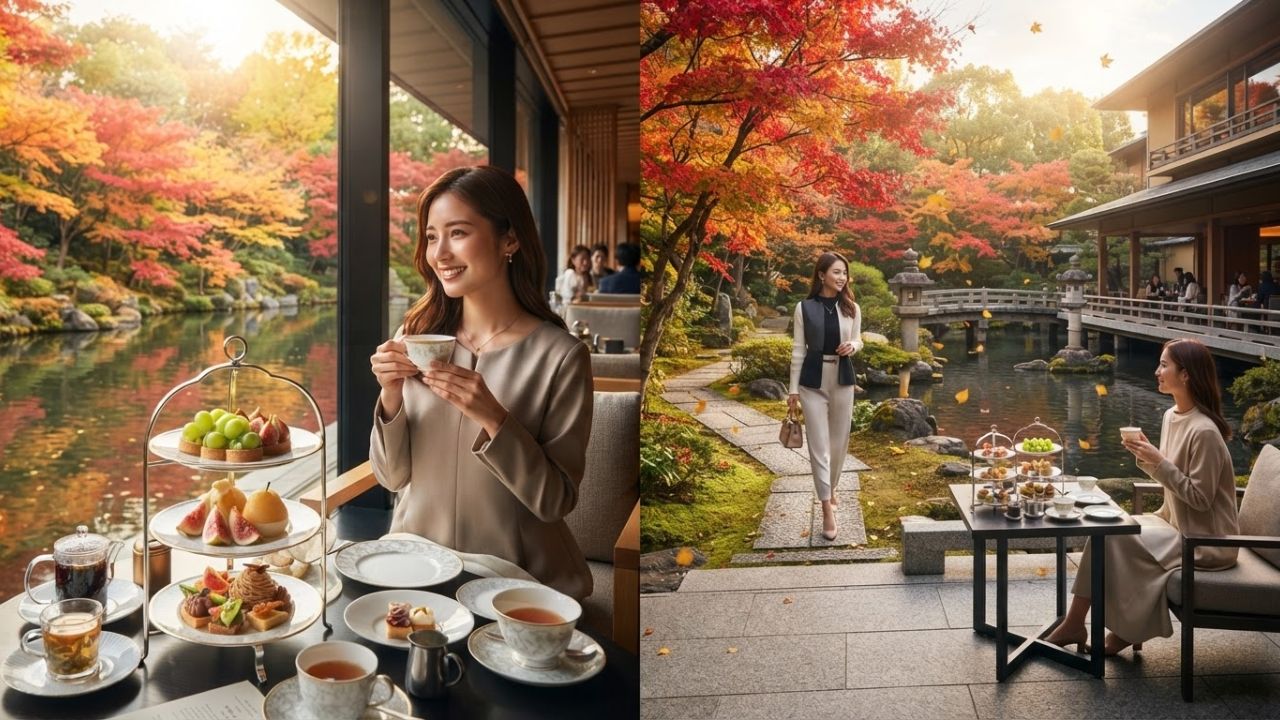
Image generated by AI
Published on July 28, 2026
Four Seasons Hotel Kyoto is significantly enhancing Japan's autumn luxury tourism calendar with the launch of its Autumn Reflections Afternoon Tea — a limited-time, highly seasonal dining experience running from 1 September to 30 November 2026 at EMBA KYOTO GRILL Lounge, created in collaboration between award-winning visiting pastry chef Yusuke Aoki and Executive Sous Chef Takashi Harada, and featuring a menu built around Japan's most prized autumn produce — Shine Muscat grapes, figs, persimmons, and pears — expressed through French pastry craftsmanship in signature creations including the Shine Muscat Tart Feuilletée with crisp pastry, almond sponge, and vanilla cream; the Chestnut Savarin with traditional French baba, chestnut cream, and maple-leaf chocolate decoration; the Smoked Salmon Galette with pear and mascarpone; and the Wagyu Beef and Raisin Puff Pastry with red wine-braised wagyu — all served against direct views of the 800-year-old Shakusui-en pond garden as it transitions through kōyō (autumn foliage) from early September to late November, priced at JPY 7,000 per person on weekdays and JPY 7,800 on weekends and public holidays, with terrace seating available for an additional fee starting at JPY 2,000 per table. For travelers planning Japan autumn travel in 2026 — particularly those for whom the combination of Kyoto's legendary foliage season and exceptional culinary craft represents the most complete luxury travel experience available anywhere in Asia — the Four Seasons Kyoto Autumn Reflections Afternoon Tea offers a perfectly timed, carefully composed reason to be in Kyoto at its most visually extraordinary.
Quick Summary
- Programme: Autumn Reflections Afternoon Tea at EMBA KYOTO GRILL Lounge, Four Seasons Hotel Kyoto — 1 September to 30 November 2026.
- Chefs: Visiting pastry chef Yusuke Aoki (award-winning) in collaboration with Executive Sous Chef Takashi Harada — combining Japanese ingredient expertise with French pastry technique.
- Pricing: JPY 7,000 per person on weekdays · JPY 7,800 on weekends and public holidays · terrace seating from JPY 2,000 additional per table.
- Seatings: Begin at 12:00 pm, 12:30 pm, 2:30 pm, and 3:00 pm — two-hour sessions; indoor dining and terrace options available.
- Setting: Views of the 800-year-old Shakusui-en pond garden as its maple and deciduous trees progress through kōyō autumn foliage — with optional garden mist atmosphere enhancement.
Kyoto's autumn foliage season — known in Japanese as kōyō — is widely considered the most spectacular natural event in Japan's travel calendar, drawing millions of domestic and international visitors between mid-October and late November each year to witness the city's ancient temples, heritage gardens, and forested hillsides transform through shades of crimson, amber, and gold. Within Kyoto's luxury hospitality landscape, Four Seasons Hotel Kyoto has built its distinctive reputation on the rare combination of world-class international brand standards and direct adjacency to one of the city's most celebrated historic garden spaces. The Autumn Reflections Afternoon Tea represents the hotel's most ambitious seasonal culinary programme to date — an experience that deliberately integrates the changing garden as an active element of the dining occasion, rather than treating it as mere backdrop, through timing, menu design, and a setting that changes character with each successive visit through the season.
Autumn Reflections Afternoon Tea: Full Programme Details
The Setting: Shakusui-en Pond Garden and Seasonal Foliage
Four Seasons Hotel Kyoto sits adjacent to the Shakusui-en pond garden — a historic landscape that has existed in its current form for over 800 years. This garden is not a decorative resort amenity constructed alongside the hotel; it is a piece of Kyoto's living heritage, with a cultural identity and seasonal rhythm entirely independent of the hospitality infrastructure that now frames it.
During the three-month span of the Autumn Reflections Afternoon Tea programme — 1 September through 30 November 2026 — the Shakusui-en garden undergoes one of its most dramatic annual transformations. The foliage of the garden's trees progresses from late summer green through early autumn warmth into the deep reds and yellows of peak kōyō, creating a setting that changes meaningfully not just week by week but day by day as the season advances.
The hotel's culinary team has designed the afternoon tea to exist in dialogue with this progression:
- Indoor dining at EMBA KYOTO GRILL Lounge provides framed garden views from a controlled, climate-comfortable environment — appropriate for guests prioritizing uninterrupted menu focus alongside seasonal atmosphere
- Terrace seating brings guests closer to the garden landscape for a more immersive outdoor experience — available for an additional fee starting at JPY 2,000 per table, placing the guest within the garden's ambient atmosphere rather than observing it through glass
The hotel has also indicated that delicate mist may be introduced around the garden — a subtle atmospheric enhancement that adds depth and visual texture to the landscape without competing with the natural seasonal display.
Seating Times and Session Structure
Two-hour seatings are scheduled to begin at four specific times each day:
| Seating | Start Time |
|---|---|
| Seating 1 | 12:00 pm |
| Seating 2 | 12:30 pm |
| Seating 3 | 2:30 pm |
| Seating 4 | 3:00 pm |
The two-hour session format reflects the tea's positioning as a composed, leisurely dining occasion rather than a quick refreshment stop — guests are given sufficient time to engage meaningfully with both the menu and the garden setting across the afternoon.
The afternoon light varies significantly between the lunchtime and mid-afternoon seatings. The 2:30 pm and 3:00 pm seatings in particular offer the warm, raking afternoon light that photographers and garden enthusiasts specifically seek during kōyō season — when low autumn sun creates the most saturated colors in the foliage.
Pricing Structure
| Time | Price Per Person |
|---|---|
| Weekdays | JPY 7,000 |
| Weekends and public holidays | JPY 7,800 |
| Terrace seating surcharge | From JPY 2,000 per table (additional) |
Free-flowing tea is included in the experience. Guests may also select curated wines or champagne as pairing options — accommodating different beverage preferences while maintaining the refined hospitality character of the overall experience.
The Culinary Collaboration: Chef Yusuke Aoki and Executive Sous Chef Takashi Harada
The Chefs Behind the Programme
The Autumn Reflections Afternoon Tea menu has been developed through a specific and intentional culinary collaboration:
Award-winning visiting pastry chef Yusuke Aoki brings an external creative perspective to the Four Seasons Kyoto kitchen — a chef recognized for his pastry achievements and invited specifically to contribute to this seasonal programme. His involvement signals that this is not a routine seasonal menu update but a curated culinary event with a defined authorial identity.
Executive Sous Chef Takashi Harada provides the institutional culinary foundation of Four Seasons Hotel Kyoto — the kitchen's established standards, local supplier relationships, and operational expertise that give the programme its execution quality and seasonal ingredient access.
The hotel describes their shared approach as a "shared appreciation of Japanese ingredients and French culinary craftsmanship" — a philosophical alignment that defines the menu's conceptual identity: French technique applied to Japanese seasonal produce with the respect and precision that both traditions independently demand.
The Menu: Seasonal Japanese Produce Through French Pastry Technique
The Seasonal Fruit Foundation
The menu's conceptual starting point is Japan's autumn fruit harvest — specifically four ingredients that represent the season's most celebrated produce:
- Shine Muscat grapes — among Japan's most prized grape varieties, known for their exceptional sweetness, seedless character, and distinctive muscat flavor
- Figs — a late summer and early autumn fruit with rich, honey-like sweetness that pairs naturally with both cream and savory preparations
- Persimmons — one of Japan's most iconic autumn fruits, ranging from astringent to sweet varieties, deeply embedded in the seasonal food culture of Kyoto and broader Japan
- Pears — used both in sweet preparations and as a flavor bridge between sweet and savory courses
Signature Sweet Creations
Shine Muscat Tart Feuilletée
Practical Traveler Advice: Planning Your Kyoto Autumn Visit Around the Afternoon Tea
Travelers planning to include the Four Seasons Kyoto Autumn Reflections Afternoon Tea in their Japan autumn itinerary should follow these practical steps:
- Book your preferred seating well in advance — peak kōyō demand is intense. The late October to mid-November window represents peak kōyō season in Kyoto and is simultaneously peak demand for Four Seasons Kyoto reservations. The 2:30 pm and 3:00 pm afternoon seatings on weekend days during peak foliage will fill earliest — reserve immediately.
- Request terrace seating if garden immersion is a priority. The JPY 2,000 per table terrace surcharge is modest relative to the total experience cost — if experiencing the garden atmosphere directly rather than through glass is important to you, specify this at booking.
- Align your visit with the foliage progression. Kyoto's kōyō typically peaks between mid-October and mid-November depending on annual temperature patterns — the programme's September start date provides foliage in early transition, while November visits capture peak color. Monitor Japan's annual kōyō forecast reports (published by Japanese weather agencies each autumn) to time your visit.
- Check Japanese public holidays for pricing. Autumn includes several Japanese national holidays — Sports Day (second Monday of October) and Culture Day (3 November) — on which the JPY 7,800 weekend/holiday pricing applies. Factor this into budget planning if your travel dates fall on these days.
- Combine the afternoon tea with a morning temple and garden visit. Kyoto's major foliage gardens — including Tofuku-ji, Eikan-do, Arashiyama, and Nanzen-ji — are best visited early in the morning before crowds peak. Structuring a morning garden visit followed by the 12:00 pm or 12:30 pm afternoon tea seating creates a full and self-contained Kyoto autumn day.
- Make transport arrangements early if staying outside Four Seasons Kyoto. Kyoto during peak kōyō season experiences significant transportation pressure — taxis become scarce and buses crowded. If you are not staying at the hotel, arrange transportation to your tea reservation well in advance of your seating time.
- Select your beverage pairing at the time of booking. Confirming whether you prefer free-flowing tea, curated wines, or champagne pairings before arrival allows the culinary team to prepare appropriately — particularly for larger party bookings.
Broader Context: Kyoto, Kōyō, and Japan's Autumn Luxury Tourism Season
Kyoto is Japan's most internationally recognized cultural travel destination — a city whose concentration of UNESCO World Heritage Sites, ancient temple gardens, traditional arts, and artisanal craft culture makes it the primary destination for the majority of international visitors engaging with Japan's cultural heritage. The city's autumn foliage season is one of the most globally recognized natural tourism events in East Asia, drawing visitors who plan their Japan itineraries specifically to coincide with the kōyō window.
Within this extraordinary destination context, Four Seasons Hotel Kyoto's positioning adjacent to the 800-year-old Shakusui-en pond garden gives it a rare physical relationship with Kyoto's heritage landscape — the hotel's architecture and garden integration allow guests to experience the cultural depth of the city's historic garden tradition alongside the Four Seasons brand's hospitality standards.
The Autumn Reflections Afternoon Tea is designed to be experienced as a Kyoto cultural encounter as much as a dining event — the garden's progression through kōyō providing a living, evolving frame for what is served on the table. This integration of culinary craft with natural heritage is characteristic of the most thoughtful luxury hospitality experiences emerging from Japan's competitive luxury hotel market, where properties are increasingly investing in experiences that connect guests to the destination's cultural identity rather than simply providing comfortable accommodation.
What to Expect Next: Programme Conclusion and Winter Transitions
The Autumn Reflections Afternoon Tea programme concludes on 30 November 2026 — the conventional endpoint of Kyoto's kōyō season, when late-November frosts have typically completed the foliage transition and the city begins its shift toward the quieter aesthetic of winter (fuyu), with bare branches, early morning frost, and occasional snow creating an entirely different but equally compelling visual character in the Shakusui-en garden.
For guests who experience the Autumn Reflections Afternoon Tea and are inspired to return, Four Seasons Hotel Kyoto's year-round programming at EMBA KYOTO GRILL Lounge continues with seasonally adjusted menus and experiences that reflect the hotel's commitment to connecting cuisine with Kyoto's distinctive seasonal rhythms.
Four Seasons Hotel Kyoto's Autumn Reflections Afternoon Tea represents a genuinely compelling reason to place Kyoto on the autumn 2026 travel agenda — a seasonal dining programme that successfully integrates the talents of visiting chef Yusuke Aoki and Executive Sous Chef Takashi Harada with the extraordinary natural theatre of an 800-year-old garden undergoing kōyō transformation, priced accessibly at JPY 7,000 per person on weekdays and available across a three-month window that spans the full arc of Kyoto's most visually spectacular season. Book early, choose your seating time deliberately, and arrive ready to experience autumn in Kyoto at its most refined.
FAQ: Four Seasons Kyoto Autumn Afternoon Tea 2026
When is the Autumn Reflections Afternoon Tea at Four Seasons Kyoto?
The Autumn Reflections Afternoon Tea at Four Seasons Hotel Kyoto runs from 1 September to 30 November 2026 at EMBA KYOTO GRILL Lounge. The programme covers the full arc of Kyoto's autumn season — from early seasonal transition in September through peak kōyō foliage in October-November to the late autumn conclusion in late November.
How much does the Four Seasons Kyoto autumn afternoon tea cost?
The Autumn Reflections Afternoon Tea is priced at JPY 7,000 per person on weekdays and JPY 7,800 per person on weekends and public holidays. Terrace seating — providing closer access to the Shakusui-en pond garden — is available for an additional fee starting at JPY 2,000 per table. Free-flowing tea is included, with curated wines or champagne available as optional pairings.
Who are the chefs behind the Four Seasons Kyoto Autumn Reflections Afternoon Tea?
The programme is a collaboration between award-winning visiting pastry chef Yusuke Aoki — invited specifically for this seasonal programme — and Executive Sous Chef Takashi Harada of Four Seasons Hotel Kyoto. Both chefs share a philosophy of combining Japanese seasonal ingredients with French pastry technique and craftsmanship.
What are the signature dishes in the Four Seasons Kyoto autumn tea menu?
The key menu items include: Shine Muscat Tart Feuilletée (crisp pastry, almond sponge, vanilla cream, and Shine Muscat grapes); Chestnut Savarin (French baba, poached pear compote, chestnut cream, maple-leaf chocolate decoration); Smoked Salmon Galette (salmon, pear, and mascarpone in delicate crêpe layers); and Wagyu Beef and Raisin Puff Pastry (red wine-braised wagyu beef with sweet raisins in flaky pastry). The seasonal Japanese produce — Shine Muscat grapes, figs, persimmons, and pears — is used across both sweet and savory courses.
What is the Shakusui-en pond garden at Four Seasons Kyoto?
The Shakusui-en pond garden is an 800-year-old historic Japanese garden directly adjacent to Four Seasons Hotel Kyoto — a living heritage landscape whose kōyō autumn foliage transformation provides the visual setting for the Autumn Reflections Afternoon Tea. Guests can view the garden's red and yellow autumn foliage from the EMBA KYOTO GRILL Lounge interior or from terrace seating closer to the garden itself.
Suggested SEO Metadata & Assets
Related Travel Guides
Disclaimer
This article is for informational and educational purposes only. It does not constitute legal, financial, or professional advice. While we strive to provide accurate and up-to-date information, travel policies, regulations, and conditions change rapidly. Always verify information with official sources before making travel decisions. Nomad Lawyer makes no representations about the accuracy, reliability, completeness, or suitability of the information provided. Readers should consult qualified professionals for advice specific to their circumstances. The views expressed in this article are those of the author and do not necessarily reflect the views of Nomad Lawyer.
Kunal K Choudhary
Co-Founder & Contributor
A passionate traveller and tech enthusiast. Kunal contributes to the vision and growth of Nomad Lawyer, bringing fresh perspectives and driving the community forward.
Learn more about our team →