
FlyDubai and Emirates Lead Regional Disruption: 51 Cancellations and 200+ Delays Across Middle East Hubs
The Middle East aviation network is under intense pressure on May 5, 2026, with 51 flight cancellations and over 200 delays reported across the UAE, Saudi Arabia, Oman, and Kuwait, primarily driven by FlyDubai and Emirates.

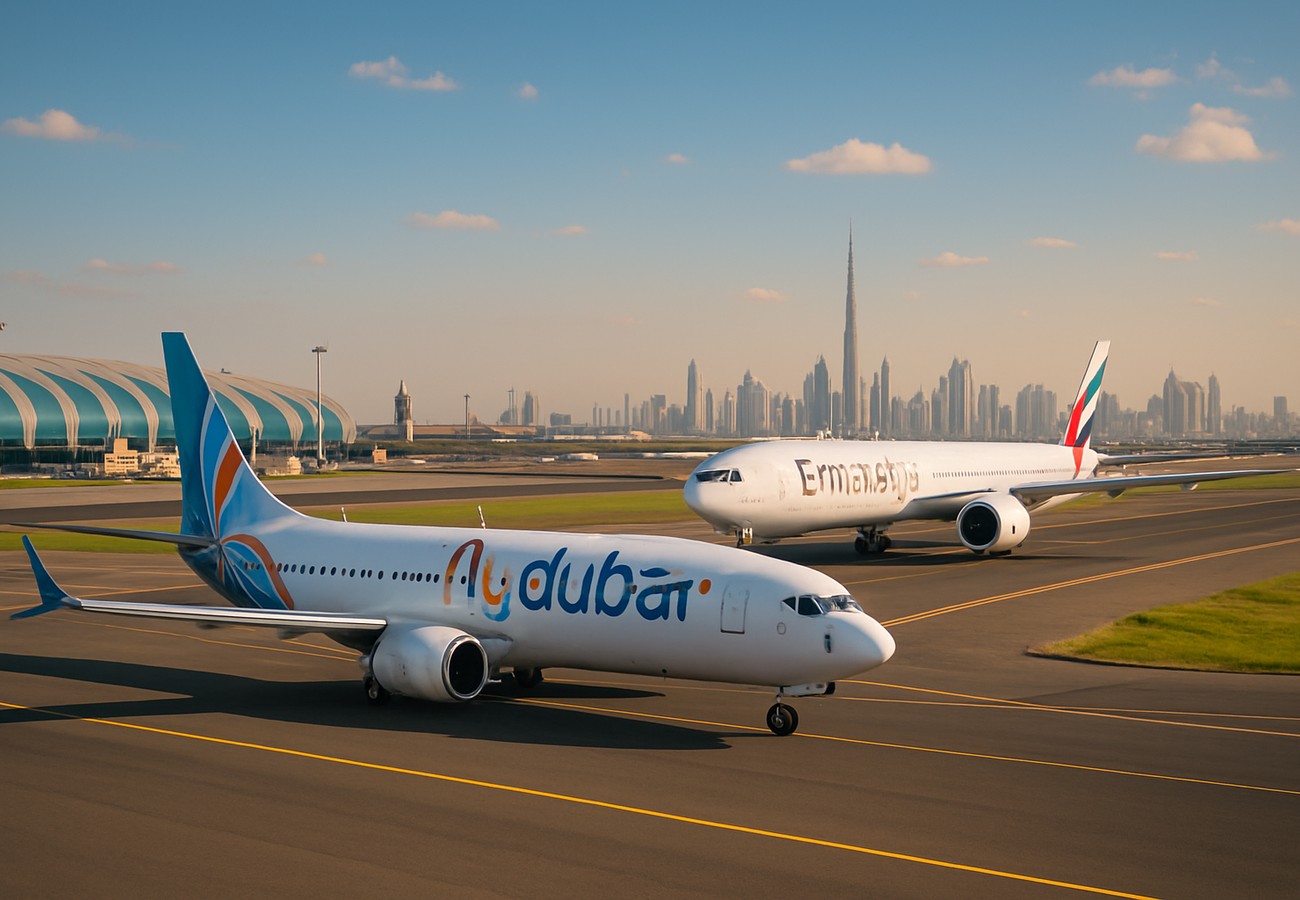
Image generated by AI
Quick Summary
- Middle East aviation corridors are facing a major operational breakdown on May 5, 2026, with 51 flights cancelled and over 200 delays cascading through the region’s primary hubs.
- Dubai International Airport (DXB) has emerged as the epicenter of the disruption, where FlyDubai has cancelled 16 flights and Emirates has reported 9 cancellations alongside 88 delays.
- Significant proportional impacts are noted at DXB, where Oman Air and Qatar Airways each recorded 50% cancellation rates for their scheduled blocks.
- Regional gateways in Riyadh, Muscat, Kuwait City, Sharjah, and Manama are also reporting varying levels of scheduling breakdowns, leaving thousands of international transit passengers stranded.
The regional aviation network is currently exhibiting fragile scheduling resilience, with cascading delays affecting turnaround times across the UAE, Saudi Arabia, Oman, Kuwait, and Bahrain. Airlines are actively redeploying fleets and adjusting rotations to stabilize their networks, yet congestion at major hubs like DXB continues to hamper recovery efforts.
For transit travelers, the situation has resulted in missed connections and extended wait times, highlighting the vulnerability of the high-density Gulf transit corridors during operational spikes.
Middle East Cancellation & Delay Metrics (May 5, 2026)
The following table summarizes the primary operational disruptions at key regional airports.
| Hub / Airport | Primary Airline | Cancellations | Delays |
|---|---|---|---|
| Dubai (DXB) | FlyDubai | 16 | 34 |
| Dubai (DXB) | Emirates | 9 | 88 |
| Riyadh (RUH) | Saudia | 3 | 18 |
| Muscat (MCT) | Oman Air | 2 | 18 |
| Kuwait (KWI) | Kuwait Airways | 3 | 5 |
| Sharjah (SHJ) | Air Arabia | 3 | 23 |
| Bahrain (BAH) | Gulf Air | 1 | 34 |
Regional Breakdown: Hub-by-Hub Status
Dubai (DXB) and Northern Emirates
Dubai International Airport remains the most heavily impacted hub. While FlyDubai and Emirates carry the volume of disruptions, smaller operators like SpiceJet (1 cancellation) and Oman Air are also struggling. In Sharjah (SHJ), Air Arabia has cancelled 3 flights (2% of operations) but is facing 23 delays, indicating significant ground-side congestion.
Riyadh and Saudi Arabia
King Khalid International Airport (RUH) has shown relatively stable core operations, with Saudia reporting only 3 cancellations (1%). However, the 18 delays suggest that the hub is feeling the pressure from incoming regional traffic.
Oman, Kuwait, and Bahrain
In Muscat (MCT), Oman Air and FlyDubai have cancelled 2 flights each, with Oman Air reporting 18 delays. Kuwait International Airport (KWI) saw a selective but sharp disruption, including a 100% cancellation rate for Gulf Air (1 flight). Meanwhile, in Manama (BAH), Emirates cancelled 2 flights (50% of its BAH schedule), illustrating how hub disruptions in Dubai are rippling outward.
Analysis: Fragile Scheduling and Hub Congestion
The current situation underscores several critical vulnerabilities in the Middle East's aviation architecture:
- Cascading Delay Effect: With hubs like DXB experiencing nearly 90 delays for a single carrier (Emirates), the "knock-on" effect for connecting flights to Europe and Asia is severe.
- Selective Resilience: While large carriers like Saudia are maintaining schedules, smaller blocks or specific rotations for carriers like IndiGo (2 cancellations in AUH) and Egypt Air (1 cancellation in SHJ) are being cut to preserve the broader network.
- Transit Vulnerability: Thousands of passengers are currently stranded in terminal lounges, stressing the capacity of airport amenities and hotel facilities.
Essential Steps for Stranded Transit Passengers
If you are currently transiting through a Middle East hub and your flight is affected:
- Download the Airline App: This is the fastest way to receive rebooking confirmations. FlyDubai and Emirates apps are currently providing real-time gate and seat updates.
- Check Your Transit Visa Status: If your delay exceeds 24 hours, inquire at the transit desk about temporary entry permits or airline-provided hotel vouchers.
- Avoid the Main Queues: If possible, use the airline’s online chat or social media channels for rebooking assistance, as physical service desks at DXB and KWI are experiencing high volumes.
- Document Expenses: Keep all receipts for meals and communications for potential insurance claims under "travel delay" clauses.
FAQ: Middle East Aviation Alert
Why are so many flights being cancelled in Dubai? The disruption is driven by a combination of operational strain and hub congestion, forcing carriers like FlyDubai to cancel selective rotations to stabilize the rest of the network.
Is it safe to travel through Riyadh (RUH)? Yes. Operations at King Khalid International Airport are significantly more stable than those in Dubai, with a very low (1%) cancellation rate for the national carrier, Saudia.
Will Qatar Airways compensate me for the DXB cancellation? Compensation depends on the cause of the cancellation and the airline’s specific policies. Passengers should contact Qatar Airways directly to discuss re-routing and support options.
Related Travel Alerts
Disclaimer
This article is for informational and educational purposes only. It does not constitute legal, financial, or professional advice. While we strive to provide accurate and up-to-date information, travel policies, regulations, and conditions change rapidly. Always verify information with official sources before making travel decisions. Nomad Lawyer makes no representations about the accuracy, reliability, completeness, or suitability of the information provided. Readers should consult qualified professionals for advice specific to their circumstances. The views expressed in this article are those of the author and do not necessarily reflect the views of Nomad Lawyer.
Kunal K Choudhary
Co-Founder & Contributor
A passionate traveller and tech enthusiast. Kunal contributes to the vision and growth of Nomad Lawyer, bringing fresh perspectives and driving the community forward.
Learn more about our team →