
FLY91 Secures $1 Billion Order for 40 ATR 72-600 Aircraft to Expand India Regional Connectivity 2026
Goa-based FLY91 has committed nearly $1 billion to acquire 40 ATR 72-600 turboprops, targeting rapid expansion into India's tier 2 and tier 3 cities and remote island territories.
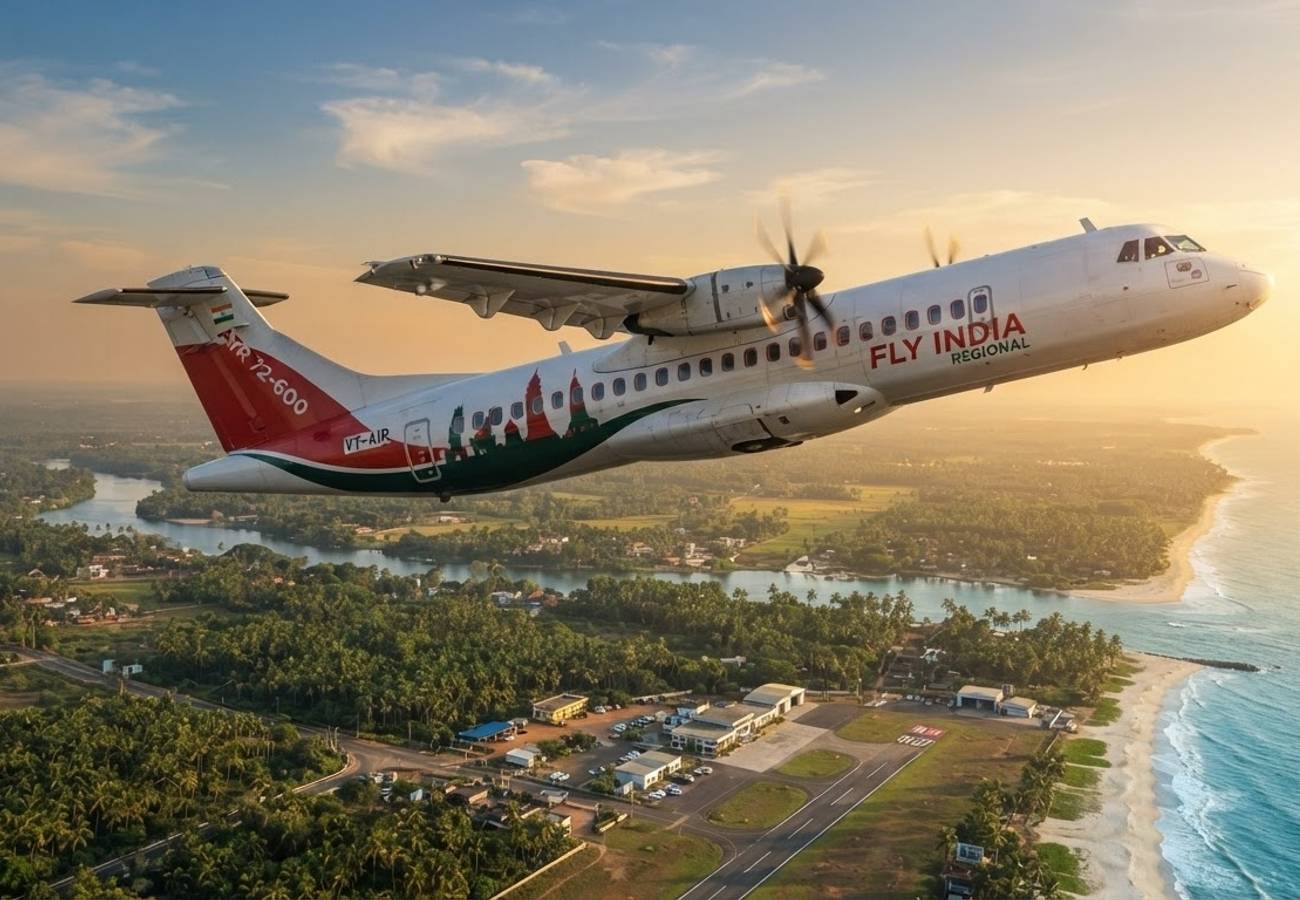
Image generated by AI
A landmark $1 billion commitment for 40 ATR 72-600 aircraft positions FLY91 as a primary catalyst for India's regional accessibility. This expansion directly targets the "missing links" between tier 2 and tier 3 cities, slashing travel times for millions.
The aviation map of India is undergoing a structural shift. FLY91, the Goa-based carrier that began commercial operations in March 2024 from Manohar International Airport, has signed a firm order for 40 ATR 72-600 turboprops. Valued at nearly $1 billion at list prices, this represents one of the largest single purchases of this aircraft type by a regional airline globally.
The move signals a departure from the traditional "hub-and-spoke" model dominated by mega-cities like Delhi and Mumbai. Instead, FLY91 is betting on a point-to-point regional network that connects smaller industrial towns, pilgrimage sites, and coastal strips directly, bypassing the congestion of major metropolitan hubs.
The Regional Connectivity Shift
The ATR 72-600 is specifically engineered for the challenges of regional aviation. With a capacity of approximately 70 passengers, it occupies the economic "sweet spot"—too large for tiny commuters but efficient enough for routes where a narrowbody jet would be financially unsustainable.
For the traveler, the impact is immediate. The aircraft's ability to operate from shorter runways and its lower fuel burn per seat allow FLY91 to service destinations that were previously reachable only via grueling surface journeys. Early success on routes linking Goa with Agatti in Lakshadweep and Jalgaon in Maharashtra proves the viability of this niche strategy.
This expansion aligns with the Indian government’s UDAN (Ude Desh ka Aam Naagrik) regional air connectivity scheme, which provides viability gap funding to make flying affordable for the general public while encouraging airlines to venture into under-served markets.
Environmental and Cultural Value
Beyond the economics, the shift toward turboprops on short sectors (under 500 nautical miles) offers a tangible environmental benefit. The ATR 72-600 maintains a smaller carbon footprint compared to jet aircraft on short-haul hops, supporting India's broader sustainability goals.
From a cultural tourism perspective, this fleet expansion unlocks "hidden" India. By making remote island territories and tier 3 towns accessible, the airline is decentralizing tourism. This prevents the over-saturation of primary hotspots and directs tourist spend toward local economies in rural and coastal regions, supporting authentic heritage sites and indigenous crafts.
Operational Stability and Maintenance
Rapid fleet growth is only sustainable with rigorous technical support. To mitigate the risk of downtime, FLY91 has integrated a sophisticated maintenance strategy with ATR.
Following an initial five-year Global Maintenance Agreement for two aircraft in 2024, the airline signed an expanded, multi-year arrangement in early 2026. This "pay-by-the-hour" model covers:
- Component repair and overhaul
- Spares pooling
- Propeller services
- Engineering assistance
For the passenger, this translates to higher reliability and fewer cancellations on routes where alternative transport options are non-existent.
Visitor Insider Tips for Regional India
Navigating India's tier 2 and tier 3 airports requires a different approach than the seamless experience of Indira Gandhi International or Chhatrapati Shivaji Maharaj International.
- Timing the Visit: To avoid the volatility of regional schedules, aim for mid-week flights. Regional routes often see spikes during local festivals or pilgrimage windows, leading to rapid sell-outs.
- Airport Logistics: Many regional airports lack the extensive retail and lounge infrastructure of metros. Arrive 90 minutes before departure, but do not expect high-end dining options on-site; eat at local establishments near the airport.
- Local Etiquette: When visiting remote destinations like the Lakshadweep islands, be mindful of local customs and environmental regulations. Many of these areas are ecologically sensitive; avoid single-use plastics and respect local dress codes in village areas.
- Hidden Gem: Use these new links to visit Jalgaon for its unique agricultural markets or Agatti for world-class diving, away from the crowds of the Maldives.
Tourism Outlook
The long-term trajectory for India's aviation is no longer just about adding more seats to international routes. The "interior" of the country is opening up. FLY91's $1 billion bet suggests that the next decade of growth will be defined by regional agility. As more ATRs enter the fleet, we expect a ripple effect where other carriers are forced to innovate their regional strategies to remain competitive.
The era of the long-haul bus journey between India's smaller cities is slowly being replaced by the hum of the turboprop.
Related Travel Guides
Disclaimer
This article is for informational and educational purposes only. It does not constitute legal, financial, or professional advice. While we strive to provide accurate and up-to-date information, travel policies, regulations, and conditions change rapidly. Always verify information with official sources before making travel decisions. Nomad Lawyer makes no representations about the accuracy, reliability, completeness, or suitability of the information provided. Readers should consult qualified professionals for advice specific to their circumstances. The views expressed in this article are those of the author and do not necessarily reflect the views of Nomad Lawyer.