
Flight-Free Southeast Asia: Island Hopping Ferry and Rail Loop Guide
Traveling across Thailand, Malaysia, Singapore, and Indonesia without flying is possible through speedboats, electric high-speed trains, and catamarans.

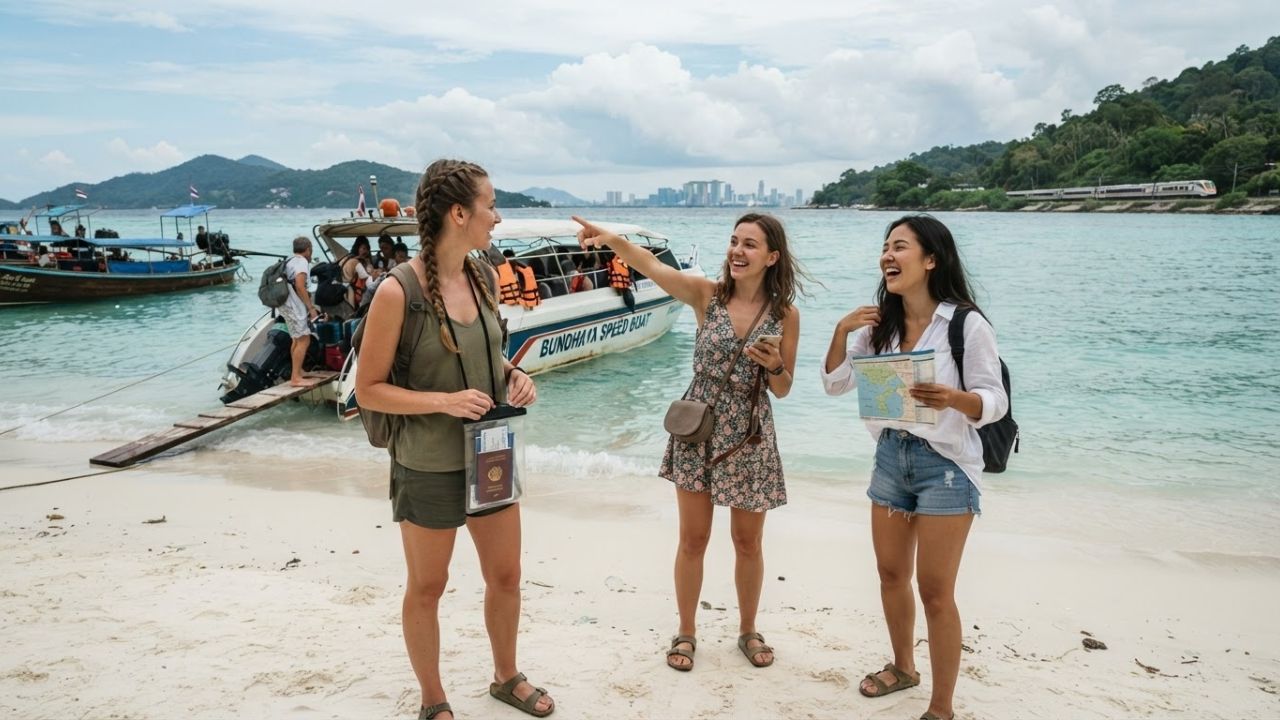
Image generated by AI
Traveling across Thailand, Malaysia, Singapore, and Indonesia without a single flight is possible through a continuous loop utilizing speedboats, electric high-speed trains, and express catamarans.
Speedboat Border Crossings: Koh Lipe to Langkawi
The maritime route begins on Pattaya Beach in Koh Lipe, Thailand, where passengers clear outbound immigration at a wooden beachfront station. A passenger speedboat crosses the 42-kilometer stretch of the Andaman Sea in 90 minutes, docking at Kuah Jetty or Telaga Harbour Marina in Malaysia's Langkawi archipelago, where travelers complete inbound customs.
Because of safety regulations and monsoon patterns in the Andaman Sea, this speedboat link operates only during the dry season, running from late October through May. During the wet season, travelers must take an overland detour through the Satun border crossing on the Thai mainland.
Overland Transit: High-Speed Rail Down Peninsular Malaysia
To travel from Langkawi to Singapore without flying, passengers take a ferry from Kuah Jetty to the mainland port of Kuala Kedah. From there, travelers board Malaysia's ETS (Electric Train Service) high-speed rail line, which runs down the center of Peninsular Malaysia directly to Johor Bahru on the southern border.
At Johor Bahru, passengers cross the Causeway by bus or shuttle train to enter Singapore through the Woodlands Checkpoint. Travelers must ensure their SG Arrival Card is submitted online through the Singapore Immigration & Checkpoints Authority (ICA) portal before crossing.
Maritime Links: Connecting Singapore to the Riau Islands
The final leg connects Singapore to Indonesia's Riau Islands via high-speed catamaran ferries leaving from HarbourFront Centre or Tanah Merah Ferry Terminal. The express catamarans cross the Singapore Strait in under an hour, arriving at Batam Centre or Bintan Island.
This international water transit allows passengers to transition directly from Singapore's urban center to Indonesia's waterfront resorts, making the four-country loop highly accessible for slow-travel enthusiasts.
Environmental Benefits and Community Tourism
Opting for marine and rail transit over regional flights reduces carbon emissions and limits airport noise pollution. Sourcing travel services from local ferry companies, regional rail lines, and independent boat captains ensures that travel spending directly supports local maritime communities.
Travelers can minimize their environmental footprint by packing reusable bags and water bottles, protecting the delicate marine national parks of the Andaman Sea and the Singapore Strait from plastic waste.
Local Insider Travel Strategies
- Pre-Book Speedboat Slots: Speedboat tickets between Koh Lipe and Langkawi sell out quickly in December and January. Book your tickets online at least two weeks in advance.
- Waterproof Document Bags: Store passports, electronic visa printouts, and boarding passes in a heavy-duty waterproof bag to protect them during beach embarkations in Koh Lipe.
- SG Arrival Card: Submit your digital arrival card via the ICA website within three days prior to entering Singapore.
- Savor Regional Specialties: Try Laksa Kedah (spicy fish noodle soup) at Kuah Jetty, and try Mie Lendir (peanut gravy noodles) near the Batam Centre ferry terminal.
- Explore Bintan: Take a ferry to Bintan Island and visit the quiet white sands of Trikora Beach for fresh local seafood and fewer crowds.
Long-Term Outlook for Regional Slow Travel
The viability of this flight-free route highlights a growing interest in low-impact, regional exploration in Southeast Asia. As electric rail infrastructure expands and maritime customs processing becomes more digitized, slow travel will remain a key alternative for eco-conscious travelers seeking to explore the diverse cultures and geographies of the Malay Peninsula and the Riau archipelago.
Related Travel Guides
Disclaimer
This article is for informational and educational purposes only. It does not constitute legal, financial, or professional advice. While we strive to provide accurate and up-to-date information, travel policies, regulations, and conditions change rapidly. Always verify information with official sources before making travel decisions. Nomad Lawyer makes no representations about the accuracy, reliability, completeness, or suitability of the information provided. Readers should consult qualified professionals for advice specific to their circumstances. The views expressed in this article are those of the author and do not necessarily reflect the views of Nomad Lawyer.
Raushan Kumar
Founder & Lead Developer
Full-stack developer with 11+ years of experience and a passionate traveller. Raushan built Nomad Lawyer from the ground up with a vision to create the best travel and law experience on the web.
Learn more about our team →