
Flight Disruptions Strand Thousands Across US Airline Hubs in April 2026
Flight disruptions strand thousands of travelers on April 10, 2026, as 93 cancellations and 772 delays cascade through Atlanta, Chicago, New York, and California hubs affecting major US carriers.

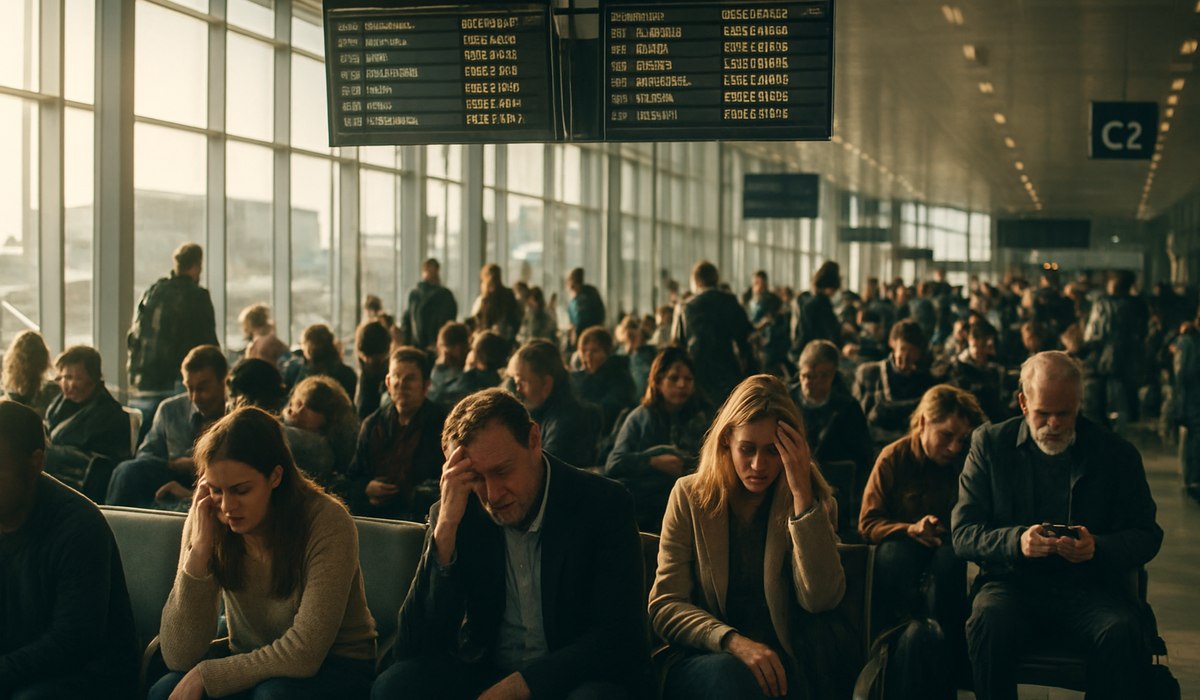
Image generated by AI
Widespread Flight Disruptions Strand Travelers at Major US Hubs
Flight disruptions strand thousands of passengers across America as cascading delays and cancellations ripple through the nation's busiest airport gateways. On April 10, 2026, flight-tracking data documented 93 cancellations and 772 delays concentrated at five major US airline carriers, with Atlanta's Hartsfield-Jackson International, Chicago O'Hare, New York-area airports, Los Angeles International, and San Francisco International bearing the brunt of operational strain. The disruption pattern exposes inherent vulnerabilities in the banked hub-and-spoke model that dominates domestic US aviation, where operational bottlenecks at single airports trigger network-wide cascading failures affecting thousands of connecting passengers.
Disruptions Concentrated at Major US Gateways
The April 2026 disruption event followed a now-familiar pattern: operational strain concentrated at a handful of critical hub airports propagates outward through interconnected networks, stranding passengers far from intended destinations. Atlanta, as the world's busiest airport by passenger volume, served as the primary disruption epicenter, followed closely by Chicago O'Hare and New York's tri-airport system. On the West Coast, both Los Angeles and San Francisco reported significantly elevated delay counts.
The concentration of problems at these five airports reflects their structural importance to American airline operations. Each serves as a primary hub for multiple carriers: Delta dominates Atlanta; United and American maintain major operations in Chicago; all major carriers compete heavily in New York; and both United and American operate substantial California bases. When operational constraints tighten at these gateways—whether from weather, air-traffic control limitations, or mechanical issues—the impact multiplies exponentially across networks.
According to FlightAware's real-time tracking system, the April 10 disruption exemplified how departure board delays compound into missed connections. With 772 services running between 45 and 150 minutes late, minimum connection windows at hub airports collapsed almost immediately. Passengers booked on tight connections found themselves stranded as gate availability evaporated and crews approached federally-mandated duty-time limits.
Which Airlines Are Most Affected
Five major US carriers dominated disruption tallies on April 10, 2026: Delta Air Lines, American Airlines, United Airlines, JetBlue Airways, and Lufthansa. The concentration reflects both their large operational footprints and their heavy reliance on banked hub-and-spoke scheduling models.
Delta's exposure stems primarily from Atlanta-based operations, where the carrier positions the vast majority of its fleet for overnight bank turns. American Airlines, with substantial operations in Chicago and Dallas, saw cascading failures as Chicago congestion backed up into subsequent waves. United Airlines, operating major hubs in Chicago, Denver, and California, experienced disruptions across multiple regions simultaneously.
JetBlue, while smaller than legacy carriers, relies heavily on Boston and Florida bases that connect through New York area airports for cross-country service. When New York operations degraded, JetBlue's network felt proportional impact. Lufthansa, as Europe's leading international carrier with significant US gateway dependence, faced particular pressure: domestic delays directly threatened transatlantic departure windows, creating downstream consequences for European connections.
The 2026 disruption illustrates how international airline operations intertwine with domestic US hub performance. Transatlantic passengers booked on Lufthansa connecting through New York, or American and United passengers linking domestic legs to European service, faced compounding delays that sometimes exceeded 12 hours by day's end.
How Hub Operations Cascade Delays Across Networks
Modern airline operations concentrate on "banked scheduling," where multiple aircraft arrive within narrow time windows, disgorge passengers, board new customers, and depart on outbound routes within 45-90 minutes. This operational model maximizes aircraft utilization and minimizes passenger connection times—but creates extreme fragility.
A single-aircraft mechanical delay, unexpected weather cell, or air-traffic control ground stop at a major hub can unravel this carefully choreographed ballet. The delayed aircraft arrives late. Ground crews struggle to turn it on compressed timelines. Subsequent outbound passengers board late. Those passengers, now 30-45 minutes behind schedule, create ripple effects throughout their downstream routing.
With 772 delays concentrated at five hub airports on April 10, this cascading effect accelerated exponentially. A delayed arrival from Denver to Chicago meant that crew and aircraft couldn't make a scheduled Chicago-New York departure. Passengers booked on that Chicago-New York leg missed their New York connections. What began as a single delayed flight mushroomed into dozens of missed connections across multiple carriers and regions.
The [Federal Aviation Administration (FAA)](https://www.faa.gov) has documented that during high-volume disruption days, hub airports operate at reduced capacity due to congestion. When demand exceeds capacity—even by modest margins—the system enters a degraded state where recovery requires 8-12 hours of reduced operations. The April 10 event followed this pattern precisely, with peak disruption occurring between 11 a.m. and 4 p.m. EDT, with recovery extending into early evening operations.
What Travelers Should Know Right Now
Passengers affected by April 10, 2026 flight disruptions face several immediate realities. First, while FAA regulations and airline customer service policies govern compensation eligibility, distinctions between weather-caused and carrier-caused disruptions significantly impact rights. Second, rebooking on alternative carriers requires proactive communication—passengers cannot assume their original airline will find available seats on competitors' flights.
Third, accommodation costs during hub-based disruptions spike dramatically. Atlanta, Chicago, New York, and California airports all serve major metropolitan markets where last-minute hotel rates can exceed $300-500 per night during disruption events. Fourth, airline meal and accommodation vouchers vary by carrier and disruption cause. Delta, American, United, and JetBlue maintain different standards for what they provide during irregular operations.
Finally, travelers stranded at hub airports should contact their airline immediately, document all expenses, and understand that compensation eligibility under federal rules (outlined by the US Department of Transportation) depends on specific circumstances. Weather-related disruptions generally exempt carriers from compensation obligations, while carrier-caused issues like mechanical failures can trigger mandatory rebooking or refund requirements.
Traveler Action Checklist
-
Check your flight status immediately using FlightAware or your airline's app—don't rely solely on automated notifications, which often lag actual developments.
-
Contact your airline directly via phone (not social media) to discuss rebooking options on alternative carriers if your flight is cancelled; wait times will be substantial, so call early.
-
Document all expenses related to the disruption, including receipts for meals, hotels, ground transportation, and any childcare or pet-sitting costs incurred due to unexpected overnight stays.
-
Understand your rights under DOT consumer protection rules—weather causes typically exempt carriers from compensation, while mechanical or operational failures may trigger eligibility.
-
Request written confirmation of your rebooking and new flight details before leaving the airport; verbal promises carry minimal weight when disputes arise later.
-
File a complaint with the Department of Transportation if you believe your carrier violated consumer protection regulations; this creates an official record supporting any future compensation claims.
-
Review your travel insurance policy to understand coverage for missed connections, accommodation, and other disruption-related costs; coverage varies significantly by plan type.
Key Disruption Data
| Metric | Value | Details |
|---|---|---|
| Total Cancellations | 93 | Concentrated April 10, 2026, across five major hubs |
Disclaimer
This article is for informational and educational purposes only. It does not constitute legal, financial, or professional advice. While we strive to provide accurate and up-to-date information, travel policies, regulations, and conditions change rapidly. Always verify information with official sources before making travel decisions. Nomad Lawyer makes no representations about the accuracy, reliability, completeness, or suitability of the information provided. Readers should consult qualified professionals for advice specific to their circumstances. The views expressed in this article are those of the author and do not necessarily reflect the views of Nomad Lawyer.
Raushan Kumar
Founder & Lead Developer
Full-stack developer with 11+ years of experience and a passionate traveller. Raushan built Nomad Lawyer from the ground up with a vision to create the best travel and law experience on the web.
Learn more about our team →