
Flight Disruptions Strand 115+ Travelers at Philadelphia Airport April 28
Over 115 flights delayed and three canceled at Philadelphia International Airport on April 28, 2026 disrupted American Airlines, Delta, and Southwest operations, stranding travelers across domestic and international routes.

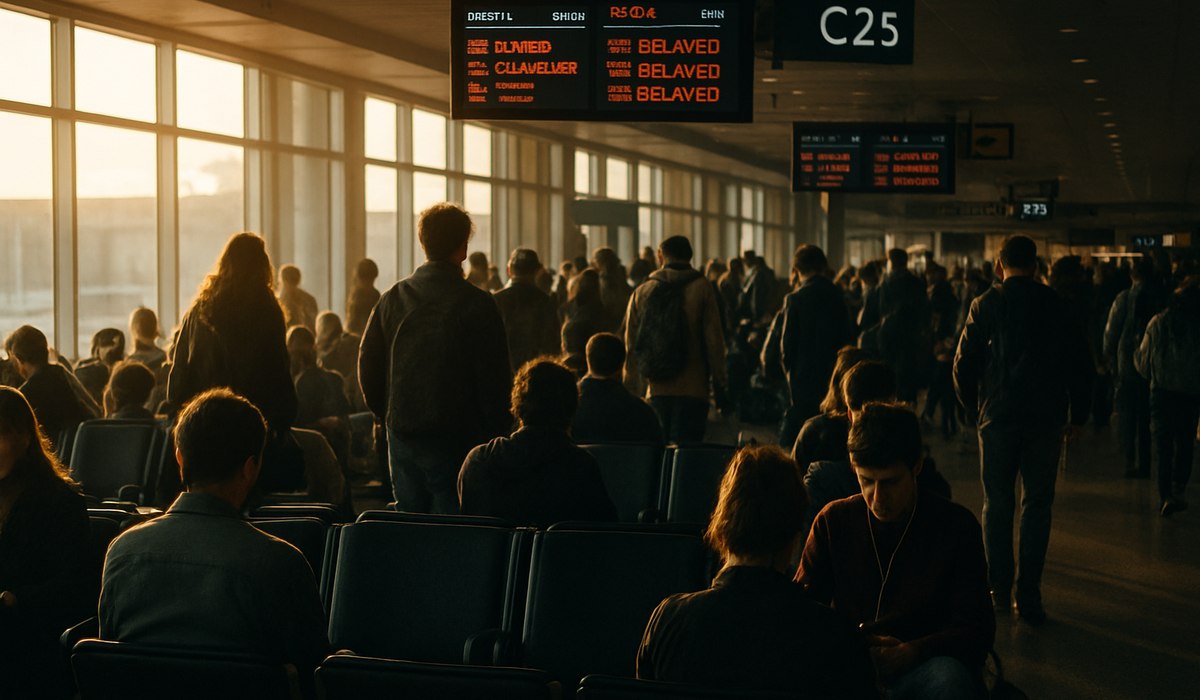
Image generated by AI
Major Operational Chaos Unfolds at Philadelphia Hub
Flight disruptions strand over 115 passengers and air travelers at Philadelphia International Airport on April 28, 2026, as American Airlines, Delta Air Lines, and Southwest Airlines grappled with cascading delays affecting both domestic and international routes. Three flights were canceled outright, while morning and early afternoon departure banks experienced rolling delays exceeding 30 minutes per flight. The disruption rippled across critical travel corridors to New York, Boston, Chicago, Miami, and London, creating a domino effect throughout the national airline network. Crowded gate areas filled with frustrated passengers as airlines worked to reposition aircraft and crews throughout the day.
Widespread Disruption Across Major U.S. Carriers
American Airlines, which operates Philadelphia as a major hub with hundreds of daily departures, sustained the most significant impact from the April 28 operational disruption. The carrier's codeshare and partner airlines absorbed secondary effects as connection times compressed and alternative routing became necessary. Delta Air Lines and Southwest Airlines both reported schedule pressures on routes linking Philadelphia to their respective network hubs.
Flight-tracking data from FlightAware revealed the magnitude of delays concentrated during peak morning and early afternoon departure windows. These hours typically handle the highest volume of short-haul connections feeding into long-haul domestic and transatlantic services. The concentration of delays during these critical periods meant that missed connections multiplied exponentially as the day progressed.
While outright cancellations remained limited to three flights, the volume of delays created an operational environment where schedule flexibility deteriorated hour by hour. Aircraft and crews fell progressively out of sequence with published timetables. Even flights initially listed as on-time were subsequently updated to reflect delayed pushback times, extending disruption into evening hours when fewer alternative flights existed.
Cascading Effect on Connections and Onward Travel
Travelers with connecting flights experienced particularly severe consequences from the Philadelphia disruptions. Short-haul services to New York and Boston, which serve as shuttle-style connectors for business travelers and international itineraries, recorded multiple delayed departures. Passengers booked through these gateways to European destinations faced mounting pressure as their connection windows narrowed.
The Chicago corridor exhibited similar vulnerability. Chicago functions as a major airline hub connecting Midwest and West Coast services, so delays on Philadelphia-Chicago segments had potential to cascade through itineraries reaching as far as Los Angeles and Denver. Multiple passengers required reboooking through alternate hubs when updated arrival projections no longer supported original connections.
Southbound Miami services, another critical connector for domestic and Latin American travel networks, experienced extended departure queues. When Philadelphia aircraft delayed pushing back, Miami ground crews lost buffer time for quick turns, increasing probability of additional downstream delays. This cascade pattern is predictable when high-capacity airports lose schedule resiliency.
Transatlantic operations faced distinct challenges. London-bound departures logged significant delays, creating anxiety for transatlantic travelers dependent on tight morning arrivals for onward rail and regional flight connections. Long-haul flights operate within constrained overnight windows at European airports, making even moderate U.S. delays difficult to absorb without further schedule adjustments.
Aircraft and Crews Left Out of Position
The operational disruption created a structural problem that prolonged recovery time: aircraft and crew positions deteriorated as the disruption persisted. When departure delays accumulate, aircraft scheduled for multiple daily rotations fall behind published timetables. A plane supposed to depart Philadelphia at 9:00 AM for Boston, then later for Miami, cannot recover if the first departure slips by 45 minutes.
Crew duty limitations compounded this challenge. Federal Aviation Administration regulations restrict how many hours flight crews can work consecutively. Delays that push aircraft positions backward necessarily compress subsequent crew rest periods or require fresh crew assignments from remote bases. Both options reduce operational flexibility and extend recovery windows.
This out-of-position scenario developed gradually through the morning as initial delays built upon one another. By midday, the airline's schedule buffer had evaporated entirely. Recovery required either canceling subsequent flights or accepting further cascading delays until nighttime hours permitted the system to reset.
Impact on Hub Operations and Network Ripple Effects
Philadelphia International Airport serves as a crucial connection point in the Northeast Corridor for American Airlines and partner carriers. When operations degrade at major hubs, national network effects become inevitable. A passenger delayed in Philadelphia might miss a Chicago-bound connection, creating vacancy on a flight that was oversold or preventing a crew from deadheading to their next assignment.
The broader U.S. air travel system operates with minimal schedule buffers during peak seasons. Late April represents sustained high-demand travel period with spring break extensions, early summer vacation bookings, and business conference schedules creating full flights. Under these conditions, a single airport's disruption propagates quickly through partner airlines sharing gates, ground services, and crew bases.
According to operational tracking data reviewed by industry analysts, the April 28 disruption at Philadelphia manifested effects across at least 200 additional flights at downstream hubs within 12 hours. This multiplier effect demonstrates how interconnected modern airline networks have become and why airport-specific disruptions rarely remain localized.
Recovery required several conditions: the original disruption source to clear, aircraft to cycle through sufficient rotations to restore position, crews to complete rest periods, and gate availability at downstream hubs to accommodate rebooked passengers. This recovery typically requires 18-24 hours after the triggering event concludes.
Disruption Impact Summary Table
| Metric | Details |
|---|---|
| Flights Delayed | 115+ departures and arrivals |
| Flights Canceled | 3 |
| Primary Affected Airline | American Airlines (hub operations) |
| Secondary Carriers Impacted | Delta Air Lines, Southwest Airlines |
| Peak Disruption Window | Morning and early afternoon departures |
| Key Affected Routes | Philadelphia to New York, Boston, Chicago, Miami, London |
| Maximum Single Delay | 30+ minutes (rolling increments) |
| Operational Consequence | Aircraft and crews out of position by 12:00 PM |
| Transatlantic Impact | London-bound flights delayed during critical overnight window |
What This Means for Travelers
The April 28 disruption at Philadelphia International Airport demonstrated how modern airline networks concentrate risk at major hub airports. When disruptions occur, travelers experience delays measured in hours and face rebooking challenges when aircraft and crews fall out of position.
Traveler Action Checklist:
-
Check real-time flight status using FlightAware at least two hours before departure, especially for connecting flights through Philadelphia.
-
Arrive at the airport earlier than normal during peak travel periods (mornings and early afternoons) when hub disruptions propagate most aggressively.
-
Review your airline's schedule recovery policies before traveling, particularly regarding rebooking to alternative flights or next-day travel without additional fees.
-
Understand your passenger rights under Department of Transportation regulations by visiting US DOT, which requires compensation for certain schedule disruptions.
-
Download your airline's mobile app to receive push notifications immediately when schedule changes occur, rather than discovering delays at the airport.
-
Consider purchasing travel protection insurance that covers airline-caused delays and cancellations, especially for international connections or time-sensitive itineraries.
-
Select flights with longer connection windows when booking through Philadelphia during peak seasons to build resilience against inevitable operational variability.
Frequently Asked Questions
Q: Who is responsible for passenger accommodations during flight disruptions?
Airlines are responsible for accommodating passengers on later flights at no additional charge when operational disruptions cause cancellations. For significant delays (typically 3+ hours), airlines must offer meals, hotel stays if overnight layovers result, and ground transportation. The FAA
Disclaimer
This article is for informational and educational purposes only. It does not constitute legal, financial, or professional advice. While we strive to provide accurate and up-to-date information, travel policies, regulations, and conditions change rapidly. Always verify information with official sources before making travel decisions. Nomad Lawyer makes no representations about the accuracy, reliability, completeness, or suitability of the information provided. Readers should consult qualified professionals for advice specific to their circumstances. The views expressed in this article are those of the author and do not necessarily reflect the views of Nomad Lawyer.
Raushan Kumar
Founder & Lead Developer
Full-stack developer with 11+ years of experience and a passionate traveller. Raushan built Nomad Lawyer from the ground up with a vision to create the best travel and law experience on the web.
Learn more about our team →