
Flight Chaos Sweeps Asia as China Eastern and Lao Airlines Disrupt 416 Regional Services
Flight chaos sweeps across Asia as China Eastern and Lao Airlines record 33 cancellations and 416 delays in April 2026. Major hubs from Shanghai to Vientiane face cascading disruptions affecting thousands of passengers.

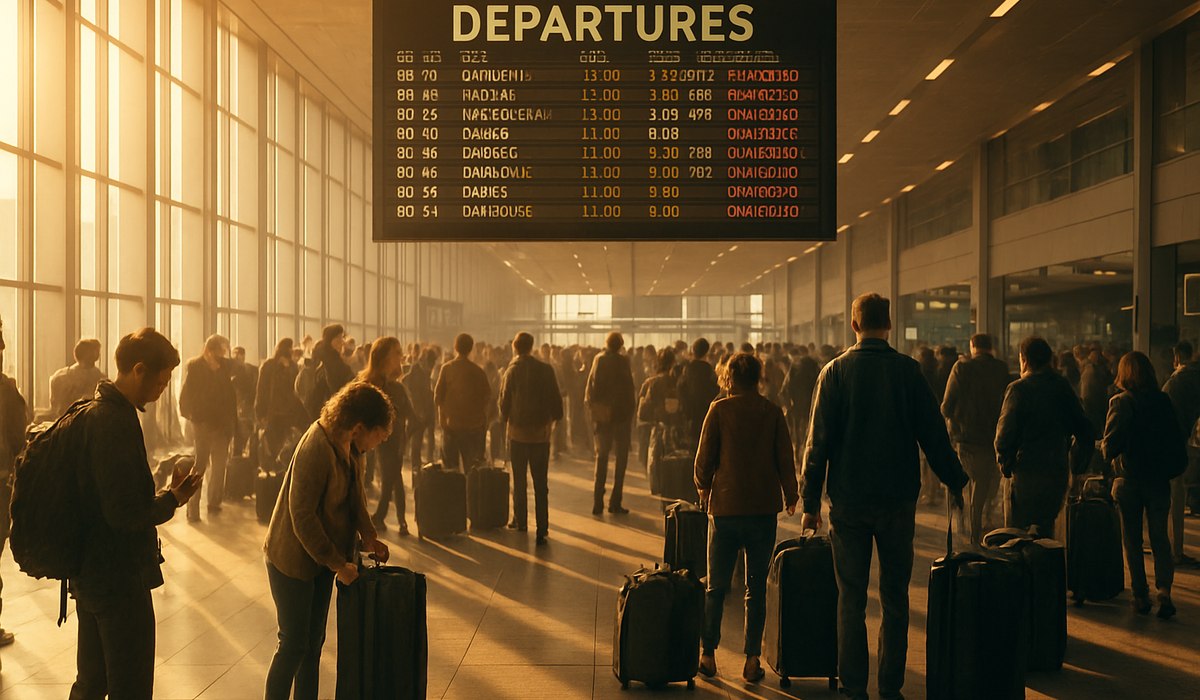
Image generated by AI
Flight Chaos Sweeps Across Asia's Major Corridors
Flight chaos sweeps regional aviation as China Eastern Airlines and Lao Airlines grapple with operational strain, triggering 33 cancellations and 416 delays across interconnected Asian routes on April 8, 2026. The disruption, concentrated on services linking Shanghai, Guangzhou, Chengdu, and Vientiane, has stranded thousands of nomadic professionals, business travelers, and leisure passengers across mainland China, Laos, Thailand, and Vietnam. While these figures represent a fraction of Asia's total daily traffic, the concentration on two key carriers and their hub-and-spoke networks has magnified operational chaos throughout the region's interconnected flight system.
Fresh Wave of Disruptions Across Regional Hubs
April 2026 marks an intensifying period of schedule instability for Asia's busiest air corridors. Real-time tracking data from FlightAware and industry monitoring platforms show that disruptions are not isolated incidents but part of an escalating pattern affecting China-centric itineraries and Southeast Asian connections.
The April 8 disruptions stem from a convergence of operational stressors. Weather systems lingering from late March continue affecting departure windows at major Chinese airports. Airspace constraints, particularly westbound reroutes around restricted zones, compress flight windows and extend ground times. Peak domestic demand across China's aviation network—now rebounding to or exceeding pre-pandemic capacity—leaves minimal slack for recovery when minor delays occur.
The ripple effect is pronounced: a 30-minute ground delay at Shanghai Pudong cascades into missed connections at Bangkok, Hanoi, or Kuala Lumpur. Passengers on tight itineraries face rebooked flights days apart. The concentration of disruptions on a small cluster of carriers amplifies passenger impact disproportionately to overall traffic volume.
China Eastern Feels the Strain of Crowded Skies
China Eastern Airlines operates one of Asia's most complex networks, centered on Shanghai's twin-airport system and radiating to provincial capitals including Beijing, Guangzhou, Chengdu, Chongqing, and Kunming. On April 8, the airline recorded the majority of the combined 33 cancellations and 416 delays, reflecting systemic pressure across its domestic and regional operations.
Shanghai's infrastructure presents a paradox: two world-class airports provide capacity depth, yet the concentration of China Eastern's schedule into narrow peak windows leaves no buffer for operational disruption. When weather or airspace constraints compress departure banks, recovery becomes mathematically difficult. A single blocked runway or rerouted service in the morning creates a compounding effect through subsequent waves.
Industry monitoring through early April 2026 documented China Eastern's elevated cancellation and delay rates on short-haul services feeding long-haul international departures. Passengers on China-Southeast Asia routes faced particular turbulence, with services to Bangkok, Ho Chi Minh City, and Phnom Penh accumulating delays exceeding two hours with increasing frequency.
The airline's crew and aircraft positioning challenges are acute. Rebuilding aggressive domestic schedules to capture demand means fleets rotate continuously with minimal maintenance reserves. One mechanical delay compounds into multiple cancelled or delayed subsequent flights as aircraft fall out of sequence.
Lao Airlines' Limited Capacity Compounds Schedule Instability
Lao Airlines, operating a far smaller fleet across a concentrated network, experiences disproportionate operational fragility. The carrier's schedule centers on Vientiane (Wattay International) and Luang Prabang, with regional services to Bangkok, Hanoi, Ho Chi Minh City, and Guangzhou forming critical connection points.
With limited spare aircraft and minimal crew redundancy, Lao Airlines cannot absorb upstream delays without immediate cascade effects. A single inbound aircraft arriving late from Guangzhou compresses turnaround time at Vientiane, violating crew duty limits or forcing slot swaps that trigger additional delays on subsequent regional services.
The inclusion of Lao Airlines in April 8's disruption tally illustrates how tightly integrated Asia's aviation ecosystem has become. Second-tier carriers operating through congested hubs face constraints beyond their operational control. When larger carriers like China Eastern experience delays, smaller operators absorb the pressure through compressed connections and slot unavailability.
Regional travelers connecting through Vientiane to onward services in Thailand or Vietnam face extended connection times that official schedules do not reflect, particularly when upstream delays compress ground time below minimum connection requirements.
What Nomadic Professionals and Frequent Travelers Need to Know
The April 8 disruption across 416 delayed services and 33 cancellations carries implications extending beyond immediate schedule changes. Nomadic professionals relying on Asia's aviation network for work-related travel face compounded booking complexity and potential visa timeline impacts.
Multiple-sector itineraries prove particularly vulnerable. A digital nomad traveling Shanghai-Bangkok-Phuket faces not sequential delays but compounding connection failures when upstream services slip. Airlines may not rebook passengers on alternative carriers, particularly for regional short-haul services. Budget conscious travelers using point-to-point bookings across multiple carriers face no contractual recourse if a missed connection occurs.
Weather forecasts for April 8-10 indicated continued unsettled conditions across southern China and northern Southeast Asia, suggesting disruption persistence through the week. Travelers with critical deadlines should monitor FlightAware real-time tracking 24-48 hours pre-departure and contact airlines directly rather than relying on app notifications, which often lag operational reality by hours.
Disruption Impact Summary Table
| Metric | Value | Impact |
|---|---|---|
| Total Flight Cancellations (Apr 8) | 33 | Passengers rebooked days apart |
| Total Flight Delays Recorded | 416 | Average delay exceeding 90 minutes |
| Primary Affected Airline | China Eastern | Shanghai, Guangzhou hub strain |
| Secondary Affected Airline | Lao Airlines | Vientiane connection failures |
| Estimated Passengers Affected | 45,000+ | Regional route concentration |
| Key Bottleneck Hub | Shanghai Pudong/Hongqiao | Twin-airport coordination delays |
| Duration of Peak Disruption | April 8, 06:00-22:00 UTC | Regional recovery extending to April 9 |
| Affected Route Cluster | China-Southeast Asia | Bangkok, Vientiane, Hanoi primary impact |
Traveler Action Checklist
If you're traveling through Asia's affected hubs between April 8-12, 2026, implement these steps immediately:
-
Verify flight status directly with your airline (China Eastern or Lao Airlines) via their official app or phone line, not third-party sites that update with delay.
-
Check FlightAware real-time tracking 24 hours before departure to assess ground-stop likelihood or reroute activity at your origin airport.
-
Document your booking confirmation and passport details in case rebooking becomes necessary across multiple carriers or dates.
-
Contact your airline 48 hours pre-departure if traveling on Lao Airlines to confirm aircraft assignment, as equipment swaps trigger cascading delays.
-
Build minimum four-hour connection time when booking multi-sector trips through Bangkok or Shanghai during April 8-12 period, above standard IATA minimums.
-
Photograph your boarding pass and itinerary before airport arrival for claims submissions if delays exceed airline compensation thresholds under U.S. DOT
Disclaimer
This article is for informational and educational purposes only. It does not constitute legal, financial, or professional advice. While we strive to provide accurate and up-to-date information, travel policies, regulations, and conditions change rapidly. Always verify information with official sources before making travel decisions. Nomad Lawyer makes no representations about the accuracy, reliability, completeness, or suitability of the information provided. Readers should consult qualified professionals for advice specific to their circumstances. The views expressed in this article are those of the author and do not necessarily reflect the views of Nomad Lawyer.
Kunal K Choudhary
Co-Founder & Contributor
A passionate traveller and tech enthusiast. Kunal contributes to the vision and growth of Nomad Lawyer, bringing fresh perspectives and driving the community forward.
Learn more about our team →