
Flight chaos strands hundreds across Europe's major airports in April 2026
Over 1,100 flights delayed and 80+ cancelled across Europe's major hubs this week, stranding hundreds of travellers. Flight chaos strands passengers in Germany, Portugal and France amid staffing and weather constraints in 2026.

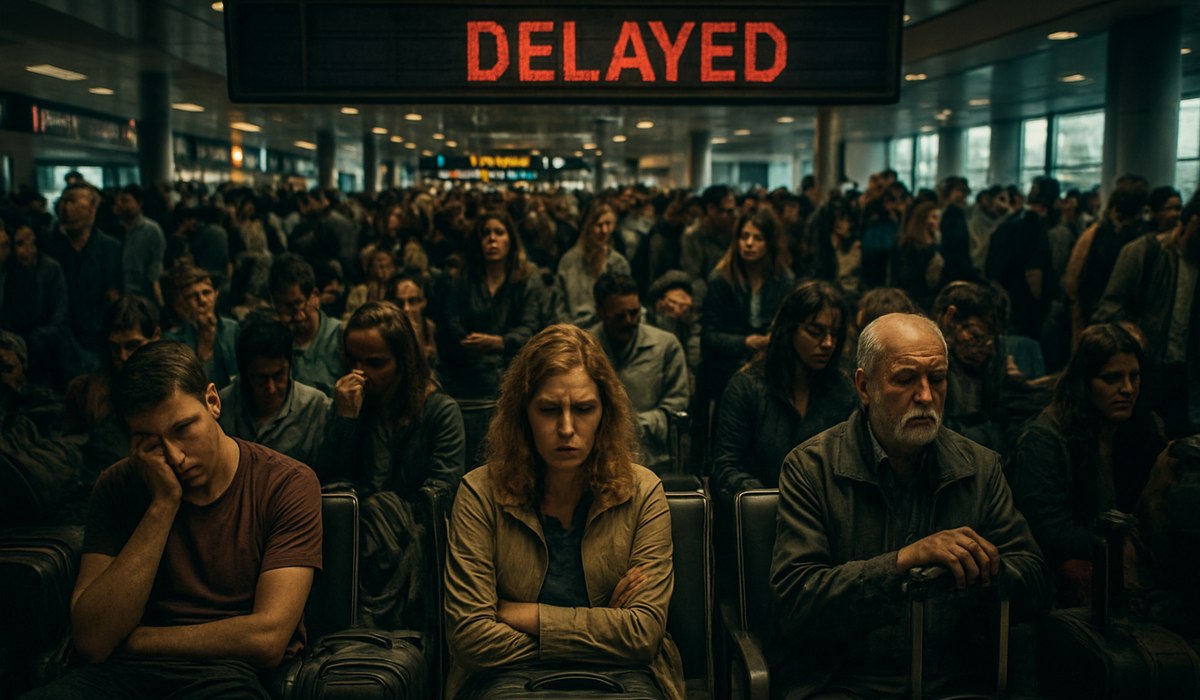
Image generated by AI
Flight Chaos Strands Hundreds: Europe Faces Major Aviation Disruption
Over 1,100 flights experienced delays and more than 80 were cancelled across Europe's busiest airports this week, creating widespread disruption for travellers. The flight chaos strands passengers at major hubs in Germany, Portugal, and France, with knock-on effects rippling through interconnected networks across the continent. Affected carriers include easyJet, Ryanair, British Airways, and numerous regional operators, all contending with a perfect storm of operational constraints that undermined schedules from early morning through evening peak hours.
Scale of Disruption: Germany, Portugal and France Hit Hardest
Aviation data aggregators and regional reports confirm approximately 1,110 flight delays and 81 cancellations concentrated on routes touching Western and Central Europe's primary gateways. Hamburg Airport emerged as one of the most heavily affected hubs, experiencing cascading delays on both domestic and intra-European services. The bottleneck created by misaligned capacity and available slots propagated through the tightly coupled European air network within hours.
Lisbon Airport bore equally severe strain, serving as a critical connector between Northern Europe and long-haul destinations in Africa and South America. Aircraft arriving late from Germany and France frequently missed their connecting banks, stranding passengers and forcing overnight rerouting. Secondary French airports also registered significant disruptions, with Paris and other regional nodes struggling under increased holding and tactical rerouting demands.
The geographic concentration of delays across these three nations highlighted how European aviation operates as an integrated system. When Hamburg slips, Lisbon suffers. When French airspace experiences constraints, German feeder routes compound the problem. This interconnection meant that flight chaos strands not just local passengers but affects travellers with connections spanning multiple countries.
Root Causes: Staffing, Weather and Air Traffic Management Constraints
Multiple operational factors converged to create this week's disruption. Staffing shortages at regional ground handlers and air traffic control facilities reduced system capacity precisely when demand peaked. Residual effects from industrial action at smaller operators further thinned available personnel.
Adverse weather in Atlantic approaches affected inbound services destined for Portugal, while localized weather patterns over France created airspace restrictions. These conditions forced airlines to thin schedules and re-time departures, creating compressed arrival sequences that overwhelmed ground infrastructure.
Air traffic management constraints in French and German airspace limited how many aircraft could be aloft simultaneously. When combined with weather-related holding, this created a cascading effect: aircraft unable to depart on schedule, crews missing their next rotations, and downstream services failing to launch on time. Airlines lacked sufficient buffer capacity to absorb even modest delays without triggering network-wide disruption.
Ground infrastructure near Hamburg and Lisbon quickly reached saturation. Hotel availability evaporated as stranded passengers sought overnight accommodation. Baggage handling systems experienced backlogs. Security and check-in queues extended for hours.
Cascading Effects: How Regional Delays Ripple Through European Networks
The flight chaos strands passengers far beyond initial disruption points. When a morning departure from Hamburg ran late, the inbound aircraft arrived tardy at its next destination. Crews that were scheduled for a return flight within the legal duty limit suddenly faced violations, forcing airlines to position spare crews or cancel onward flights.
Feeder routes supporting long-haul connections suffered particularly acute disruptions. A delayed short-haul rotation into Paris meant missed connecting banks for passengers booked on evening trans-Atlantic flights. Some travellers were rebooked onto flights departing two or three days later.
Low-cost carriers with minimal aircraft reserves proved especially vulnerable. easyJet and Ryanair operate dense networks with tight turnaround times. A single delayed aircraft can cascade through six or seven flights in a single day. Their hub-centric models at Hamburg and Lisbon amplified the problem: when central hubs experience disruption, dozens of services unravel simultaneously.
Network carriers like British Airways also faced operational strain, though their larger fleets and more distributed route networks provided marginally more resilience. However, connections to long-haul flights—where passenger impact is most severe—meant that even small short-haul delays created meaningful revenue and service failures.
The duration of disruption exceeded one day. As aircraft remained out of position and crew scheduling slipped further out of alignment, multiple subsequent waves of departures faced cancellations or delays, keeping some passengers stranded for 36+ hours.
Airline Impact: easyJet, Ryanair and British Airways Among Affected Carriers
easyJet reported significant cancellations among its dense Hamburg and Lisbon networks. The carrier's reliance on rapid turnarounds meant that minor delays compounded into service failures. Passengers booked on connecting flights through these hubs faced cascading cancellations.
Ryanair, Europe's largest low-cost carrier by volume, also experienced substantial disruption on routes through affected gateways. The airline's high-frequency schedules with minimal spare capacity meant limited flexibility to absorb delays.
British Airways managed the disruption more effectively through its larger fleet and ability to consolidate services, but passengers on feeder routes into London still experienced extended delays. Long-haul connecting passengers faced particular hardship, with some rebooked on alternative routes via other European hubs, adding 10-20 hours to journey times.
TAP Air Portugal, Air France, Lufthansa and regional operators across Germany and France also appeared prominently in delay statistics. Smaller carriers operating with tight schedules proved most vulnerable to any capacity disruption.
Across all affected airlines, the primary issue was external: insufficient airspace capacity, weather constraints and staffing limitations left no room for operational flexibility. Even carriers with historically strong on-time performance could not overcome systemic network constraints.
Live Tracking and Real-Time Information Resources
Passengers seeking up-to-date delay and cancellation information should consult FlightAware, which provides real-time flight tracking and historical delay data. The platform allows passengers to monitor specific flights and receive notifications of status changes.
The U.S. FAA and U.S. Department of Transportation offer regulatory resources and passenger rights frameworks that often apply to U.S. carriers even when disruptions occur in European airspace.
Individual European airports maintain their own status pages with delay information. Checking airport websites directly (e.g., Hamburg Airport, Lisbon Airport, Paris CDG) provides the most current local conditions.
Traveler Action Checklist
If your flight was affected by this disruption, take these steps:
-
Check your airline's website and official app first for rebooking options, delay status and compensation details.
-
Photograph all itinerary documentation, boarding passes and cancellation notices to support future claims.
-
Request written confirmation from your airline stating the reason for cancellation or delay (weather, technical, staffing, etc.), as this affects compensation eligibility.
-
Document all expenses related to the disruption: meals, accommodation, ground transport, and phone calls.
-
If delayed beyond 3 hours on EU flights, file for compensation under EU261 regulations (up to €600 per passenger, depending on flight distance).
-
Contact your travel insurance provider immediately if you have coverage; some policies reimburse expenses related to airline disruptions.
-
Monitor your airline's website for rescheduled flights; rebooking windows sometimes close within 24-48 hours.
-
Request alternative routing if available; sometimes positioning on a competitor's flight returns you to your destination faster.
-
Keep all receipts for out-of-pocket expenses incurred during the disruption.
-
**Follow up with your airline in writing
Disclaimer
This article is for informational and educational purposes only. It does not constitute legal, financial, or professional advice. While we strive to provide accurate and up-to-date information, travel policies, regulations, and conditions change rapidly. Always verify information with official sources before making travel decisions. Nomad Lawyer makes no representations about the accuracy, reliability, completeness, or suitability of the information provided. Readers should consult qualified professionals for advice specific to their circumstances. The views expressed in this article are those of the author and do not necessarily reflect the views of Nomad Lawyer.
Kunal K Choudhary
Co-Founder & Contributor
A passionate traveller and tech enthusiast. Kunal contributes to the vision and growth of Nomad Lawyer, bringing fresh perspectives and driving the community forward.
Learn more about our team →