
Flight Chaos Leaves Thousands Stranded Across Five US State Hubs
Flight chaos leaves thousands stranded as major airport hubs in Georgia, Illinois, California, Massachusetts, and New York experience cascading disruptions in April 2026, affecting over 675 services and 56 cancellations systemwide.

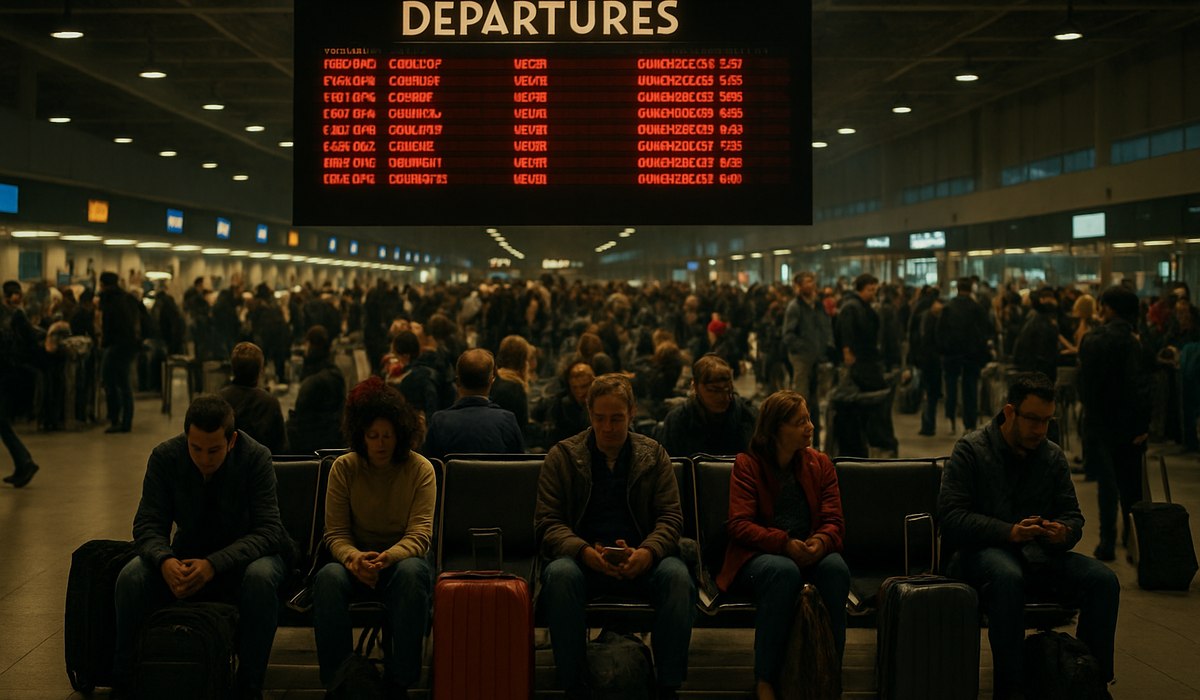
Image generated by AI
Breaking: Flight Chaos Leaves Thousands Stranded Across Five Major US Hubs
Flight chaos leaves thousands of passengers scrambling across America's busiest airports this Monday. Major operational disruptions centered on Hartsfield-Jackson Atlanta International, Chicago O'Hare, Los Angeles International, San Francisco International, Boston Logan, and New York area airports have triggered 56 flight cancellations and impacted approximately 675 services. Delta Air Lines, American Airlines, SkyWest, and Air Canada face the brunt of these cascading delays, creating a domino effect that extends far beyond the initial five-state network affected by the disruption.
Five-State Network Disruption: Which Airports Are Most Affected
The operational strain concentrates heaviest in Georgia, Illinois, California, Massachusetts, and New York—five states that form the backbone of US domestic and cross-border aviation. Atlanta's Hartsfield-Jackson hub, already handling record passenger volumes, struggles under the combined weight of weather constraints and crew scheduling conflicts. Chicago O'Hare's dense departure schedule leaves minimal buffer capacity when irregularities emerge.
West Coast operations at LAX and San Francisco creak under similar pressure, while Boston Logan and New York's tri-airport complex (JFK, LaGuardia, Newark) face acute runway and gate capacity limitations. When irregular operations build at these critical junctures, small schedule shocks cascade into multi-hour delays within minutes. Aircraft and crews end up out of position, triggering late-day cancellations as airlines attempt schedule resets. Secondary and regional airports throughout each state experience knock-on disruption as diverted equipment creates secondary bottlenecks.
For real-time tracking of affected routes, check FlightAware for live updates on your specific flights.
Cascading Delays: How Domestic Feeder Routes Trigger Long-Haul Cancellations
A substantial portion of today's disrupted flights operate as domestic feeder services—short and medium-haul routes designed to connect passengers onto long-haul trunk services. When these regional feeders experience delays or cancellations, passengers miss critical connections. This network effect multiplies the original disruption exponentially across the system.
Airlines typically prioritize keeping premium long-haul and high-demand routes operational, sometimes sacrificing regional and off-peak services. Passengers on smaller city-pair routes face disproportionate exposure to last-minute cancellations or significant schedule changes. SkyWest, operating under multiple major carrier brands, features prominently in today's delay statistics—a reality that highlights how regional operators become pressure points when mainline carriers seek to stabilize schedules.
Air Canada experiences knock-on disruption on cross-border services into Boston, New York, and California gateways. When US hubs experience operational strain, transborder sectors suffer delayed inbound aircraft, air traffic flow restrictions, and crew time limit complications.
Capacity Crunch at Atlanta and New York: Why These Hubs Are Bottlenecks
Atlanta and New York area airports face particular pressure today due to their role as network linchpins and their thin capacity margins. Hartsfield-Jackson Atlanta processes more passengers annually than any other US airport, yet its runway configuration and gate infrastructure leave little slack when operations strain.
The New York area complex—JFK, LaGuardia, and Newark—operates near perpetual saturation. High traffic density combines with limited expansion capacity, meaning that small disruptions trigger rapid cascade effects. When aircraft and crews fall out of sequence, recovery takes substantially longer than at less congested hubs.
These capacity constraints reflect decades of aviation growth outpacing infrastructure development. Unlike European hubs that invested heavily in expansion, major US airports operate closer to maximum practical capacity. The Federal Aviation Administration acknowledges these limitations through FAA operational guidance.
Understanding Root Causes: Weather, Staffing, and Network Sensitivity
Today's disruption stems from multiple compounding factors rather than a single systemwide outage. Weather systems affecting several hubs triggered ground stops, reduced arrival and departure rates, and temporary runway constraints. Airlines trimmed schedules and held flights on the ground preemptively. Even after conditions improve, knock-on effects persist for many hours as aircraft and crews work back into planned rotations.
The broader US aviation system exhibits high sensitivity to such operational shocks. Strong demand combined with historically lean staffing across airlines, air traffic control, and ground handling reduces overall system resilience. When two or three major hubs experience simultaneous pressure, ripple effects spread throughout the connected network.
Recent traffic patterns and residual congestion from earlier periods compound today's challenges. The system operates with minimal buffer capacity by design—a cost-efficiency approach that prioritizes profitability over redundancy.
Airline Response and Passenger Rebooking as Disruptions Spread
Delta Air Lines and American Airlines have initiated aggressive rebooking efforts, though extensive queues form at ticketing counters and telephone lines. Both carriers waive change fees for affected passengers and offer alternative routing options when available. SkyWest, as a regional operator, coordinates rebooking through its major carrier partners.
Air Canada's customer service teams manage cross-border complications, coordinating with US airport authorities on crew rest requirements and equipment positioning. Industry analysts note that major carriers typically employ a tiered response: first protecting high-value long-haul services, then stabilizing regional trunk routes, with smallest city-pairs receiving cancellation priority.
Real-time rebooking availability varies dramatically by destination demand. Passengers on competitive routes find abundant alternatives; those flying smaller markets may face multi-day delays or significant circuitous routing. Airlines increasingly utilize standby lists and oversold flights to maximize seat utilization during recovery operations.
The US Department of Transportation's airline consumer protection rules mandate minimum compensation and service standards, though passenger rights vary based on flight cancellation vs. delay classifications.
| Metric | Data Point |
|---|---|
| Total Flights Affected | 675+ services |
| Outright Cancellations | 56+ flights |
| Primary Airlines Impacted | Delta, American, SkyWest, Air Canada |
| Affected States | Georgia, Illinois, California, Massachusetts, New York |
| Worst-Hit Hub | Hartsfield-Jackson Atlanta International |
| Key Secondary Hub | Chicago O'Hare International |
| Root Cause Categories | Weather, crew scheduling, capacity constraints |
| System Recovery Timeframe | 24-48 hours typical |
| Passengers Stranded | Thousands across network |
What This Means for Travelers: Actionable Response Steps
Immediate action maximizes your chances of reaching your destination with minimal disruption:
-
Check flight status immediately on FlightAware or your airline's app before heading to the airport—avoid unnecessary travel to terminals if your flight's canceled.
-
Contact your airline directly via phone or mobile app rather than waiting in terminal queues; customer service representatives access rebooking inventory faster than counter agents.
-
Document everything including booking confirmations, cancellation notices, and rebooking offers; these records support compensation claims under DOT regulations.
-
Understand your rights under US Department of Transportation guidelines—carriers must rebook you on competing airlines' flights at no additional charge if they can't accommodate you within reasonable timeframes.
-
Explore ground transportation alternatives if your destination lies within driving distance; rental cars or trains may reach your goal faster than rebooking through congested airline systems.
-
Request meal and hotel vouchers if you're stranded overnight—DOT requires carriers to provide these accommodations when cancellations strand passengers.
-
File complaints with the DOT if airlines refuse compensation or accommodations you're legally entitled to receive.
Traveler Action Checklist
- Verify your flight
Kunal K Choudhary
Co-Founder & Contributor
A passionate traveller and tech enthusiast. Kunal contributes to the vision and growth of Nomad Lawyer, bringing fresh perspectives and driving the community forward.
Learn more about our team →