
Spirit Airlines' Final Las Vegas Flight Ends with Symbolic Wing Wave as Budget Carrier Exits Nevada Market
Breaking airline news and aviation industry updates for 2026.

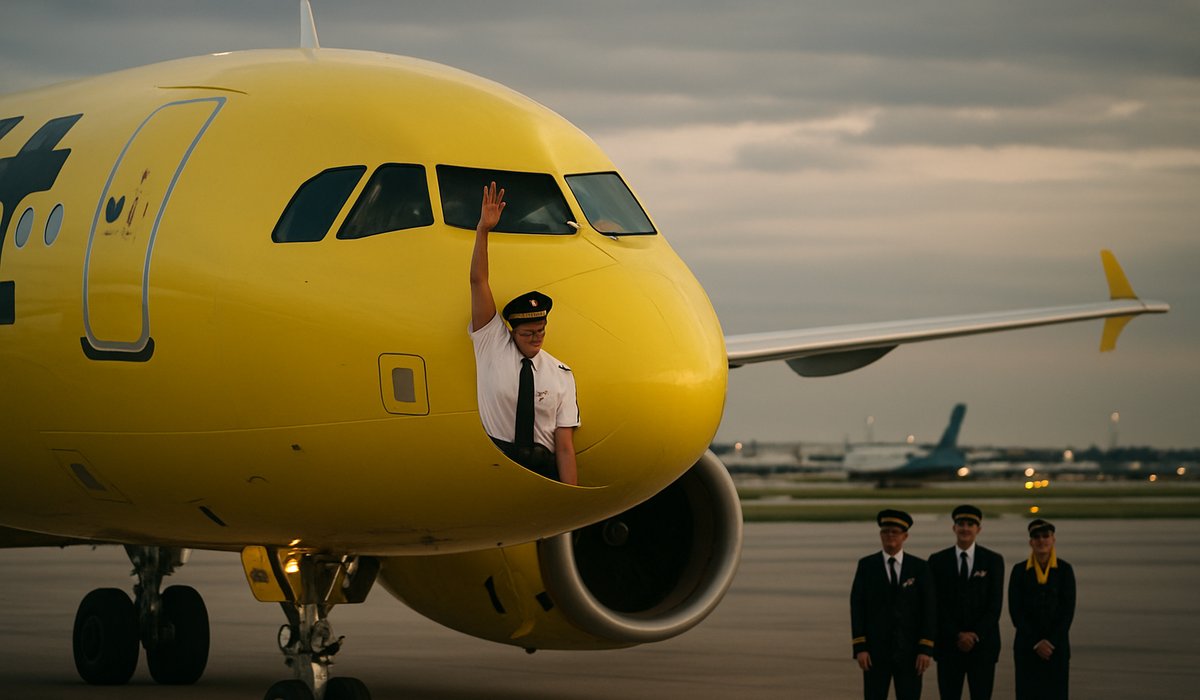
Image generated by AI
Spirit Airlines' Final Las Vegas Flight Ends with Symbolic Wing Wave as Budget Carrier Exits Nevada Market
The low-cost carrier's departure marks another chapter in aviation industry consolidation amid sustained financial pressures
Closure of Major Ultra-Low-Cost Carrier Operations
Spirit Airlines has ceased all operations at Harry Reid International Airport in Las Vegas, with the carrier's last aircraft departing Friday, May 29, in what aviation observers are marking as a symbolic end to the airline's presence in the competitive Nevada market. As the final jet lifted off the runway, the aircraft's pilot executed a farewell wing wave—a traditional aviation gesture—before the plane climbed toward its ultimate destination: long-term storage at Pinal Airpark near Marana, Arizona.
The departure underscores the mounting challenges facing ultra-low-cost carriers (ULCCs) in an industry grappling with volatile jet fuel prices, inflationary pressures, and shifting consumer travel patterns following years of pandemic disruption.
Industry Context: The Squeeze on Budget Airlines
Spirit's withdrawal from Las Vegas reflects broader turbulence within the ULCC sector. Airlines operating on razor-thin margins have struggled to maintain profitability as operational costs surge. Rising jet fuel prices—historically linked to geopolitical tensions and crude oil volatility—have compressed margins that depend on volume-based revenue models heavily reliant on ancillary fees for baggage charges, seat selections, and carry-on allowances.
The carrier's exit from one of America's busiest tourism hubs represents a significant retreat for a business model that once promised to democratize air travel through aggressive price competition and minimal frills.
A Changing Competitive Landscape
Las Vegas, welcoming over 40 million annual visitors pre-pandemic, represents a lucrative market. Spirit's departure creates room for larger network carriers and regional competitors to consolidate market share, potentially offering travelers fewer discount alternatives on this key corridor.
The airline industry has witnessed accelerated consolidation in recent years, with weaker carriers exiting markets or merging with stronger competitors. Fuel surcharges, ancillary revenue dependencies, and capital constraints have proven particularly punishing for carriers without diversified route networks or substantial financial reserves.
What Comes Next
The aircraft's relocation to Pinal Airpark—a sprawling facility frequently used for aircraft retirement and storage—signals that Spirit's Las Vegas-based fleet will not return to service on this route in the foreseeable future. Industry analysts suggest the carrier's operational footprint will likely contract further as market conditions remain challenging.
FAQ: Spirit Airlines and Budget Aviation Market Trends
Q: Why are budget airlines facing financial difficulties? A: Ultra-low-cost carriers operate on extremely thin profit margins dependent on high passenger volume. Rising jet fuel prices, labor cost inflation, and increased regulatory compliance expenses have severely compressed revenues, particularly when ancillary fees (baggage charges, seat selection) face consumer resistance.
Q: How do airline fees impact total travel costs? A: Baggage charges, carry-on fees, and seat selection can add $100-300+ to round-trip fares on budget carriers, often exceeding the base ticket price and narrowing the value proposition compared to legacy carriers offering bundled amenities.
Q: What happens to aircraft in long-term storage? A: Aircraft stored at facilities like Pinal Airpark are preserved through climate-controlled environments and regular maintenance. They may eventually return to service, be sold to other operators, or ultimately scrapped for parts.
Q: Is Las Vegas losing air service due to Spirit's departure? A: No. Harry Reid International Airport continues hosting numerous carriers. However, consumers lose a discount alternative, potentially reducing competition and upward pressure on fares.
Q: How does fuel price volatility affect airline pricing? A: Jet fuel represents 20-35% of airline operating costs. Price spikes force carriers to implement fuel surcharges or adjust base fares upward, directly impacting consumer ticket prices across the industry.
Related Travel Guides
Disclaimer
This article is for informational and educational purposes only. It does not constitute legal, financial, or professional advice. While we strive to provide accurate and up-to-date information, travel policies, regulations, and conditions change rapidly. Always verify information with official sources before making travel decisions. Nomad Lawyer makes no representations about the accuracy, reliability, completeness, or suitability of the information provided. Readers should consult qualified professionals for advice specific to their circumstances. The views expressed in this article are those of the author and do not necessarily reflect the views of Nomad Lawyer.
Raushan Kumar
Founder & Lead Developer
Full-stack developer with 11+ years of experience and a passionate traveller. Raushan built Nomad Lawyer from the ground up with a vision to create the best travel and law experience on the web.
Learn more about our team →