
FAA Supersonic Noise Standards Airspace Routing Delays
The FAA proposes noise certification standards for commercial supersonic flights, warning of airspace rerouting and scheduling bottlenecks by 2027.

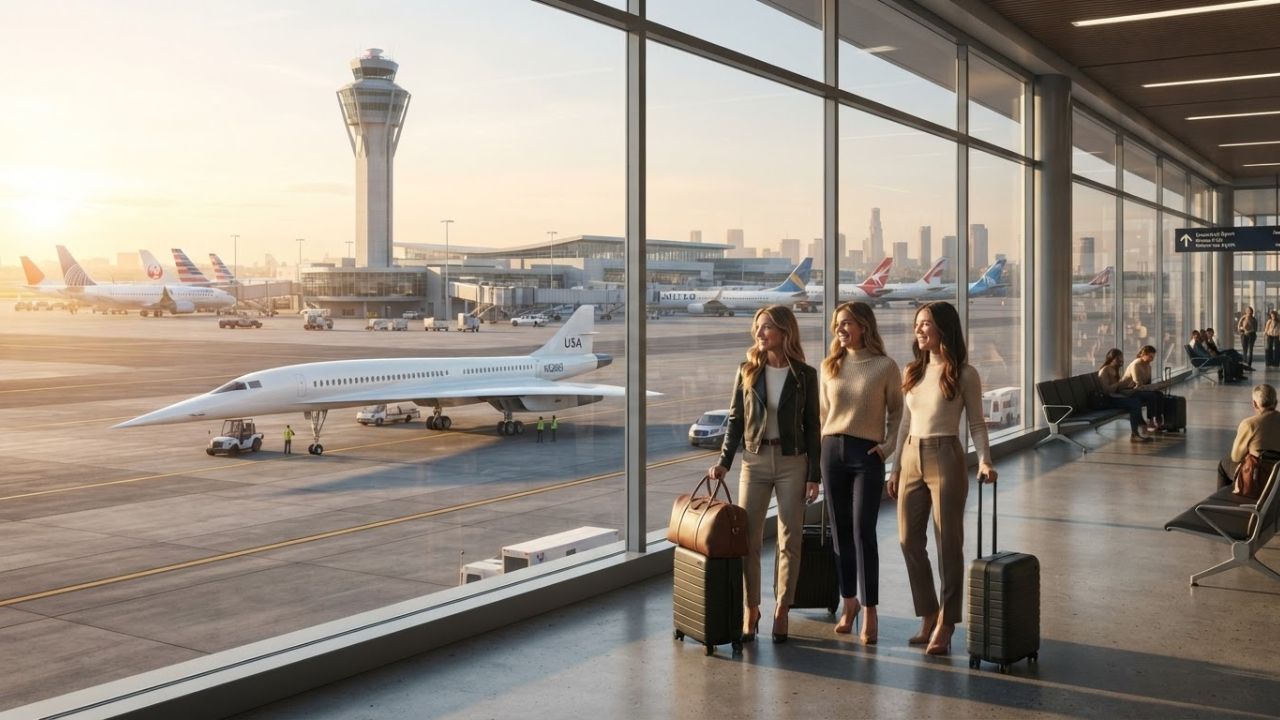
Image generated by AI
FAA Proposes New Noise Certification Standards for Civil Supersonic Airplanes Alerting Airspace Planners to Potential Flight Path Rerouting in 2026
The Federal Aviation Administration has proposed new noise-based certification standards for civil supersonic airplanes, laying the groundwork to lift the decades-old ban on overland supersonic flights. However, air traffic control operators warn that integrating test corridors for next-generation Mach 1+ aircraft will disrupt existing high-altitude commercial flight paths.
The Disruption Details
The Federal Aviation Administration (FAA) has proposed new noise-based certification standards for civil supersonic airplanes, transitioning regulatory focus from absolute speed limits to ground-level acoustics. By utilizing advanced aerodynamic designs and "Mach cutoff" techniques, manufacturers seek to refract sound waves back into the upper atmosphere, neutralizing sonic booms.
However, air traffic control (ATC) networks must coordinate separate high-altitude corridors to safely integrate these high-speed flights. Operating aircraft at Mach 1.7 alongside standard commercial jets cruising at Mach 0.8 will require specialized airspace sectors, forcing conventional domestic routes to adjust their flight paths around designated test areas.
Flight & Airport Impact Breakdown
- High-Altitude Corridors: Routes above Flight Level 450 (45,000 feet) will be partitioned for supersonic transit, pushing conventional corporate jets into lower, more congested air traffic sectors.
- East Coast Transit Paths: Transatlantic flight paths approaching New York (JFK) and Boston (BOS) will experience rerouting delays as ATC coordinates the transition of supersonic aircraft from ocean tracks to coastal descent lanes.
- Overland Test Sectors: Airspace blocks over the western United States—specifically near Edwards Air Force Base and the Mountain West corridor—will see periodic flight restrictions during low-boom test windows.
- Airport Noise Management: Major gateways will modify departure patterns to comply with forthcoming FAA take-off and landing noise guidelines, potentially increasing terminal-area holding delays.
Supersonic Flight Parameters and Airspace Impact
| Regional Hub / Contributor | Technology Focus Area | Expected Airspace / Operational Role |
|---|---|---|
| United States (FAA / NASA) | X-59 Low-Boom & Mach Cutoff | Regulatory noise frameworks; western US test sectors |
| Japan (JAXA) | Low-boom design configurations | Aerodynamic testing; Pacific corridor integration |
| United Kingdom (Rolls-Royce) | Next-gen propulsion systems | Engine emissions testing; slot allocations at major bases |
| France & Germany (Airbus) | High-speed transport concepts | Transatlantic routing models; European terminal holds |
| China / India / Australia | Hypersonic & civilian jet concepts | Regional routing studies; high-speed corridor allocations |
Passenger Rights & Advisory (Information Gain)
If airspace rerouting or test-flight closures cause significant delays or cancellations to your scheduled flight, you are protected under the U.S. Department of Transportation (DOT) consumer protection mandates. Under these guidelines, if an airline cancels a flight or delays a domestic departure by more than three hours (and international by more than six hours), you are entitled to a full cash refund to your original payment method.
In cases where you accept rebooking, airlines are obligated to seat you on the next available flight. If the delay extends overnight due to airline operational changes within their control, major US carriers have committed to providing complimentary hotel vouchers, ground transportation, and meal vouchers.
For flights departing from European airports, passengers remain protected under Regulation (EC) No 261/2004, which provides compensation ranging from EUR 250 to EUR 600 for delays exceeding three hours, unless the delay was caused by extraordinary air traffic control safety decisions.
Industry Analyst View
Our analysis indicates that while the commercial return of supersonic flight is technically feasible, the immediate challenge lies in airspace integration. Mixing Mach 1.7 aircraft like the Boom Overture with conventional Mach 0.8 airliners in the same terminal radar approach control (TRACON) zones will require advanced, automated ATC scheduling systems.
Airline planners must build extra block-time buffers into transoceanic routes as early test flights begin, preparing for potential queue priorities given to high-speed aircraft.
FAQ: Supersonic Flight Integration
When will commercial supersonic flights resume?
The FAA expects to complete regulations by 2027, with manufacturers targeting commercial test flights and certification towards the end of the decade.
What is the main safety difference between modern supersonic jets and Concorde?
Modern aircraft utilize lightweight composites, low-boom shaping, and Mach cutoff technology to eliminate or significantly reduce the ground-level sonic boom.
How will this impact current flight schedules?
Conventional flights may see minor route adjustments or holding patterns as air traffic controllers designate specific high-altitude corridors for supersonic testing.
Related Travel Guides
Disclaimer
This article is for informational and educational purposes only. It does not constitute legal, financial, or professional advice. While we strive to provide accurate and up-to-date information, travel policies, regulations, and conditions change rapidly. Always verify information with official sources before making travel decisions. Nomad Lawyer makes no representations about the accuracy, reliability, completeness, or suitability of the information provided. Readers should consult qualified professionals for advice specific to their circumstances. The views expressed in this article are those of the author and do not necessarily reflect the views of Nomad Lawyer.
Kunal K Choudhary
Co-Founder & Contributor
A passionate traveller and tech enthusiast. Kunal contributes to the vision and growth of Nomad Lawyer, bringing fresh perspectives and driving the community forward.
Learn more about our team →