
FAA Investigates Delta Flight 1076 After Reported Firework Impact Near Chicago Midway Airport in 2026
The FAA is investigating a potential firework strike involving Delta Flight 1076 during its final approach to Chicago Midway International Airport during Independence Day celebrations.

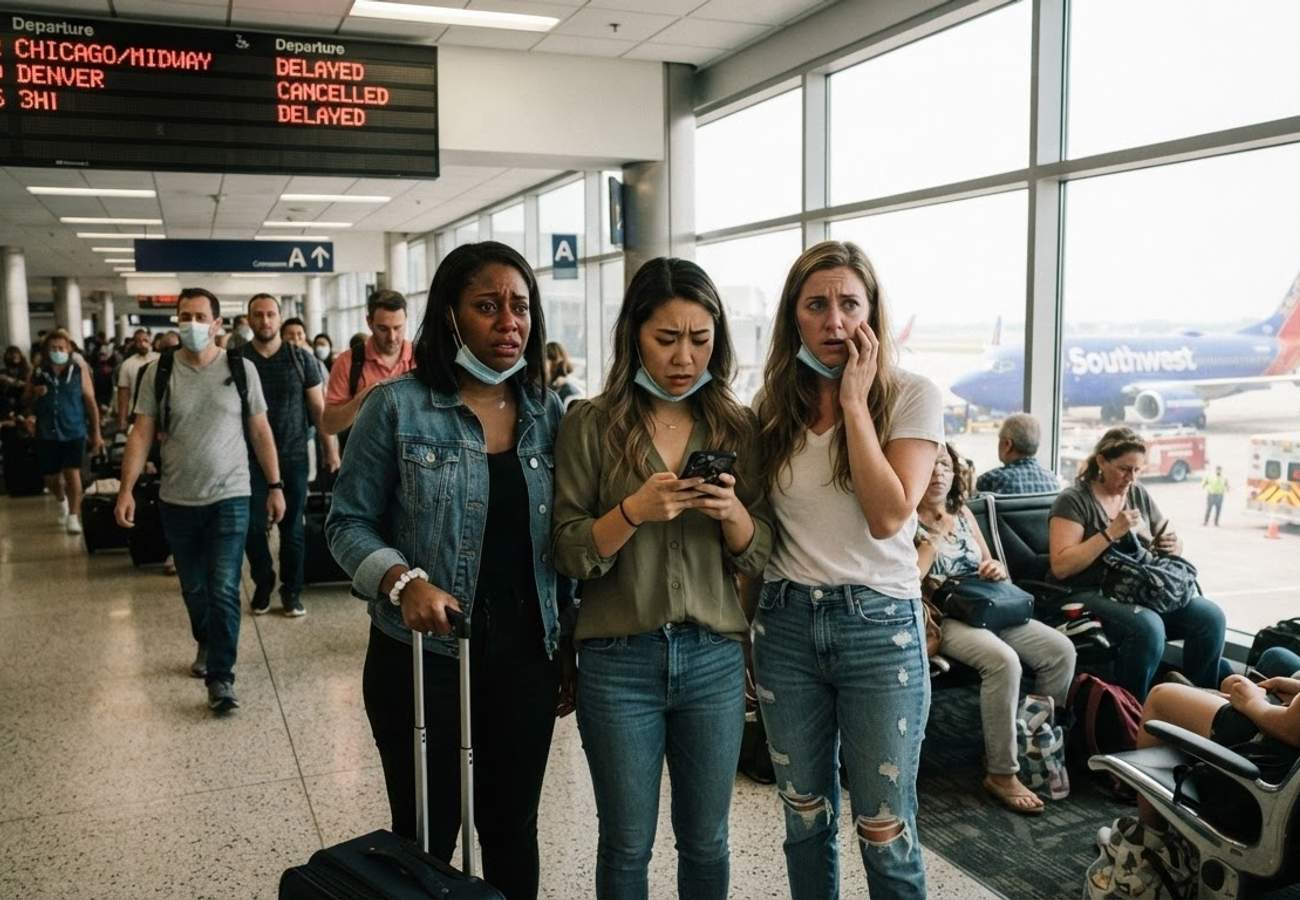
Image generated by AI
[Chicago, July 6, 2026] — Federal aviation authorities have launched a formal inquiry after Delta Flight 1076 experienced a suspected external impact, believed to be a firework, while descending toward Chicago Midway International Airport. The incident occurred during the height of Independence Day celebrations, with no injuries reported among the passengers or crew.
The event took place as the aircraft entered its final approach phase, a critical period of flight where altitude is low and precision is paramount. According to air traffic communication logs, the flight crew alerted controllers to a sudden, loud noise resembling an impact. Despite the unexpected auditory event, the pilots maintained a stable glide slope and successfully landed the aircraft at its designated gate.
Delta Flight 1076 Maintains Stability During Approach to Midway
The incident occurred as the aircraft navigated the densely populated residential areas surrounding Chicago Midway International Airport. Reports indicate that multiple unauthorized fireworks displays were active across the city, coinciding with the aircraft's descent.
Cockpit recordings and radio transmissions reveal that the crew reported a distinct "bang" at a low altitude. Rather than declaring an emergency or diverting to another airfield, the crew executed standard landing procedures. Upon arrival at the gate, maintenance teams immediately initiated a post-landing inspection to check for structural anomalies.
Operational Sequence of the Incident
| Phase of Flight | Event/Action | Outcome |
|---|---|---|
| Final Approach | Reported loud impact-like noise | Aircraft remained on flight path |
| Descent | Stability maintained | No diversion required |
| Landing | Standard touchdown | Safe arrival at gate |
| Post-Flight | Maintenance inspection | No critical structural damage found |
| Current Status | FAA Review | Aircraft cleared for continued service |
Initial ground assessments suggest that the aircraft did not suffer critical structural failure. However, engineers are conducting a more granular technical evaluation to determine if debris physically punctured the fuselage or if the sound was the result of a nearby atmospheric explosion.
Urban Airspace Risks and Fireworks Hazards in Chicago
The timing of this event underscores a recurring safety conflict between urban celebrations and aviation corridors. Aviation safety observers note that fireworks launched in residential zones can easily reach altitudes that intersect with the approach and departure paths of commercial liners.
Chicago's aviation landscape is particularly complex, with both Midway and O'Hare airports situated within high-density urban environments. This proximity increases the likelihood of "near-miss" encounters with consumer-grade pyrotechnics.
Industry experts have identified several specific risks associated with holiday fireworks:
- Altitude Intersection: High-flying pyrotechnics can enter the protected airspace of airport approach corridors.
- Pilot Distraction: Bright flashes and sudden noise can cause visual or auditory confusion during the high-workload landing phase.
- Physical Damage: Even small debris can cause surface abrasions or damage to sensitive aircraft sensors.
- Visibility Issues: Smoke and flashes can reduce the clarity of the horizon and runway lights during night operations.
- Monitoring Gaps: Air traffic control cannot track individual fireworks, making it impossible to warn pilots in real time.
FAA Investigation Focuses on Flight Data and Radar
The Federal Aviation Administration (FAA) has confirmed it is reviewing the event as part of a broader safety assessment of airspace activity during the July 4th holiday. The primary objective is to differentiate between a direct physical strike and a sonic event caused by a nearby burst.
Investigators are currently analyzing the Cockpit Voice Recorder (CVR) and the Flight Data Recorder (FDR) to pinpoint the exact second the noise occurred and whether the aircraft experienced any sudden aerodynamic fluctuations.
The FAA's investigative framework includes:
- Trajectory Analysis: Reviewing radar data to see if any anomalies occurred in the aircraft's descent path.
- Local Coordination: Working with Chicago law enforcement to map reported fireworks activity in the vicinity of the approach path.
- Surface Inspection: A forensic review of the aircraft's exterior to find evidence of chemical residue or impact marks.
- ATC Review: Analyzing the timing of communications between the Delta crew and Midway tower.
While the aircraft has been cleared to return to service, the FAA continues to monitor the data to determine if new safety mandates are required for urban airports during national holidays.
Passenger Safety and Operational Response
Throughout the descent and landing, the safety of those on board remained the priority. Reports indicate that passengers were not notified of the potential impact until after the aircraft had taxied to the gate, a decision likely made to prevent panic during a critical phase of flight.
The lack of an emergency diversion suggests that the flight crew felt the aircraft's structural integrity was not compromised. Standard operating procedures dictate that as long as the aircraft is controllable and flight systems are operational, a controlled landing is the safest course of action.
No cabin evacuations were necessary, and the aircraft taxied normally. This outcome highlights the resilience of modern airframes, which are designed to withstand minor external impacts without catastrophic failure.
Why This Matters: The Conflict of Urban Aviation and Public Celebration
This incident is more than a localized anomaly; it represents a systemic challenge for the aviation industry as urban sprawl continues to envelop major airport hubs. The "Information Gain" here lies in the realization that current "no-firework zones" are often suggestions rather than strictly enforced boundaries.
When a commercial jet—carrying hundreds of passengers—is potentially struck by a consumer product, it exposes a gap in airspace security. Unlike drones, which can be detected by specialized sensors, fireworks are "blind" projectiles. If the FAA determines that Delta Flight 1076 was indeed struck, it may trigger a push for stricter local ordinances and potentially the use of acoustic monitoring systems to detect illegal pyrotechnics near approach paths.
Furthermore, this event emphasizes the necessity of pilot training for "unexpected auditory events." The crew's ability to remain calm and execute a standard landing despite a loud impact noise prevented a potential secondary emergency, such as a hard landing or a runway excursion caused by pilot distraction.
The FAA's final report will likely serve as a catalyst for updated safety protocols regarding holiday airspace management in major U.S. cities.
Related Travel Guides
Disclaimer
This article is for informational and educational purposes only. It does not constitute legal, financial, or professional advice. While we strive to provide accurate and up-to-date information, travel policies, regulations, and conditions change rapidly. Always verify information with official sources before making travel decisions. Nomad Lawyer makes no representations about the accuracy, reliability, completeness, or suitability of the information provided. Readers should consult qualified professionals for advice specific to their circumstances. The views expressed in this article are those of the author and do not necessarily reflect the views of Nomad Lawyer.
Kunal K Choudhary
Co-Founder & Contributor
A passionate traveller and tech enthusiast. Kunal contributes to the vision and growth of Nomad Lawyer, bringing fresh perspectives and driving the community forward.
Learn more about our team →