
EVA Airways Hikes International Baggage Fees: New Taiwan Route Charges from September 29

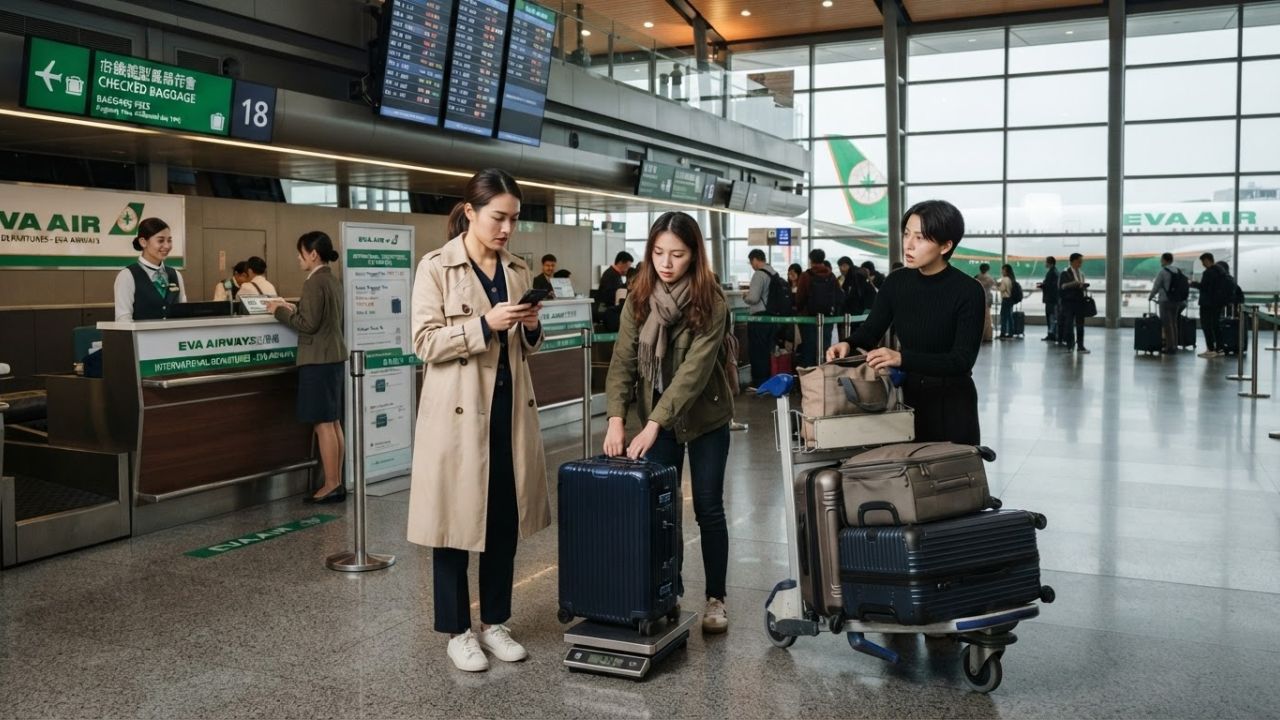
Passengers flying internationally with Taiwan-based carrier EVA Airways face steep luggage price adjustments starting September 29, 2026, as additional checked bags jump up to $390 per piece alongside fee increases across all global route zones. The revised structure applies to excess baggage, overweight pieces, oversized equipment, sports gear, and pet transit across four global pricing zones.
The adjustment reflects rising operational and aviation fuel expenditures, joining a broader movement among international network carriers to recalibrate ancillary fee structures. For passengers traveling on tickets dated on or after September 29, 2026, luggage planning requires early calculation to prevent unexpected charges at airport check-in counters across Asia, North America, Europe, Oceania, and the Middle East.
Breakdown of the Fee Increases: Taiwan Routes and Excess Charges
Under the revised pricing framework, excess baggage costs increase between $20 and $90 per piece depending on origin and destination. The most pronounced impact hits passengers flying to and from Taiwan, where base additional checked baggage fees are rising sharply:
- Revised Extra Bag Charge: $160 to $390 per piece.
- Previous Rate: $140 to $300 per piece.
- Marginal Fee Hike: Up to $90 more per piece on long-distance transpacific and intercontinental sectors.
Beyond extra checked suitcases, the policy overhaul reconfigures fees across multiple cargo and baggage categories:
- Overweight and Oversized Luggage: Heavier penalties for pieces that exceed standard weight thresholds (typically 23 kg or 32 kg depending on cabin class) or exceed total linear dimension parameters.
- Sporting Equipment: Dedicated fees for golf bags, surfboards, bicycle boxes, and diving gear, requiring pre-registration and zone-based handling surcharges.
- International Pet Transportation: Adjusted fees for domestic animals traveling as checked baggage or cargo in climate-controlled holds.
- Prepaid Baggage Discounts: Advance booking incentives via the airline's digital portal prior to departure, offering reduced rates compared to gate and counter fees.
EVA Airways Global Pricing Zones
To administer the updated luggage rate structure, EVA Airways groups its international flight network into four designated geographical pricing zones:
| Pricing Zone | Geographic Coverage |
|---|---|
| Zone 1 | Japan, South Korea, the Philippines, China, Hong Kong, Macau, Thailand, Malaysia, Singapore, Indonesia, Vietnam, and Cambodia |
| Zone 2 | Australia, New Zealand, Micronesian destinations (including Guam and Palau), India, and other Asian regions outside Zone 1 and Taiwan |
| Zone 3 | Transpacific gateways: Los Angeles, Seattle, San Francisco, Vancouver, Hawaii, and Middle Eastern destinations |
| Zone 4 | Remainder of North America, Europe, Turkey, Africa, and Russia |
Because charges compound across trans-zone routes, passengers embarking on multi-segment journeys—such as flying from North America through Taipei Taoyuan International Airport (TPE) to Southeast Asia—must verify whether baggage calculations apply per segment or across the entire journey.
Eco-Conscious Travel: Fuel Efficiency and Light-Payload Benefits
Luggage weight directly influences commercial aircraft fuel consumption. Aviation environmental studies monitored by the Taiwan Civil Aeronautics Administration (CAA) demonstrate that every kilogram trimmed from aircraft payload directly lowers carbon burn per passenger-kilometer:
- Operational Fuel Reductions: Reducing checked baggage by an average of 5 kg across a wide-body Boeing 777-300ER or Boeing 787 Dreamliner fleet produces substantial carbon savings across transpacific corridors.
- Local Sourcing and Micro-Economy Support: Travelers can bypass costly baggage tariffs by buying toiletries, cold-weather apparel, and hiking gear locally upon arrival, directly supporting independent neighborhood vendors and artisan cooperatives in regional hubs like Taipei, Kaohsiung, and Taichung.
- Forwarding Services: On multi-city Asian itineraries, forwarding luggage via domestic rail express or using bonded luggage storage services at transit hubs prevents repetitive airline excess fees.
Local Insider Tips for Flying Through Taiwan with EVA Airways
Navigating Taiwan's primary aviation gateways requires tactical awareness of local infrastructure and airline policies:
- Use Taipei Main Station In-Town Check-in: Travelers departing via Taipei Taoyuan International Airport (TPE) on EVA Airways can take advantage of in-town check-in and automated baggage drop at Taipei Main Station (Airport MRT Line A1). Check-in and bag drop must be completed at least 3 hours prior to flight departure. This allows travelers to drop luggage downtown early and explore historic Dihua Street or the Da'an district unencumbered.
- Prepay Luggage at Least 24 to 48 Hours Early: Secure prepaid baggage allowances via EVA Airways' official mobile app or website prior to flight departure to capture discounted pricing over counter rates.
- Souvenir Weight Distribution: Popular Taiwanese culinary purchases—such as pineapple pastries (fengli su), sun cakes (taiyang bing), and vacuum-sealed Alishan high-mountain oolong tea—add rapid bulk. Pack delicate gift boxes into carry-on personal items (within the standard 7 kg carry-on limit) rather than overloading checked bags beyond the 23 kg threshold.
- Off-Peak Airport Transit Windows: At Taoyuan Terminal 2 (EVA Airways' primary operating base), peak departure crowds cluster between 06:30 and 09:00 for morning Asian regional flights, and between 20:30 and 23:30 for long-haul flights to North America and Europe. Arrive 3.5 hours ahead if checking oversized gear or sporting equipment.
- Songshan Alternative for Regional Routes: For travelers flying to Tokyo Haneda (HND) or Seoul Gimpo (GMP), check if your itinerary operates from downtown Taipei Songshan Airport (TSA), where baggage drops and customs processing are significantly quicker than at Taoyuan.
Future Aviation Outlook: Ancillary Unbundling Across Asian Carriers
EVA Airways' revised policy signals a deeper trend among premier full-service Asian carriers toward ancillary fee unbundling, aligning with long-standing practices across North American and European airlines. As global operating costs remain elevated, carriers are isolating non-essential service components to maintain baseline ticket competitiveness while protecting operational margins.
For travelers, managing baggage weight and leveraging advance digital booking tools will be fundamental to controlling total itinerary costs across international networks heading into 2027 and beyond.
Related Travel Guides
Disclaimer
This article is for informational and educational purposes only. It does not constitute legal, financial, or professional advice. While we strive to provide accurate and up-to-date information, travel policies, regulations, and conditions change rapidly. Always verify information with official sources before making travel decisions. Nomad Lawyer makes no representations about the accuracy, reliability, completeness, or suitability of the information provided. Readers should consult qualified professionals for advice specific to their circumstances. The views expressed in this article are those of the author and do not necessarily reflect the views of Nomad Lawyer.
Raushan Kumar
Founder & Lead Developer
Full-stack developer with 11+ years of experience and a passionate traveller. Raushan built Nomad Lawyer from the ground up with a vision to create the best travel and law experience on the web.
Learn more about our team →