
Paris Gare du Nord Leads Europe's Most Iconic Historic Railway Terminals for 2026 Rail Travelers

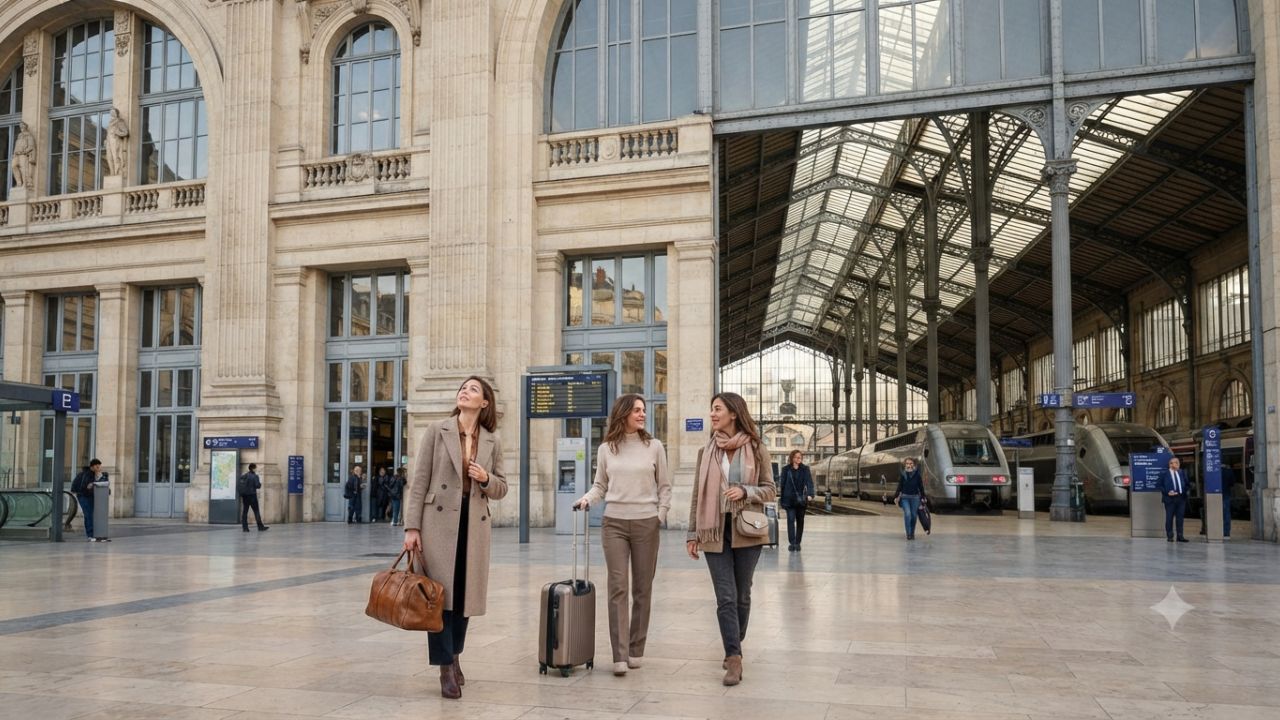
Paris Gare du Nord stands alongside Europe's grandest historic railway stations, combining 19th-century architectural heritage with high-speed international rail networks.
Europe's historic railway stations continue to define cross-border travel, combining 19th-century engineering with high-speed international rail networks. Led by Paris Gare du Nord, ten iconic European rail terminals illustrate how historical architecture, urban engineering, and modern infrastructure work together to carry millions of passengers daily.
Gare du Nord Leads Europe's 19th-Century Grand Terminal Architecture
[PARIS, October 4, 2026] — Designed by architect Jacques-Ignace Hittorff and completed in 1864, Paris Gare du Nord remains Europe's busiest railway terminus. Replacing an earlier 1846 station that proved inadequate for growing passenger volumes, the 1864 reconstruction expanded the station footprint from 12,000 to 36,000 square meters.
Combining a classical stone facade adorned with statues representing major European cities with a massive iron-and-glass train hall, Gare du Nord established a new standard for railway architecture. Today, the station serves as the primary French gateway for high-speed Eurostar services connecting Paris with London, Brussels, Amsterdam, and Cologne.
Architectural Matrix: Ten Iconic European Railway Terminals
To evaluate Europe's most significant historical rail gateways, heritage transport analysts compare construction dates, architectural styles, engineering features, and operational updates across ten major hubs.
| Station Name | Location | Opening Date | Lead Architect / Engineer | Key Engineering & Operational Highlight |
|---|---|---|---|---|
| Gare du Nord | Paris, France | 1864 | Jacques-Ignace Hittorff | 36,000 m² footprint; Eurostar hub for London & Brussels |
| St Pancras Int'l | London, UK | 1868 (Hotel 1873) | W.H. Barlow & G.G. Scott | Barlow iron shed; restored 2007 Eurostar terminal |
| Antwerpen-Centraal | Antwerp, Belgium | 1898 (Hall) / 1905 | Louis Delacenserie | Multi-level subterranean rail links to Amsterdam & Rotterdam |
| Amsterdam Centraal | Amsterdam, NL | 15 October 1889 | Pierre Cuypers & A.L. van Gendt | Built on artificial island in the IJ; active Oct 2026 works |
| Leipzig Hbf | Leipzig, Germany | 1915 | William Lossow & Max Hans Kühne | Promenaden retail integration & 2013 City Tunnel S-Bahn |
| Milano Centrale | Milan, Italy | 1931 | Ulisse Stacchini | 72-meter main roof arch span & Shoah Memorial site |
| Madrid Atocha | Madrid, Spain | 1851 / 1892 | Alberto de Palacio | Tropical garden hall (garden temporarily closed for works) |
| Porto São Bento | Porto, Portugal | 5 October 1916 | José Marques da Silva | Over 22,000 historic azulejo wall tiles by Jorge Colaço |
| Budapest Keleti | Budapest, Hungary | 16 August 1884 | Gyula Rochlitz & J. Feketeházy | Covered glass hall with Mór Than & Károly Lotz murals |
| Helsinki Central | Helsinki, Finland | 5 March 1919 | Eliel Saarinen | Finnish granite facade with iconic lantern-holding statues |
St Pancras International Transformed Victorian Engineering into High-Speed Gateway
Opened in 1868 as the London terminus for the Midland Railway, St Pancras International features the famous single-span iron-and-glass train shed engineered by William Henry Barlow. The station's Gothic Revival frontage, designed by Sir George Gilbert Scott, opened as the Midland Grand Hotel in 1873.
After surviving post-war threats of demolition, the station underwent a multi-million-pound restoration, reopening in 2007 as St Pancras International. Today, it houses High Speed 1 (HS1) Eurostar services, linking central London directly with Paris, Brussels, and Amsterdam under Victorian train sheds.
Antwerpen-Centraal Integrates Multi-Level Transit Into Railway Palace
Often referred to as a "railway cathedral," Antwerpen-Centraal combines a massive iron-and-glass train shed completed in 1898 with a stone passenger hall designed by Louis Delacenserie in 1905. Featuring a 75-meter-high central dome, the station served as a monument to Antwerp's commercial trading status.
To accommodate modern high-speed traffic, Antwerpen-Centraal underwent a major multi-level engineering transformation. Subterranean rail tunnels beneath the historic hall now permit direct high-speed trains from Amsterdam, Schiphol Airport, and Rotterdam to pass through to Brussels without reversing direction.
Amsterdam Centraal Executes 2026 Infrastructure Modernization Work
Opening on October 15, 1889, Amsterdam Centraal was constructed on three artificial islands in the IJ waterfront. Designed by Pierre Cuypers and A. L. van Gendt, the station unified competing regional rail networks into a central urban hub.
Travelers navigating Dutch rail networks in October 2026 should note major active engineering works:
- October 3, 2026: Total station closure with no train services operating to or from Amsterdam Centraal.
- October 4–5, 2026: Heavily adjusted timetables and restricted platform access as track modernization progresses.
- Passenger Advice: Travelers connecting through Amsterdam must verify alternative rail services via Amsterdam Zuid or Schiphol Airport.
Leipzig Hauptbahnhof and Milano Centrale Showcase Massive Terminal Engineering
Leipzig Hauptbahnhof opened in 1915 after 13 years of construction, ranking among the world's largest passenger rail terminals by floor area. The station modernized its operations by opening the Promenaden shopping gallery in 1997 and integrating the Leipzig City Tunnel in 2013, connecting regional S-Bahn networks with long-distance Intercity-Express (ICE) trains.
Milano Centrale, opened in 1931 following a 1912 design competition won by Ulisse Stacchini, presents a commanding entrance to Milan. Featuring a 72-meter main roof arch span, the station blends Art Nouveau and Art Deco elements. Beneath Platform 21, the station houses the Shoah Memorial, dedicated to deportation trains during World War II.
Madrid Atocha and Porto São Bento Blend Cultural Heritage With High-Speed Rail
Madrid's Atocha station originated in 1851, opening its iconic iron-roofed historical hall in 1892. While modern high-speed AVE trains operate from expanded subterranean concourses, the original 1892 hall was repurposed into an indoor tropical garden featuring thousands of plants. Travelers visiting Atocha in autumn 2026 should note that the indoor tropical garden area is temporarily closed for renovation, though all high-speed AVE and Cercanías train services operate normally.
In northern Portugal, Porto's São Bento station opened its permanent terminal on October 5, 1916. Designed by José Marques da Silva, the entrance hall features over 22,000 historical azulejo ceramic tiles painted by Jorge Colaço, depicting key events in Portuguese history. Tunnels link São Bento directly with Porto's main Campanhã rail hub.
Budapest Keleti and Helsinki Central Express National Identity Through Rail Design
Opening on August 16, 1884, Budapest Keleti was designed by Gyula Rochlitz and János Feketeházy to showcase Hungary's growing economic role within the Austro-Hungarian Empire. The interior glass hall features frescoes by Mór Than and Károly Lotz depicting transport and trade. Travelers should check current track maintenance updates affecting services between Keleti and Kelenföld stations.
Helsinki Central Station, designed by Eliel Saarinen and opened on March 5, 1919, represents a landmark of Finnish Art Nouveau architecture. Featuring a Finnish granite facade, a prominent clock tower, and four monumental stone statues holding glowing lanterns at the main entrance, the station symbolizes Finland's post-independence identity while linking the capital to national rail routes and Helsinki Airport.
Critical Impact Analysis: Adapting 19th-Century Landmarks for 21st-Century High-Speed Rail
Preserving 19th-century architectural landmarks while expanding high-speed rail capacity presents a complex engineering challenge for European transport authorities. Stations built for steam locomotives must now accommodate 300 km/h electric trains, automated security gates, and millions of daily commuters.
Projects like Antwerpen-Centraal's multi-level tunnel excavation and Leipzig's City Tunnel demonstrate how major European cities adapt historic station footprints rather than building suburban terminals outside city centers. Maintaining central station locations allows rail operators to compete effectively against short-haul European aviation.
Why This Matters (Information Gain & Experience)
For international travelers exploring Europe by train, grand railway stations serve as both operational transit hubs and architectural destinations. Recognizing active station engineering projects—such as the October 3–5 track closures at Amsterdam Centraal or garden renovations at Madrid Atocha—ensures smooth travel planning across European rail networks.
By utilizing high-speed rail links connecting Gare du Nord, St Pancras, and Antwerpen-Centraal, travelers can experience Europe's richest architectural heritage while enjoying seamless, city-center-to-city-center transit.
Related Travel Guides
Eurostar High-Speed Rail Corridors Link London to Paris, Brussels, and Amsterdam
European High-Speed Rail Network Expansion and Cross-Border Corridors 2026
The Best Architectural Railway Station Tours in Europe According to Reddit
Disclaimer
This article is for informational and educational purposes only. It does not constitute legal, financial, or professional advice. While we strive to provide accurate and up-to-date information, travel policies, regulations, and conditions change rapidly. Always verify information with official sources before making travel decisions. Nomad Lawyer makes no representations about the accuracy, reliability, completeness, or suitability of the information provided. Readers should consult qualified professionals for advice specific to their circumstances. The views expressed in this article are those of the author and do not necessarily reflect the views of Nomad Lawyer.
Raushan Kumar
Founder & Lead Developer
Full-stack developer with 11+ years of experience and a passionate traveller. Raushan built Nomad Lawyer from the ground up with a vision to create the best travel and law experience on the web.
Learn more about our team →