
European River Cruise Fleet Shifts to Battery Power with 15-Vessel Electrification Project
AmaWaterways and Uniworld lead a shift toward greener river travel with 15 new battery-powered vessels serving the Danube and Black Sea regions through 2030.

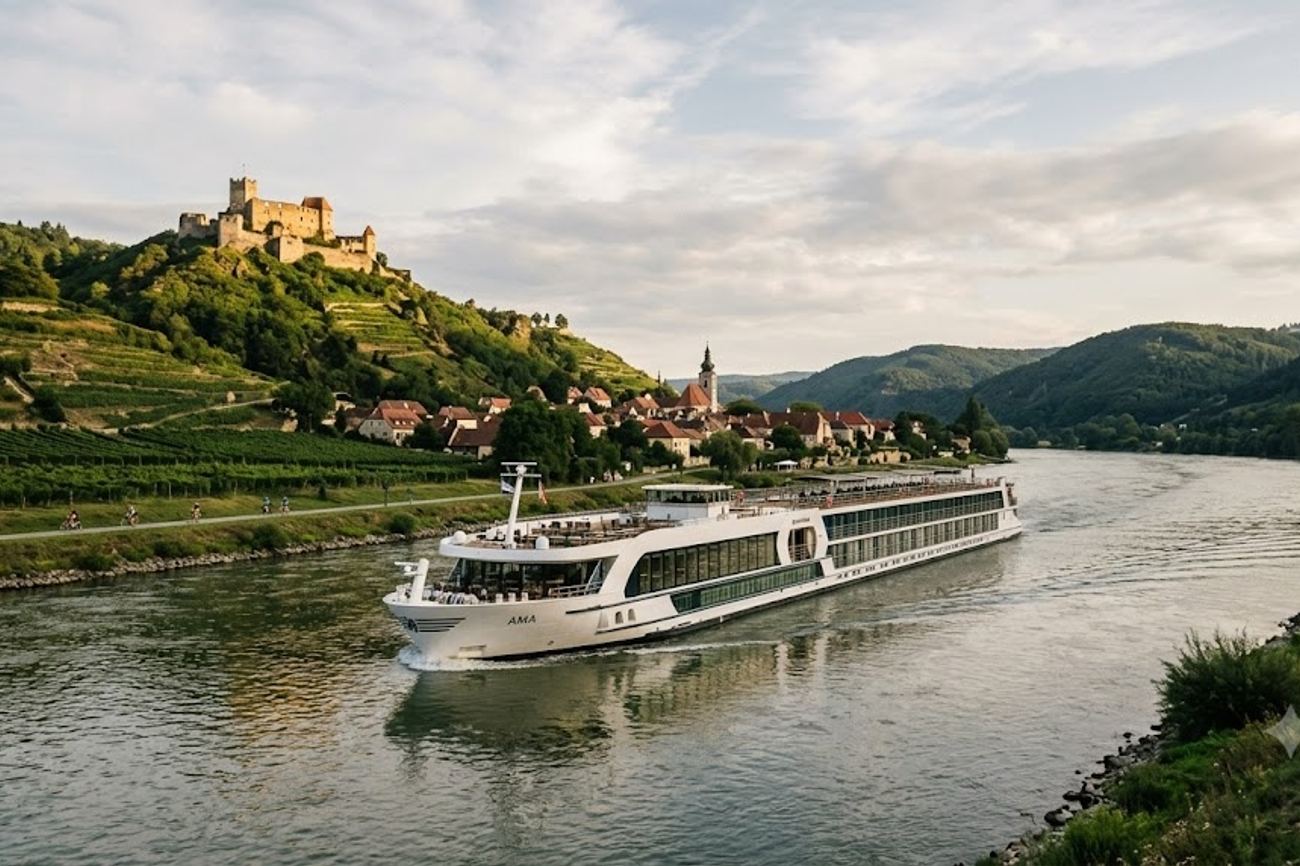
Image generated by AI
Electrifying the Danube and Black Sea Corridors
European river travel is undergoing a fundamental technological shift. A new electrification program is introducing 15 advanced vessels equipped with EST-Floattech battery systems, designed to reduce the environmental footprint of cruising through Europe's most sensitive inland waterways.
The project is a collaboration between system integrator Van Tiem Elektro and EST-Floattech, utilizing the Octopus High Energy platform. These ships are currently being outfitted at two primary locations: De Gerlien van Tiem in Druten, Netherlands, and Vahali Shipyards in Ghent, Belgium.
Major industry operators, including Uniworld and AmaWaterways, are connected to the program. The fleet is slated for deployment across the Danube and the wider Black Sea region, with a delivery schedule extending through 2030.
Technical Specifications and Operational Impact
Each of the 15 vessels will be equipped with 650 kWh of installed battery capacity. While project announcements round the total fleet capacity to approximately 9.7 MWh, the exact mathematical total stands at 9.75 MWh.
These battery systems are not intended for full electric propulsion but rather for "partial electric sailing." This hybrid approach allows ships to:
- Manage Hotel Loads: Power onboard amenities without idling diesel engines while docked in cities.
- Ensure Emergency Backup: Provide critical power reserves for safety and navigation.
- Reduce Urban Noise: Enable quieter arrivals and departures in densely populated river ports.
The Octopus High Energy platform integrates via MODbus through a dedicated string controller, ensuring compatibility with existing shipboard systems. To meet rigorous maritime safety standards, the system has earned type approvals from RINA, ABS, Lloyd’s Register, Bureau Veritas, and DNV.
Managing Expectations on Deployment
While the 15-vessel order represents one of EST-Floattech’s largest contracts to date—building on previous applications like the Solara and Astara—specific deployment details remain fluid.
Currently, there are no publicly disclosed individual ship names or vessel-specific itineraries. Because cruise operators frequently adjust schedules and ship assignments based on market demand, the project should be viewed as a fleet-wide upgrade rather than a set of 15 fixed routes.
Project Data Summary
| Item | Confirmed Specification |
|---|---|
| Total New Vessels | 15 |
| Battery Platform | EST-Floattech Octopus High Energy |
| Capacity Per Vessel | 650 kWh |
| Total Fleet Capacity | 9.75 MWh (Announced as ~9.7 MWh) |
| System Integrator | Van Tiem Elektro |
| Outfitting Yards | De Gerlien van Tiem (NL) & Vahali Shipyards (BE) |
| Key Operators | AmaWaterways, Uniworld |
| Primary Regions | Danube and Black Sea |
| Delivery Timeline | Through 2030 |
| Primary Use Cases | Partial electric sailing, hotel loads, emergency backup |
| Integration Method | MODBus via String Controller |
| Certifications | DNV, BV, LR, ABS, RINA |
Deployment Status by Vessel
| Vessel | Public Name | Battery Capacity | Operating Region | Operator Assignment | Individual Itinerary |
|---|---|---|---|---|---|
| Vessels 1–15 | Not disclosed | 650 kWh | Danube/Black Sea | Not individually assigned | Not published |
Key Takeaways
- Sustainability Shift: The move to partial electrification directly addresses the pollution and noise concerns of riverside cities.
- Strategic Partnerships: The collaboration between Van Tiem Elektro and EST-Floattech scales proven technology from tankers to the luxury cruise sector.
- Long-term Rollout: The phased delivery through 2030 ensures a gradual transition to greener fleet operations.
- Operational Versatility: Batteries will primarily handle "hotel loads," meaning ships can remain powered while docked without emitting exhaust into city centers.
FAQ
Which cruise lines are using these new battery ships? AmaWaterways and Uniworld are the operators publicly identified as being connected to this electrification program.
Will these ships be 100% electric? No. The batteries are designed for partial electric sailing, managing hotel loads (onboard electricity), and providing emergency backup power.
When will these ships be available for passengers? The delivery program for the 15 vessels is scheduled to continue through 2030.
Related Travel Guides
Disclaimer
This article is for informational and educational purposes only. It does not constitute legal, financial, or professional advice. While we strive to provide accurate and up-to-date information, travel policies, regulations, and conditions change rapidly. Always verify information with official sources before making travel decisions. Nomad Lawyer makes no representations about the accuracy, reliability, completeness, or suitability of the information provided. Readers should consult qualified professionals for advice specific to their circumstances. The views expressed in this article are those of the author and do not necessarily reflect the views of Nomad Lawyer.
Kunal K Choudhary
Co-Founder & Contributor
A passionate traveller and tech enthusiast. Kunal contributes to the vision and growth of Nomad Lawyer, bringing fresh perspectives and driving the community forward.
Learn more about our team →