European Airport Layovers Reimagined: How Spain and Four Nations Unlock Affordable City Transit Tours Without Hotel Costs


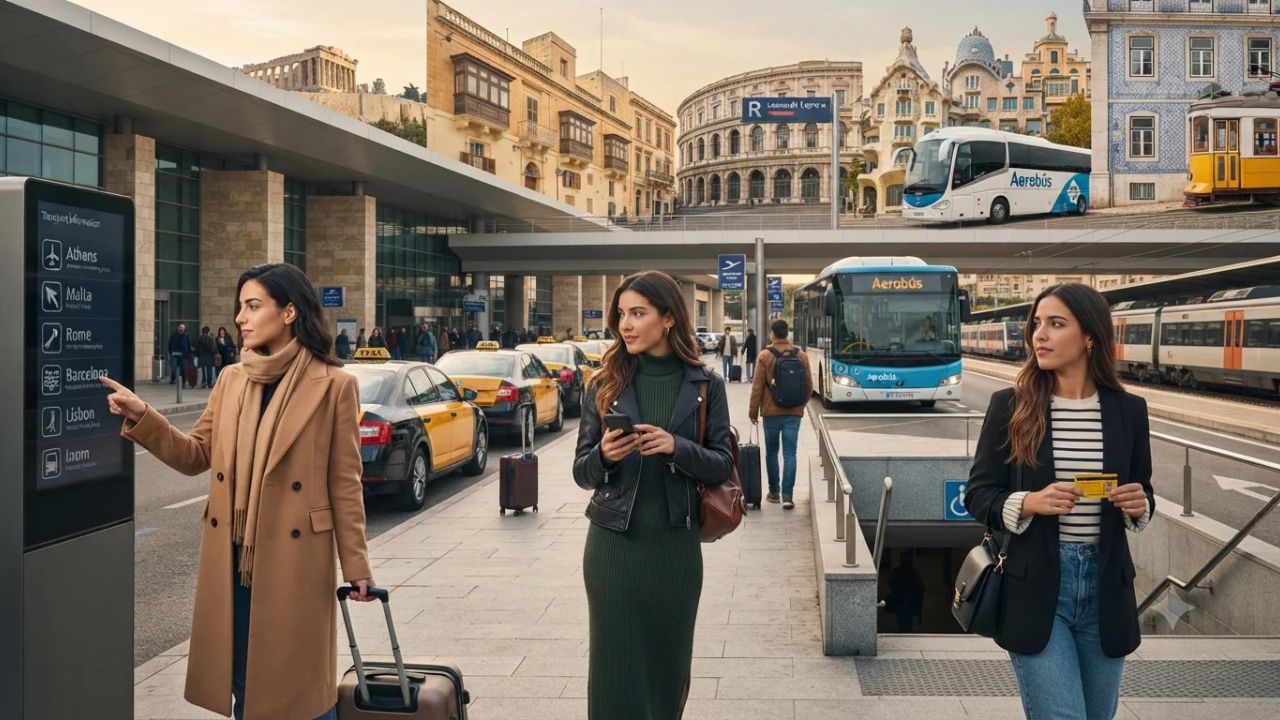
Long airport layovers across Europe are no longer an endurance test confined to crowded terminal departure lounges, as accessible express rail lines, rapid shuttle buses, and direct metropolitan connections across Spain, Italy, Hungary, Ireland, and the United Kingdom enable transit passengers to embark on affordable independent city tours.
For international travellers traversing global aviation corridors, an extended flight connection of five to eight hours frequently represents an uncomfortable purgatory of overpriced airport dining and tedious gate-sitting. However, a growing cohort of independent flyers is transforming these transit windows into cultural excursions. Across eight prominent European aviation hubs—Barcelona-El Prat, Madrid-Barajas, Rome Fiumicino, Milan Malpensa, Milan Bergamo, Budapest Ferenc Liszt, Dublin Airport, and London Stansted—efficient public transport networks deliver travellers directly into historic city centers in thirty to fifty minutes for as little as €2.60 to €15.00 each way.
These self-directed layover excursions provide an exceptional way to experience world-class landmarks, savor authentic local gastronomy, and explore atmospheric medieval quarters without committing to multi-day hotel reservations or costly car hires. Nevertheless, successfully stepping beyond airport terminals requires strict logistical discipline. Travellers must evaluate precise transit timetables, manage luggage storage, account for updated Schengen biometric entry procedures under the European Entry/Exit System (EES), and protect their onward flights against security delays that lie beyond airline compensation protections.
The Economics of Transit Tourism: Turning Wasted Hours into City Breaks
The concept of layover tourism sits at the intersection of modern aviation routing and budget-conscious travel design. Rather than booking expensive direct long-haul flights or enduring stressful 50-minute mad dashes between gates, strategic travellers deliberately select flight connections spanning six to ten hours.
THE LAYOVER BREAKTHROUGH EQUATION
| Category / Entity | Details / Impact |
|---|---|
| Standard Approach | The Transit Tourism Model |
| 7-Hour Layover trapped inside terminal | 7-Hour Layover converted to city tour |
| €45–€70 spent on airport food/coffee/retail | €5–€28 spent on round-trip train/bus |
| Tedious gate-sitting, exhaustion | Authentic meal in historic plaza |
| Zero cultural exploration | 2–3 hours sightseeing world heritage |
| High frustration, terminal fatigue | Refreshed, energized multi-city trip |
By leveraging public rail and express coach connections that operate on fixed, predictable schedules, passengers step directly into European capitals. The cost of a round-trip public transit ticket is frequently lower than the price of a single mediocre lunch and beverage at an airside airport restaurant. In addition, transit tourism stimulates local metropolitan economies, channeling visitor spending into independent cafés, bakeries, municipal transit operators, and cultural landmarks that traditional point-to-point air travel bypasses entirely.
Eight European Airports Evaluated: Transit Times, Fares, and Minimum Windows
Not every airport is suitable for a quick city escape. Airports situated vast distances from urban centers without dedicated rail links introduce unacceptable risks of traffic gridlock. Below is an exhaustive operational comparison of eight European hubs that offer practical, time-tested connections directly into historic metropolitan districts.
| Airport & City Hub | Primary Transit Link | Standard Transfer Time | Round-Trip Transit Cost | Recommended Minimum Layover Window | Primary Sightseeing Focus |
|---|---|---|---|---|---|
| Barcelona-El Prat (BCN) | Aerobús (A1 / A2) | 30–35 minutes | €14.90 (€7.45 single) | 5 to 6 Hours | Gothic Quarter, Las Ramblas, Plaça Catalunya |
| Madrid-Barajas (MAD) | Cercanías Train (C1/C10) | 28–32 minutes | €5.20 (€2.60 single) | 6 Hours | Paseo del Prado, Retiro Park, Atocha |
| Rome Fiumicino (FCO) | Leonardo Express Train | 32 minutes | €28.00 (€14.00 single) | 6 Hours | Colosseum exterior, Monti district, Termini |
| Milan Bergamo (BGY) | ATB Airport Bus | 25–30 minutes | €6.00 (€3.00 single) | 6 Hours | Bergamo Città Alta (Medieval Upper City) |
| Milan Malpensa (MXP) | Malpensa Express Train | 37–51 minutes | €25.00 return promo | 7 Hours | Duomo di Milano, Galleria, Sforza Castle |
| Budapest (BUD) | 100E Airport Express | 35–45 minutes | ~€13.00 (HUF 5,000) | 5 to 6 Hours | Danube Promenade, Chain Bridge, St. Stephen |
| Dublin Airport (DUB) | Dublin Express Coach | 15–25 minutes | From €18.00 (€9.00 web) | 5 to 6 Hours | Trinity College, Temple Bar, River Liffey |
| London Stansted (STN) | Stansted Express Train | 48 minutes | From £19.80 (£9.90 adv) | 7 Hours | City of London, Spitalfields, Liverpool St |
AIRPORT TRANSFER COST COMPARISON (RETURN)
| Column 1 |
|---|
| Madrid Barajas [===] €5.20 |
| Milan Bergamo [====] €6.00 |
| Budapest [=========] ~€13.00 |
| Barcelona [===========] €14.90 |
| Dublin [=============] From €18.00 |
| London Stansted [=================] From £19.80 (~€23.50) |
| Milan Malpensa [==================] €25.00 |
| Rome Fiumicino [====================] €28.00 |
Spain: Architectural Splendour via Barcelona and Madrid
Spain provides two of the most functional and cost-effective transit gateways in southern Europe through Barcelona-El Prat and Adolfo Suárez Madrid-Barajas airports.
SPAIN TRANSIT TOURISM ARCHITECTURE
| Airport | Transport Mode | Transit Duration | Single Fare |
|---|---|---|---|
| Rome Fiumicino (FCO) | Leonardo Express | 32 minutes | €14.00 |
| Milan Malpensa (MXP) | Malpensa Express | 37–51 minutes | €15.00 |
| Milan Bergamo (BGY) | ATB Airport Bus | 25–30 minutes | €3.00 |
Rome Fiumicino (FCO): A Fast-Track to Antiquity
Rome Fiumicino (Leonardo da Vinci Airport) features one of the most efficient dedicated airport rail links in Europe.
- Transit Mechanics: The non-stop Leonardo Express train operated by Trenitalia links the airport railway station directly with Roma Termini in 32 minutes flat. Trains depart every 15 minutes throughout the day. Standard single adult tickets cost €14.00 (€28.00 return). The service is completely immune to highway traffic jams and is guaranteed even during general rail transport strikes.
- The Ideal 2.5-Hour Walking Itinerary: From Roma Termini, take Metro Line B two stops south (or take a scenic 20-minute walk down Via Cavour) to arrive at the Colosseum and the Roman Forum. While going inside requires pre-booked tickets, walking the exterior perimeter along Via dei Fori Imperiali offers breathtaking, unobstructed views of classical antiquity. Stroll up into the atmospheric Monti neighborhood for an authentic espresso and a freshly baked slice of Roman pizza al taglio before catching the Leonardo Express back to FCO.
Milan Bergamo (BGY): The Insider’s Medieval Secret
Many low-cost airline passengers flying into Milan Bergamo (Orio al Serio Airport) make the strategic mistake of attempting a long 55-minute coach journey into central Milan. A far superior layover strategy is exploring Bergamo itself, specifically its ancient walled upper city (Città Alta).
- Transit Mechanics: The ATB Airport Bus (Line 1) departs directly outside arrivals every 20 minutes, reaching Bergamo railway station in 15 minutes and the historical Città Alta in 25 to 30 minutes. A 3-zone single ticket costs €3.00 (€6.00 return), or €8.50 for a 24-hour network pass that includes the historic funicular railway.
- The Ideal 2.5-Hour Walking Itinerary: Ride the bus directly up to the Venetian Walls—a UNESCO World Heritage fortification. Wander along the stone parapets overlooking the Lombardy plains, take the historic funicular up through medieval towers, and explore the Piazza Vecchia, the Basilica di Santa Maria Maggiore, and the Colleoni Chapel. Sample regional casoncelli pasta or polenta e osei pastries in a quiet trattoria before taking the bus directly back down to the departures hall.
Milan Malpensa (MXP): Duomo Vistas from Lombardy's Western Gate
Located 50 kilometres northwest of the city, Milan Malpensa requires a slightly longer layover buffer (minimum 7 hours).
- Transit Mechanics: The Malpensa Express train connects Terminal 1 and Terminal 2 with Milano Centrale (51 minutes) and Milano Cadorna (37 minutes). Trains run every 30 minutes. A standard single ticket costs €15.00, while a special same-month return ticket is available for €25.00.
- Strategic Tip: If visiting primarily for sightseeing, take the train terminating at Milano Cadorna (37 minutes). From Cadorna, it is an easy 15-minute walk past the historic Sforza Castle (Castello Sforzesco) and through the pedestrianized Via Dante directly to the Piazza del Duomo and the soaring glass arches of the Galleria Vittorio Emanuele II.
Hungary: Danube Panoramas from Budapest Ferenc Liszt
Budapest has emerged as one of Central Europe’s most dynamic transit destinations, supported by an exceptionally affordable airport express bus system.
BUDAPEST AIRPORT 100E EXPRESS CORRIDOR
| Entity / Route | Metrics | Operational Status |
|---|---|---|
| Jurisdiction | Member Nations Included | Border Rules & System Access |
| Schengen Area | Spain, Italy, Hungary | Regulated by Entry/Exit System |
| (+ 26 European states) | (EES); Single external border | |
| Ireland | Republic of Ireland | Outside Schengen; Independent |
| Irish immigration & visa rules | ||
| United Kingdom | England, Scotland, Wales, NI | Outside Schengen; Independent |
| UK immigration & ETA rules |
The European Entry/Exit System (EES)
Following its full operational launch on April 10, 2026, the European Union’s automated Entry/Exit System (EES) electronically registers non-EU short-stay travellers entering the Schengen Area (including Spain, Italy, and Hungary).
- Biometric Collection: Travellers from visa-exempt third countries (such as the United States, Canada, the UK, Australia, and New Zealand) undergo digital biometric verification (facial photograph and fingerprint scanning) at automated electronic kiosks upon their initial arrival at the Schengen exterior border.
- Elimination of Ink Stamps: The EES replaces physical passport ink stamping with digital timestamps that track the 90-day allowance within any 180-day window. First-time registration can add 15 to 25 minutes to immigration processing at peak arrival banks, a factor transit travellers must include in their timing calculations.
Airport Transit Visa (ATV) Versus Short-Stay Visas
A critical legal distinction governs international transit:
- Airport Transit Visa (Type A): Authorizes a passenger from an eligible non-exempt nation to remain strictly within the international airside transit zone of a Schengen airport while awaiting a connecting flight to a non-Schengen country. An ATV does not permit you to pass through passport control into the country.
- Uniform Schengen Visa (Type C): If your nationality requires a visa to enter Europe and you hold only an Airport Transit Visa, border police will legally prohibit you from leaving the terminal for sightseeing. Only passengers who hold a valid short-stay Category C visa, or who belong to visa-exempt nationalities, may pass through border control landside.
Step-by-Step Risk Management: Ensuring You Never Miss Your Connection
Leaving an airport during a layover involves calculated logistical coordination. A minor railway delay, a sudden security line surge, or confusion regarding boarding gates can transform an enjoyable city excursion into an expensive travel disaster.
THE FOOLPROOF 7-HOUR LAYOVER TIMELINE
| Hour | Action Required | Location & Status |
|---|---|---|
| Hour 0:00 | Flight Touches Down | Onboard aircraft at gate |
| Hour 0:30 | Disembark & Clear Border Control | Terminal Immigration Hall |
| Hour 1:00 | Store Carry-On Bags (If needed) | Left Luggage / Locker facility |
| Hour 1:15 | Board Express Train or Bus | Airport transit station |
| Hour 1:55 | Arrive at Historic City Center | Metropolitan central hub |
| Hour 2:00 | 2.5 Hours Independent Exploration | Historic walking loop & dining |
| Hour 4:30 | Board Return Express Transit | Metropolitan central hub |
| Hour 5:15 | Arrive Back at Airport Terminal | Terminal Departures Concourse |
| Hour 5:45 | Clear Security Screening Lines | Airside security checkpoint |
| Hour 6:30 | Boarding Commences at Gate | Onward Departure Gate |
| Hour 7:00 | Flight Departs on Schedule | Airborne |
Essential Golden Rules for Transit Sightseers
- Verify Your Baggage Routing: When checking in for your initial flight, confirm that your checked baggage is checked through to your final destination. If your bags are tagged through, they remain securely in the airport's automated baggage handling system while you explore. If travelling on separate tickets across unrelated budget airlines, you must collect your bags, check them into luggage storage, and re-check them before your second flight.
- Download Offline Digital Boarding Passes: Ensure you have your digital boarding pass for the onward flight saved directly to your smartphone's offline wallet before leaving the airport, avoiding reliance on spotty mobile data networks in town.
- Know the Hard Boarding Cutoff: Airlines enforce strict boarding gate closure deadlines—typically 15 to 20 minutes prior to scheduled departure. Missing this gate closure forfeit your seat, and European passenger rights regulations (EU Regulation 261/2004) explicitly state that passengers who miss flights due to personal excursions outside the airport are not eligible for free rebooking, food vouchers, or hotel compensation.
- Deposit Heavy Carry-On Luggage: Exploring medieval cobblestone streets while dragging a 10-kilogram roller suitcase is exhausting. Utilize the official "Left Luggage" facilities (Consigne de bagages / Consigna de equipaje) available at all eight featured airports, which typically charge between €6 and €12 per item for four to eight hours.
- Always Set a Hard Return Alarm: Set an alarm on your phone for exactly four hours prior to your onward flight departure. When that alarm rings, your sightseeing ends immediately—regardless of whether you have finished lunch or completed your walking route—and you head directly to the return transit stop.
Comprehensive Frequently Asked Questions About European Layover Travel
How long does my layover need to be to safely leave the airport?
As an absolute rule of thumb, you need a minimum layover of 5 to 6 hours for compact, well-connected airports like Barcelona, Budapest, and Dublin. For larger hubs with longer transit routes or extensive security queues—such as Madrid, Rome, Milan Malpensa, and London Stansted—you should allow at least 6 to 7 hours. Connections under five hours should be spent inside the terminal.
What happens to my checked luggage while I go into the city?
If you booked your flights under a single unified ticket (airline itinerary), your checked baggage will automatically be transferred to your connecting flight by airport ground handlers. You do not need to collect your bags; they remain in secure airside storage. You only carry your cabin baggage with you.
What should I do with my cabin baggage during the layover?
All major European hubs offer secure left-luggage offices or automated electronic storage lockers. Fees generally range from €6 to €12 per bag for four to eight hours. Storing your heavy bags allows you to walk through historic cobblestone quarters unencumbered.
Do I need a visa to leave the airport during a layover in Europe?
Yes. To exit the transit area and enter the host country, you must have the legal right to cross the border. If your nationality qualifies for visa-free entry into the Schengen Area (such as US, Canadian, British, Australian, or Japanese citizens), you can pass through immigration. If your nationality requires a Schengen C visa, you must hold one; an Airport Transit Visa (Type A) does not permit you to leave the airport terminal. Remember that Ireland and the UK maintain independent visa rules separate from the Schengen zone.
What is the new European Entry/Exit System (EES), and how does it affect layovers?
Launched fully on April 10, 2026, the EES electronically registers non-EU short-stay visitors entering the Schengen Area using digital facial scans and fingerprint capture. First-time registration can add 15 to 25 minutes to immigration processing at peak hours, so transit travellers must account for this initial delay when calculating sightseeing time.
Am I protected under EU Regulation 261/2004 if I miss my connecting flight?
No. While EU261 protects passengers against airline-caused flight delays, cancellations, and lost baggage, it explicitly excludes passenger-caused missed departures. If you are delayed by city traffic, train cancellations, or long security lines and fail to reach the boarding gate before it closes, the airline is under no obligation to rebook you or provide compensation.
Which European airport offers the cheapest city transit connection?
Madrid-Barajas offers the least expensive transport: a single four-zone Cercanías suburban train ticket from Terminal 4 to central Madrid (Atocha) costs just €2.60 (€5.20 return). Milan Bergamo is also very inexpensive, with local airport buses into the medieval Città Alta costing only €3.00 each way.
Can I leave the airport during an overnight layover instead of booking a hotel?
Yes, provided public transit operates during your transit hours. For example, Barcelona’s Aerobús and Budapest’s 100E shuttle bus operate 24 hours a day, 7 days a week. In summer, exploring lively illuminated squares like Plaça de Catalunya or Budapest's Danube Promenade late in the evening can be a memorable and cost-effective alternative to booking an expensive airport hotel room.
How much money should I budget for an average 3-hour city layover tour?
A typical independent layover excursion costs between €20 and €45 per person. This covers round-trip airport express transit (€5 to €28), luggage storage (€6 to €10), and an authentic local meal or pastry with coffee (€10 to €15).
What is the best strategy if my return train or bus is delayed?
Always travel back toward the airport at least 2.5 hours before flight departure. If your scheduled train or bus suffers a severe mechanical breakdown, hail an official taxi or open a ride-hailing app (such as Uber, FreeNow, or Bolt) immediately without waiting for the next scheduled transit departure. Carry sufficient local currency or a working credit card to cover emergency taxi fares.
Related Travel Guides
This article is for informational purposes. Flight routes, passenger regulations, visa rules, and transit advisories are subject to change by airlines and aviation authorities. Readers are advised to verify schedules and travel documentation with relevant carriers and border agencies before departure.
Related Stories

Paris Budget Travel Guide 2026: Master Free Attractions, New Metro Fares, Louvre Tiered Pricing, and Affordable Cultural Exploration

Eight Popular Global Cities Unlock Affordable Holidays and Cultural Experiences: Complete Budget Travel Guide