
Deutsche Bahn Network Failures Trigger Widespread European Rail Disruptions in August 2026
Systemic delays and major construction closures on Deutsche Bahn routes are causing a ripple effect across European international rail corridors, impacting thousands of cross-border passengers.

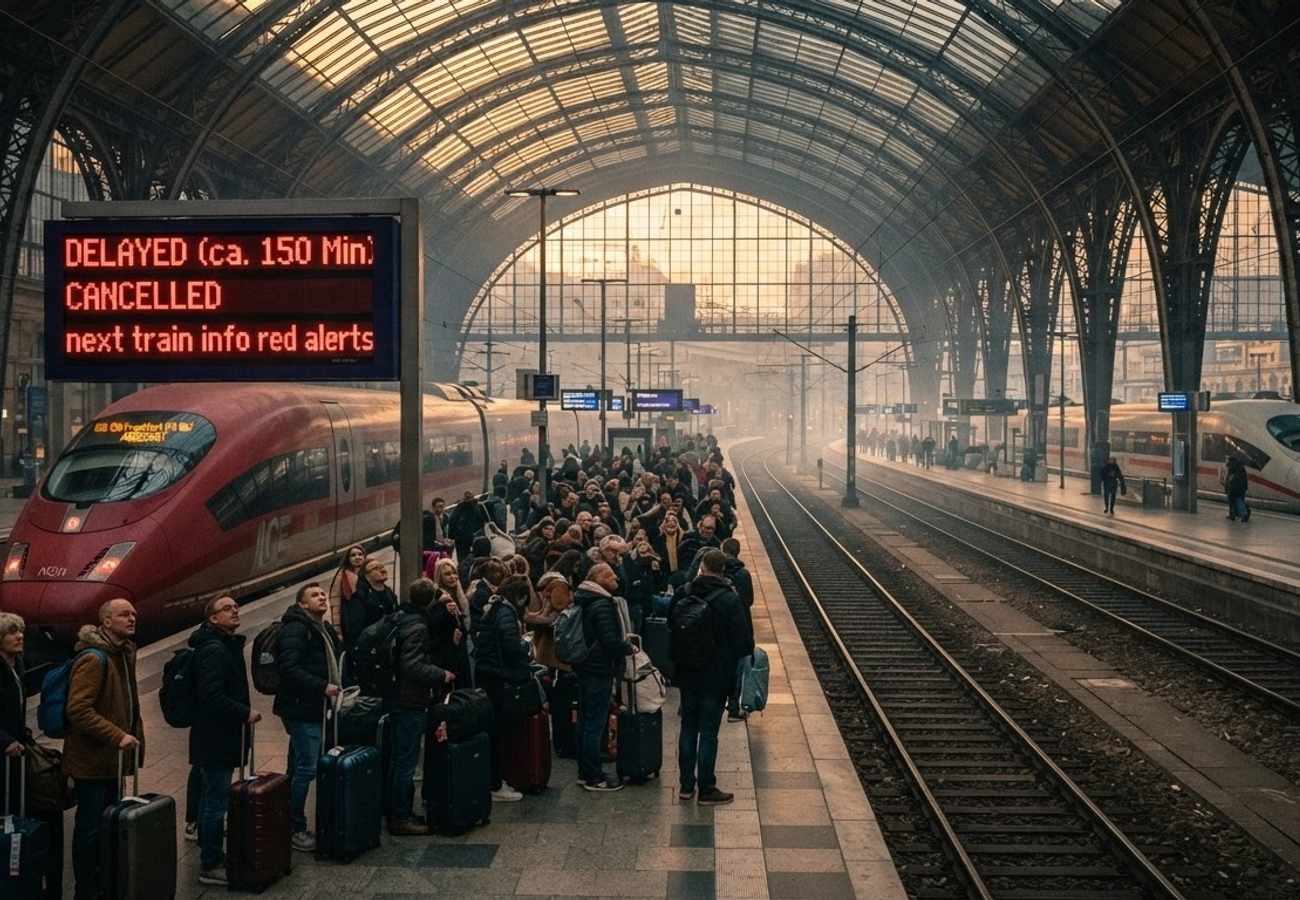
Image generated by AI
Severe operational bottlenecks and strategic infrastructure closures within the German rail network are currently compromising international travel across Central Europe. Passengers on cross-border itineraries are facing systemic delays, missed connections, and unplanned rerouting.
Analysis of the German Rail Network Collapse
As of August 27, 2026, the German rail infrastructure is experiencing significant strain, creating a cascade of delays for international services. Because Deutsche Bahn (DB) serves as the primary transit corridor for EuroCity and Intercity-Express (ICE) services, failures within German borders are directly impacting travel to Belgium, the Netherlands, France, Switzerland, and Austria.
Our analysis of current operational reports indicates that passengers are encountering itineraries extended by several hours. Common disruption patterns include backtracking along congested lines and sudden diversions that bypass planned intermediate stops, leading to critical failures in multi-country travel plans.
While the primary disruption is rail-based, the secondary impact is felt at major transit hubs where intermodal connections are failing.
- Critical Corridor Closure: The line between Düsseldorf and Cologne-Mülheim is under full closure from late August into early September 2026.
- Affected Hubs: Cologne Central Station and the Messe/Deutz interchange are seeing significant diversion traffic, increasing the risk of missed transfers.
- Regional Bottlenecks: Weekend shutdowns at Lübeck Hauptbahnhof and engineering projects in southern Bavaria are reducing overall track capacity.
- International Ripple Effects:
- Eurostar: Delays reported at London St Pancras and Lille-Europe due to late inbound stock.
- Benelux Routes: Extended dwell times at Amsterdam Centraal due to intensified EU border-control checks.
- Central Europe: Direct impacts on services linking Germany to the Czech Republic, Switzerland, and Austria.
Passenger Rights & Advisory
For the affected passenger, these disruptions trigger specific protections under European Union rail regulations. Our analysis of the current policy framework suggests the following actionable steps for those stranded or delayed.
Compensation Thresholds Under EU rail passenger rights, travelers on cross-border services are entitled to financial compensation based on the length of the delay at their final destination:
- 60 to 119 minutes delay: 25% of the ticket price.
- 120 minutes or more delay: 50% of the ticket price.
Practical Recovery Steps For passengers currently navigating these disruptions, we advise the following:
- Secure Documentation: Request official written proof of the delay from DB staff or digital portals. Retain all unused seat reservations.
- Claim Filing: Submit claims through the DB Passenger Rights Service Center. If the ticket was issued by a different operator, that company remains the primary point of contact for claims.
- Alternative Routing: Once a specific delay threshold is met, passengers are generally permitted to switch to alternative trains without additional fare charges.
- Expense Tracking: If forced into an overnight stay, retain all receipts for essential accommodation and meals; these may be reimbursable under specific operator guidelines.
The current situation highlights the systemic fragility of the European rail "hub-and-spoke" model. When a central node like Germany undergoes simultaneous large-scale construction and operational pressure, the entire continental network suffers.
The combination of planned infrastructure upgrades and unplanned border-control intensifications suggests that "buffer time" is no longer a luxury but a necessity for international rail travel in 2026. We anticipate that until the Düsseldorf-Cologne corridor reopens in September, volatility in the North-South axis will remain high.
Travelers are strongly urged to cross-reference DB schedules with SNCF (France), NS (Netherlands), SBB (Switzerland), and ÖBB (Austria) to verify real-time arrivals.
Related Travel Guides
Disclaimer
This article is for informational and educational purposes only. It does not constitute legal, financial, or professional advice. While we strive to provide accurate and up-to-date information, travel policies, regulations, and conditions change rapidly. Always verify information with official sources before making travel decisions. Nomad Lawyer makes no representations about the accuracy, reliability, completeness, or suitability of the information provided. Readers should consult qualified professionals for advice specific to their circumstances. The views expressed in this article are those of the author and do not necessarily reflect the views of Nomad Lawyer.
Preeti Gunjan
Contributor & Community Manager
A passionate traveller and community builder. Preeti helps grow the Nomad Lawyer community, fostering engagement and bringing the reader experience to life.
Learn more about our team →