
Europe's 2026 Overtourism Crisis: How Italy, Greece, Spain Are Fighting Back
Europe's major destinations implement aggressive tourist taxes, cruise levies, and entry fees in 2026 to combat overtourism. Italy, Greece, Spain, and more now charge visitors for heritage preservation and infrastructure.

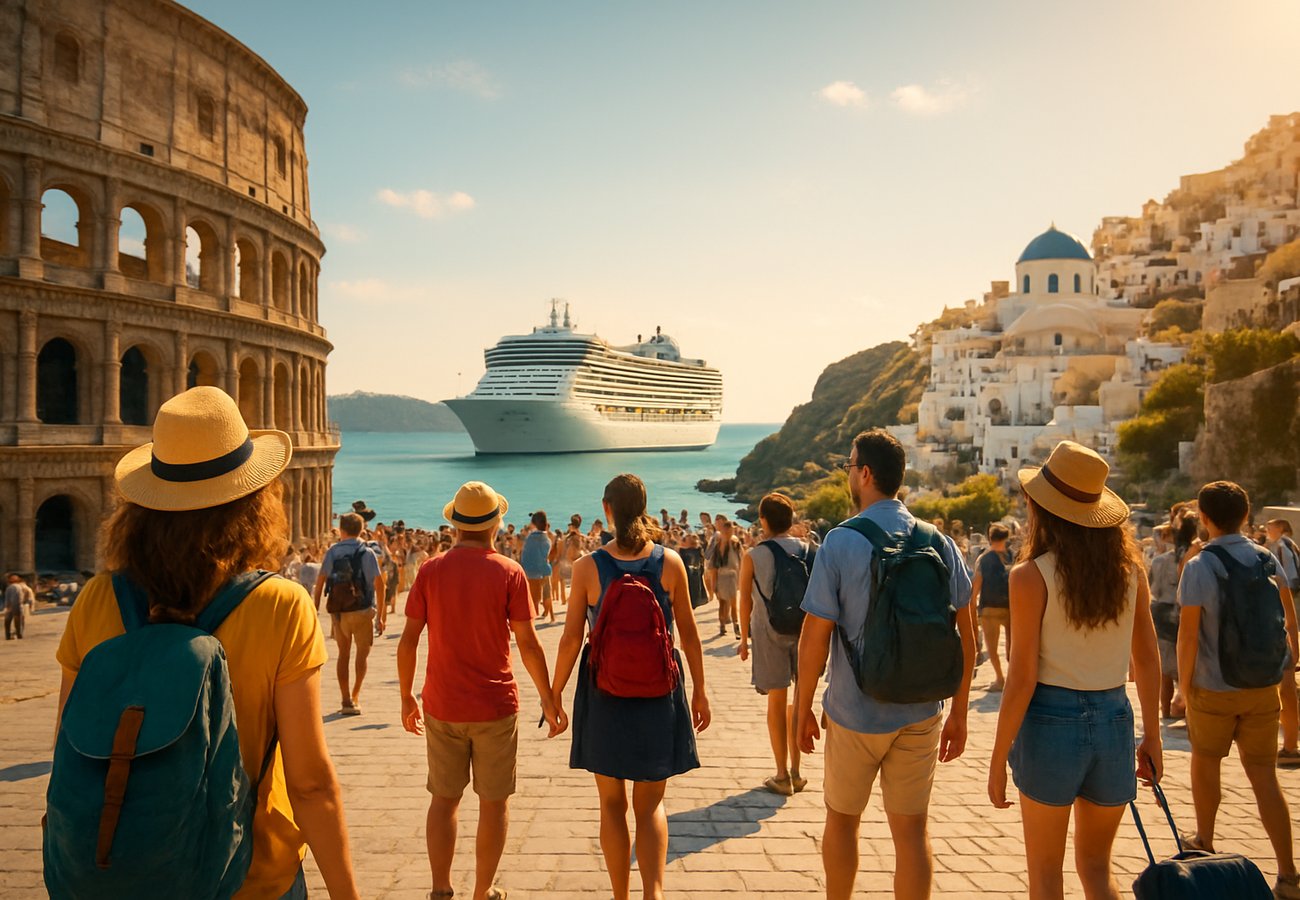
Image generated by AI
The Turning Point: When Europe Fought Back Against Tourist Chaos
May 2026 marked a watershed moment across European tourism. No longer would the continent's historic cities absorb endless waves of visitors without demanding financial accountability. From Rome's cobblestone streets to Santorini's cliff edges, governments implemented a coordinated pushback: massive tourist taxes, cruise levies, entry fees, and usage charges designed to make travelers fund the very infrastructure they strain.
The crisis was undeniable. Overcrowded heritage sites, overburdened public services, and environmental degradation forced governments across Italy, Spain, Greece, Norway, Iceland, the UK, Netherlands, and beyond to implement multi-layered financial barriers. Each nation crafted its own system—but the message was identical: visit responsibly, or pay considerably more.
Reddit: "These fees are brutal but honestly? Walking through Barcelona without 10,000 other people might finally be worth it." — r/travel
Italy's Imposta di Soggiorno: Taxing Your Way to Heritage Preservation
Italy's municipal tourist tax system, known as imposta di soggiorno, has evolved into a precise revenue-collection machine. By 2026, rising visitor numbers forced municipalities to adjust rates aggressively. Rome and Milan now operate on a sliding scale that punishes luxury travelers while protecting budget options.
The structure is ruthless:
Rome and Milan accommodation rates:
- Budget hotels: €3 per night
- Mid-range hotels: €7 per night
- Four-star hotels: €10 per night
- Five-star luxury: €12 per night
- Short-term rentals: charged proportionally to mirror hotel rates
Hotels collect taxes at check-in or checkout and remit directly to local authorities. Children under certain ages, local residents, and professional travelers receive exemptions. Smaller tourist hotspots adjust seasonally—off-peak stays cost less to incentivize shoulder-season travel.
The result? Consistent revenue for heritage maintenance, waste management, and urban amenities. Italy's decentralized approach allows each municipality to respond to local pressures independently. Venice, Florence, and the Amalfi Coast each adjusted rates to protect their unique character while funding essential services.
Barcelona's Precision Strike: Spain's Tiered Tourist Surcharges
Spain's decentralized system empowers regions to weaponize taxation against overtourism. Catalonia and Barcelona led the charge in 2026, introducing surgical surcharges that target specific visitor behaviors and accommodation types.
Barcelona's 2026 structure reveals sophisticated fiscal engineering:
Hotel-based charges (per person, per night):
- Luxury hotels: €12
- Four-star properties: €8.40
- Tourist apartments: €9.50
- Hostels: €6
- Campsites: €7
Cruise passenger surcharges:
- Under 12-hour stopovers: €9–€11 per person
The seven-night cap prevents extended stays from becoming punitive, but day-trippers and short-stay cruise passengers face maximum impact. Why? Barcelona's strategy explicitly discourages transient tourism while funding housing initiatives, infrastructure improvements, and visitor management programs.
According to official Barcelona tourism data, these measures generated €47 million in 2026 revenue alone—all directed toward local services and sustainable tourism initiatives.
Greece's Dual-Layer System: The Climate Crisis Resilience Fee Meets Cruise Levies
Greece implemented perhaps Europe's most aggressive system in 2026, combining accommodation charges with ruthless cruise passenger fees. The Climate Crisis Resilience Fee targets overnight guests while cruise levies directly tax maritime visitors consuming Greek port infrastructure.
Accommodation charges (Climate Crisis Resilience Fee):
One- to two-star hotels:
- Peak season: €2/night
- Off-peak: €0.50/night
Three-star hotels:
- Peak: €5/night
- Off-peak: €1.50/night
Four-star hotels:
- Peak: €10/night
- Off-peak: €3/night
Five-star hotels:
- Peak: €15/night
- Off-peak: €4/night
Short-term rentals:
- Peak: €8/night
- Off-peak: €2/night
Cruise passenger fees are seasonally brutal:
Peak season (May–September):
- Santorini and Mykonos: €20/person
- All other ports: €5/person
Shoulder season:
- Santorini/Mykonos: €12/person
- Other ports: €3/person
Off-season:
- Santorini/Mykonos: €4/person
- Other ports: €1/person
Greece's strategy isn't subtle—it's environmental triage. These fees fund climate adaptation, heritage preservation, waste management, and port infrastructure. The tiered system by accommodation class and cruise port ensures wealthy visitors subsidize environmental protection. According to sustainable tourism research, Greece's system became a global model for linking visitor impact directly to ecological responsibility.
Reddit: "That €20 cruise fee for Santorini actually made me book a land-based trip instead. Problem solved, I guess." — r/backpacking
Norway's Flat 3% Tax: The Understated Approach
Norway opted for elegant simplicity in 2026—a flat 3% tourism tax on all overnight stays and cruise visits in high-traffic zones like the Lofoten Islands and Tromsø.
This approach:
- Applies universally to hotels, short-term rentals, and cruise operations
- Collects seamlessly through accommodation and cruise operators
- Funds trail maintenance, rescue services, and environmental protection
The psychological brilliance? A 3% charge feels less aggressive than Greece's tiered model, yet generates substantial revenue for communities that bear genuine infrastructure strain during peak Arctic tourism seasons. Visitors fund the very services—emergency rescue, trail maintenance, seasonal amenities—that make Nordic tourism viable.
Iceland's Distance-Based Revolution: The Per-Kilometer Charge
Iceland scrapped fuel taxes entirely in 2026, replacing them with a distance-based per-kilometer charge for vehicles under 3.5 tonnes. This system directly links road maintenance costs to actual usage, ensuring tourists driving the Ring Road and interior routes contribute proportionally to infrastructure damage they cause.
The model reflects a harder truth: tourism literally wears roads. Iceland's solution quantifies that wear and charges accordingly. Foreign rental car operators report 8-15% cost increases, but revenue now funds genuine road maintenance rather than disappearing into general taxation.
The Broader Picture: Entry Fees, Usage Charges, and Heritage Protection
Beyond accommodation and cruise levies, Europe implemented granular charges:
Edinburgh's visitor levy: 5% accommodation surcharge, generating £8.5 million annually for city services
Zaanse Schans (Netherlands): Day-entry fees introduced to manage visitor flow at this fragile historic windmill complex
Venice proposals: Day-entry fees up to €5 to cap daily visitors at 50,000—a direct response to environmental collapse
What This Means for Travelers in 2026
European travel just got significantly more expensive. A week-long Mediterranean tour now includes:
- Accommodation taxes (€50–€105)
- Cruise surcharges (€20–€100)
- Entry fees at major sites (€5–€50)
- Road usage charges in Iceland (€40–€80)
These aren't optional. They're embedded in booking systems, automatically calculated, and non-negotiable.
But here's the philosophical shift: Europe is forcing travelers to confront tourism's true cost. Overtourism destroyed destinations. Now, destinations are pricing visitors to sustainable levels.
The Strategic Outcome
Europe's 2026 overtourism response accomplished what soft messaging never could. Financial barriers work. They discourage day-trippers, encourage longer stays, redistribute peak-season crowds across shoulder seasons, and—critically—fund infrastructure that actually sustains tourism quality.
Venice can now cap daily arrivals. Barcelona can fund housing for residents priced out by Airbnb. Greece can protect Santorini's carrying capacity. Iceland can maintain roads without subsidy.
The outcome isn't reduced tourism—it's restructured tourism. Fewer casual visitors, more committed travelers with deeper spending and longer stays. Destinations remain viable. Heritage sites survive. Local residents retain livability.
Europe didn't eliminate overtourism in 2026. It weaponized taxation against it.
The age of free-access tourism ended quietly, replaced by the era of accountable, funded, sustainable travel.
Related Travel Guides
Disclaimer
This article is for informational and educational purposes only. It does not constitute legal, financial, or professional advice. While we strive to provide accurate and up-to-date information, travel policies, regulations, and conditions change rapidly. Always verify information with official sources before making travel decisions. Nomad Lawyer makes no representations about the accuracy, reliability, completeness, or suitability of the information provided. Readers should consult qualified professionals for advice specific to their circumstances. The views expressed in this article are those of the author and do not necessarily reflect the views of Nomad Lawyer.
Raushan Kumar
Founder & Lead Developer
Full-stack developer with 11+ years of experience and a passionate traveller. Raushan built Nomad Lawyer from the ground up with a vision to create the best travel and law experience on the web.
Learn more about our team →