
European Heatwaves Threaten Summer Tourism and Visitor Safety
With Western Europe recording its hottest June on record at 20.74°C, extreme heat is disrupting peak summer travel across Spain, Italy, and Greece.
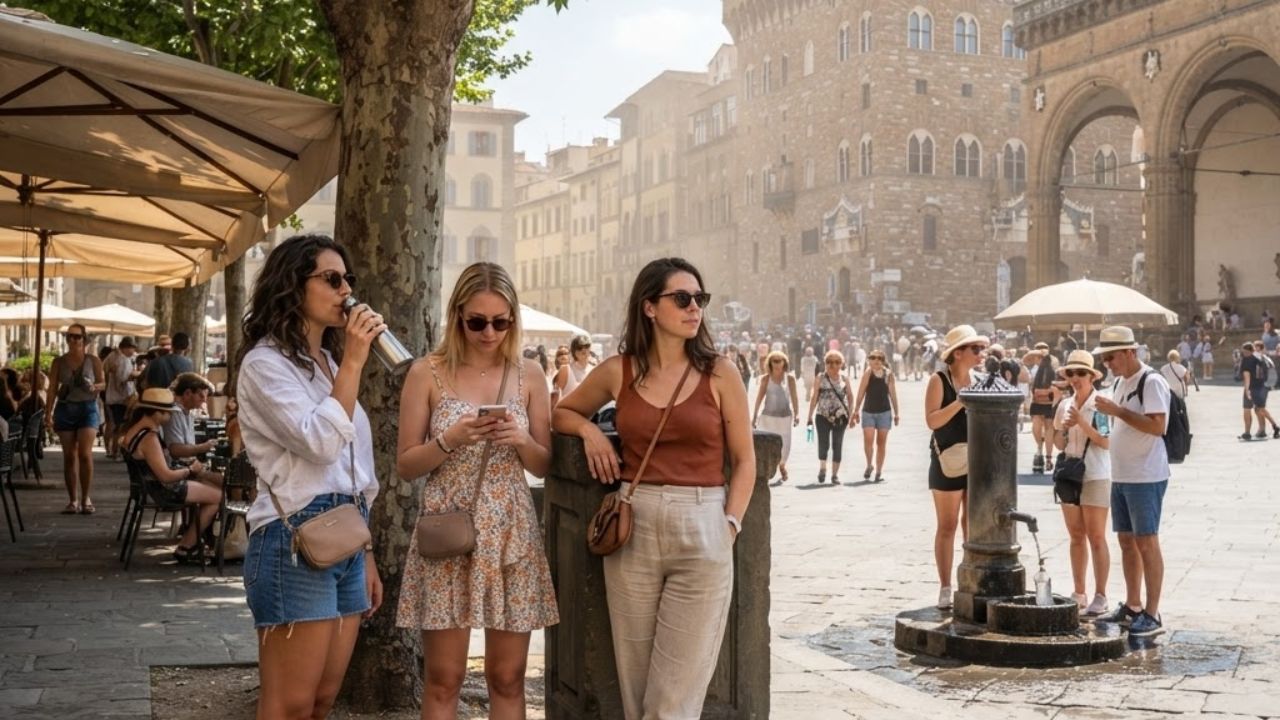
Image generated by AI
Measuring a record 20.74°C average in Western Europe during June, extreme summer heatwaves are disrupting travel safety across major Mediterranean hubs.
The Core Transit Update
Transit systems, urban walking tour routes, and airport terminals across Europe are adjusting to extreme thermal events. Copernicus climate data compiled by August 4, 2026, shows that Western Europe experienced its hottest June on record, averaging 20.74°C (3.06°C above the 1991–2020 baseline), following an unusually early heatwave between May 21 and 30 that affected England, Wales, and France.
Because July and August account for 31.1 per cent of all nights spent in EU tourist accommodation—with Spain, Italy, France, and Germany representing 61.7 per cent of the total 3.08 billion night stays—extreme temperatures expose millions of travelers to health risks. To manage the pressure, the World Health Organization (WHO) and the European Environment Agency (EEA) have updated heat-health action plans, while EU-OSHA has issued safety directives for outdoor workers and guides.
Climate Statistics & Tourism Accommodation Metrics
Planning a summer holiday in Europe requires tracking local climate indices and understanding seasonal visitor density. The following tables outline the June temperature deviations and summarize European Union accommodation metrics.
| Climatic Measured Region | June 2026 Average Temperature | Measured Deviation from 1991–2020 Normal | Stated Record Ranking |
|---|---|---|---|
| Western Europe | 20.74°C | +3.06°C norm deviation | Hottest June on record |
| European Land Mass | 19.14°C | +1.78°C norm deviation | Second-warmest June on record |
| Global Air Surface | 16.54°C | +0.56°C norm deviation (+1.39°C pre-industrial) | Second-warmest June on record |
Verified June 2026 climate and temperature statistics.
| Tourism Industry Parameter | Measured Value / Statistic | Primary Data Source |
|---|---|---|
| Total EU Night Stays (2025) | 3.08 billion nights (+2.2% YoY) | Eurostat Tourism Database |
| Peak Summer Night Share | 31.1% of nights in July & August | Eurostat Tourism Database |
| EU Market Share (Big Four) | 61.7% (Spain, Italy, France, Germany) | Eurostat Accommodation Statistics |
| Cumulative Weather Losses | ~€822 billion (1980–2024) | European Environment Agency |
| WHO Heat-Related Death Toll | 200,000+ lives (past 4 years) | WHO Regional Office for Europe |
European Union accommodation statistics and climate loss data.
Traveler Logistics Guide
From a ground-level perspective, the best way to navigate this is to schedule your city walks and exposed archaeological visits (such as the Acropolis in Greece or the Colosseum in Italy) for the early morning hours before 10:00 AM, as national park and monument administrations will temporarily close access doors during peak afternoon heatwaves to protect tourist safety. Checking national weather alerts is recommended.
To plan your summer travel:
- Allow Safe Connecting Windows: Extreme heat can cause railway track buckling and speed restrictions on train lines. Allow at least a three-hour safety window when connecting between trains and international flights.
- Verify Room Cooling Systems: Historic hotel properties in southern Europe do not always feature central air conditioning. Confirm the exact cooling facilities directly with the property before booking.
- Monitor Wildfire Warnings: Drier conditions across the Iberian Peninsula and Greece increase wildfire danger. Check civil protection updates and comply immediately with municipal evacuation notices.
- Pack Health Rehydration Gear: Carry insulated water bottles and electrolyte powder packs. Rest in shaded public parks or air-conditioned museums during the hottest hours (12:00 PM to 4:00 PM).
Infrastructure Impact Assessment
The retrofitting of urban squares with shade trees, misting fountains, and reflective pavements protects historical centers from severe heat-island effects and minimizes municipal water depletion.
By directing tourism demand to shoulder-season travel (spring and autumn) and booking green-certified accommodation providers, the travel sector supports regional labor adaptation (complying with EU-OSHA safety directives for guides), reduces peak energy grid stress, and ensures that European cities remain habitable.
Related Travel Guides
Turkmenistan Modernizes Migration Laws and Plans E-Visa Launch
Shravani Mela 2026 Deoghar Travel Tips and Logistics Guide
10 Best Travel Tips for Coping with Europe's Summer Heatwaves, Checking Historic Hotel Cooling, and Monitoring Wildfire Hazards, According to Reddit
Disclaimer
This article is for informational and educational purposes only. It does not constitute legal, financial, or professional advice. While we strive to provide accurate and up-to-date information, travel policies, regulations, and conditions change rapidly. Always verify information with official sources before making travel decisions. Nomad Lawyer makes no representations about the accuracy, reliability, completeness, or suitability of the information provided. Readers should consult qualified professionals for advice specific to their circumstances. The views expressed in this article are those of the author and do not necessarily reflect the views of Nomad Lawyer.