
Europe Heatwave 2026: Record Temperatures Exceed 43°C Across France, Spain, Italy, Greece and Germany
Extreme heatwaves in July 2026 are disrupting travel across France, Spain, Italy, Greece, and Germany, with temperatures exceeding 43°C and triggering critical wildfire alerts.

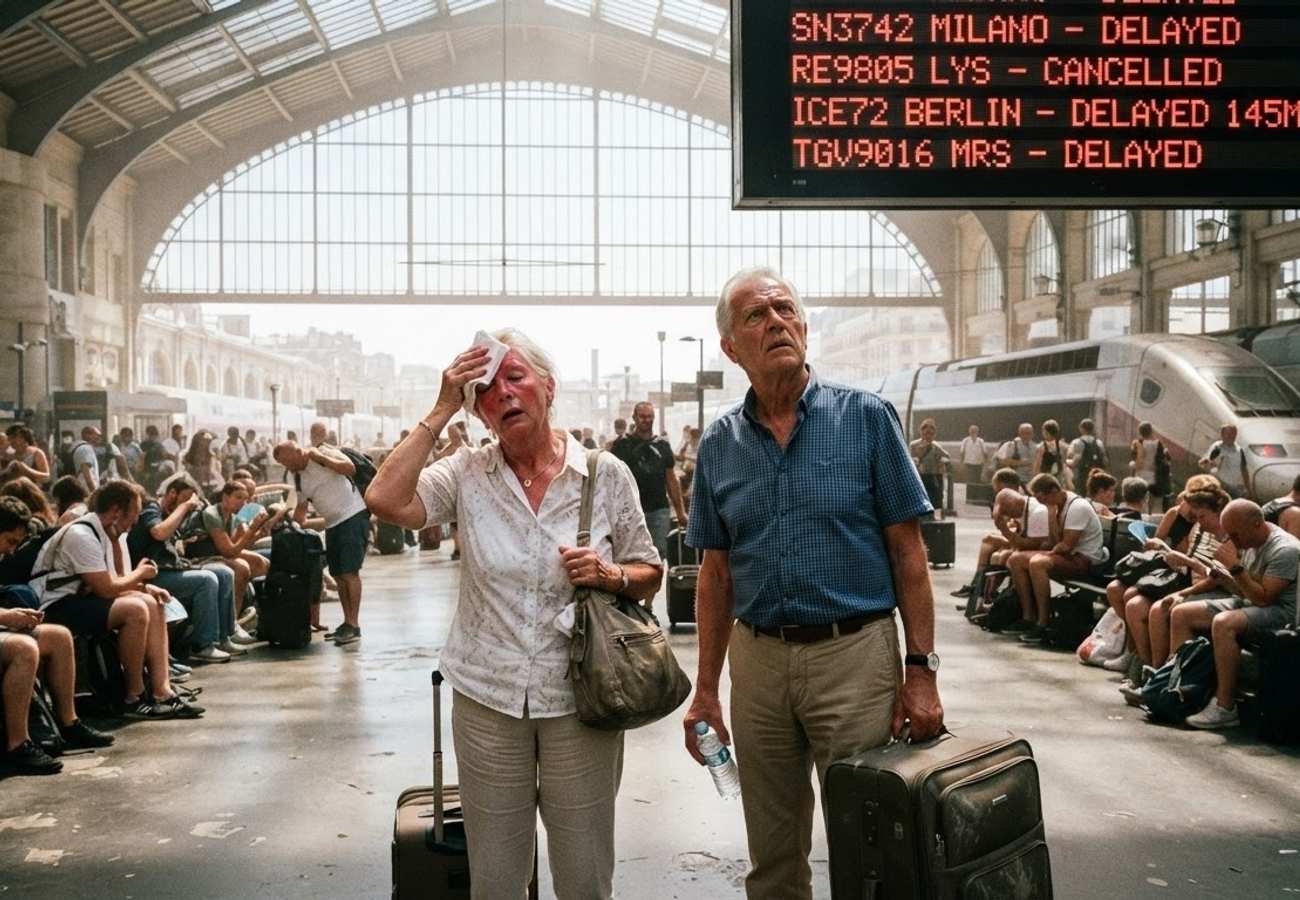
Image generated by AI
Extreme thermal anomalies across Western and Southern Europe have triggered a travel emergency in July 2026, with temperatures surpassing 40°C in multiple nations. This systemic heat event is currently disrupting transport infrastructure and public health safety across France, Spain, Italy, Greece, and Germany.
The crisis is driven by persistent hot air masses and intense solar radiation. Copernicus data confirms that Western Europe recorded its hottest June on record, while the continent as a whole experienced its second-warmest June overall. The World Health Organization (WHO) issued a warning on 7 July, forecasting continued dangerous conditions with temperatures near 43°C expected in Southern Spain and Portugal, and subsequent heat surges targeting France and the Benelux region.
Infrastructure and Logistical Disruptions
Industry observers note that the heatwave's impact extends beyond passenger discomfort, affecting the physical integrity of transport networks:
- Rail Networks: Operators are implementing speed reductions as prolonged heat compromises track stability and electrical equipment.
- Aviation: Airports face secondary disruptions stemming from wildfire smoke, severe thunderstorms, and air-traffic restrictions.
- Roadways: Sudden closures are occurring near active wildfire zones.
- Hospitality: Older hotel inventories and holiday apartments are proving inadequate, as many lack the cooling capacity to handle record-breaking peaks.
Regional Data Analysis: France and Spain
France served as the initial primary warning point for this crisis. Météo-France reports that June 2026 was the hottest June ever recorded nationally, with temperatures averaging 3.8°C above the 1991–2020 baseline.
French Temperature Peaks (June/July 2026):
| Location | Recorded Temperature |
|---|---|
| Saintes | 43.8°C |
| Brive | 43.0°C |
| Cognac / Niort / La Roche-sur-Yon | 42.7°C |
| Bordeaux | 42.5°C |
| Vichy | 41.7°C |
| Paris | 40.6°C / 40.1°C (Consecutive days) |
Notably, authorities placed 72 departments under red heat vigilance—the highest number of red warnings issued since the system's inception in 2004. On 24 and 25 June, France recorded its highest ever national average temperature for a complete day, reaching 30°C (surpassing the previous record of 29.4°C).
In Spain, AEMET issued a special adverse-weather notice on 5 July with a 70 per cent probability of extreme heat. The impact is concentrated in the southwestern peninsula, Ebro Valley, northeastern depressions, and Pyrenean valleys.
Spanish Thermal Distribution:
- Southwestern Spain: Maximums between 40°C and 42°C.
- Southern Spain (Andalucía): Forecasts approaching 43°C.
- Southern Plateau: 38°C to 40°C.
- Ebro Valley/Northeastern Depressions: 39°C to 41°C.
- Balearic Islands: 36°C to 38°C.
Critical Health and Safety Risks
The WHO emphasizes that heat exhaustion and heatstroke are acute risks for travelers. Heat exhaustion manifests as dizziness, nausea, and cramps, while heatstroke—marked by confusion and seizures—requires immediate medical intervention.
High-risk groups include infants, pregnant travelers, older adults, and those with chronic illnesses. However, healthy adults are susceptible to illness following prolonged exertion, alcohol consumption, or dehydration. Current medical guidance recommends spending two to three hours daily in a cooled environment and avoiding strenuous activity during peak thermal hours.
Wildfire and Rural Access Constraints
Extreme temperatures have critically lowered vegetation moisture, increasing the volatility of wildfire behavior. Combined with strong winds, this has led to the closure of national parks, hiking trails, and rural access roads. Travelers are warned that smoke can impair respiratory health and reduce visibility even in areas far from the active flame front.
Market trends suggest that flexible booking policies are now essential, as authorities may suddenly close regions for safety, rendering non-refundable accommodations and transport tickets a significant financial risk.
Why This Matters: Industry Implications
This event signals a shift from "seasonal heat" to "systemic climate disruption" for the European travel industry. The fact that France placed 72 departments under red vigilance for the first time since 2004 indicates that existing urban and transport infrastructure is not designed for the current thermal reality.
For the aviation and rail sectors, the "secondary disruptions" (smoke, warped tracks) mean that schedules are no longer reliable during peak summer. This will likely force a permanent shift in how European tourism is marketed, moving away from mid-day city exploration toward "early-start/late-finish" itineraries.
Forward Outlook
Expect continued volatility through the remainder of July 2026. Travelers should anticipate further adjustments to airport operations and rail schedules. The primary focus for the coming weeks will be the Benelux region and Northern France as the heat surge migrates northward. Immediate priority for travelers should be the verification of air-conditioning standards in accommodations and the use of official vigilance maps (such as Météo-France and AEMET) for daily planning.
Adaptive planning is no longer optional; it is a requirement for survival in the 2026 European summer.
Related Travel Guides
Disclaimer
This article is for informational and educational purposes only. It does not constitute legal, financial, or professional advice. While we strive to provide accurate and up-to-date information, travel policies, regulations, and conditions change rapidly. Always verify information with official sources before making travel decisions. Nomad Lawyer makes no representations about the accuracy, reliability, completeness, or suitability of the information provided. Readers should consult qualified professionals for advice specific to their circumstances. The views expressed in this article are those of the author and do not necessarily reflect the views of Nomad Lawyer.
Raushan Kumar
Founder & Lead Developer
Full-stack developer with 11+ years of experience and a passionate traveller. Raushan built Nomad Lawyer from the ground up with a vision to create the best travel and law experience on the web.
Learn more about our team →