
Europe Heatwave 2026: 40°C Temperatures Impact Germany, Poland, and Italy
A powerful Omega block atmospheric pattern is trapping 40°C heat across Europe, causing severe rail, road, and energy in

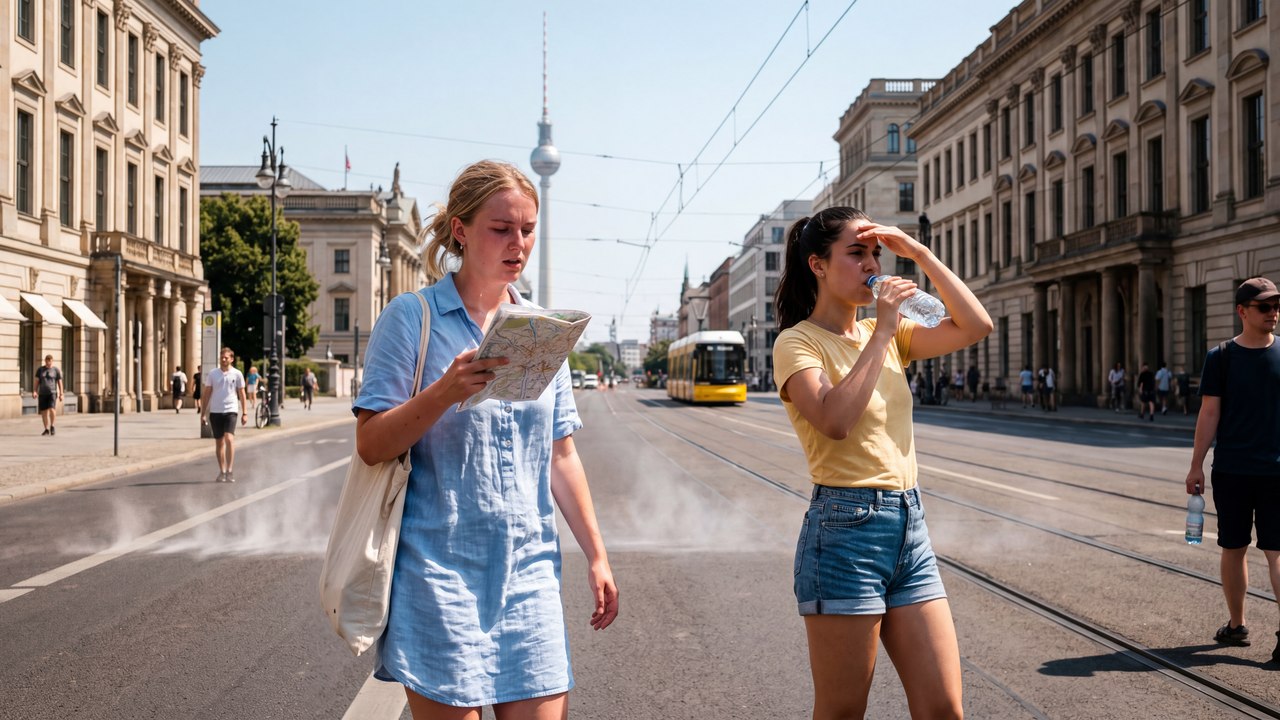
Image generated by AI
Europe is currently experiencing a systemic climatic breakdown as a high-pressure "heat dome" stabilizes over the continent. Meteorological data confirms an Omega block configuration, a weather pattern that traps hot air masses and prevents the entry of cooler Atlantic currents. This has resulted in sustained temperatures approaching 40°C across multiple latitudes.
The heatwave wavefront has shifted eastward. While France and the United Kingdom previously faced record thermal conditions, the crisis has now intensified in Germany and Poland. These nations are currently at the frontline of the temperature surge, with peak intensity expected over the coming weekend.
Simultaneously, southern and central corridors—including Italy, Austria, and Hungary—are reporting severe heat accumulation. In Italy, inland regions are suffering from a total lack of cooling airflow, while Hungary is seeing intensified thermal stress across the Danube basin. Further north, Denmark, Czechia, and Slovakia have entered a transitional exposure zone, experiencing sharp, non-seasonal temperature spikes.
The impact extends beyond public health to critical national infrastructure. Sustained solar heating is causing physical deformation of road surfaces and thermal expansion of rail tracks, forcing transport operators to modify schedules. Energy grids are under extreme pressure as cooling demands peak in densely populated urban centers.
Key Facts Breakdown
- Peak Temperatures: Approaching 40°C in multiple European zones.
- Primary Cause: Atmospheric Omega block trapping hot air and preventing nighttime cooling.
- High-Risk Zones: Germany and Poland (current frontline); Italy, Austria, and Hungary (urban corridors).
- Transitional Zones: Denmark, Czechia, and Slovakia.
- Infrastructure Impact: Rail track expansion, road surface deformation, and energy grid instability.
- Public Health: Increased hospital admissions for dehydration and heat exhaustion; deployment of urban cooling shelters.
Affected Regions Summary
| Region | Status | Primary Impact |
|---|---|---|
| Germany & Poland | High-Risk | Infrastructure strain; peak heat expected weekend |
| Italy, Austria, Hungary | Expanding Pressure | Urban heat accumulation; limited airflow |
| Denmark, Czechia, Slovakia | Transitional | Sudden thermal loads; energy demand spikes |
| France, UK, Switzerland | Previous Peak | Record-breaking thermal conditions |
Why This Matters
Industry observers note that this event represents more than a seasonal spike; it is a "climatic breakdown event" that exposes the fragility of European infrastructure. Most European rail and road networks were engineered for temperate climates, not sustained 40°C loads.
The "Omega block" is particularly dangerous because it eliminates the nocturnal cooling cycle. When cities cannot cool down overnight, energy grids face a 24-hour load, increasing the probability of systemic blackouts. For the travel industry, this creates a "cascading failure" scenario: heat damages the tracks, which delays the trains, while the energy grid struggles to power the stations, leading to total mobility collapse in high-density corridors.
Industry Outlook
Expect a gradual eastward shift of the heat mass toward the Balkans. While thunderstorm systems may provide temporary relief, the transition will likely be volatile. Aviation and rail operators should prepare for continued "thermal throttling" of services. Long-term, this event will likely accelerate the mandate for "heat-resilient" infrastructure upgrades across Central and Northern Europe to prevent similar operational shutdowns in future summers.
Related Travel Guides
Disclaimer
This article is for informational and educational purposes only. It does not constitute legal, financial, or professional advice. While we strive to provide accurate and up-to-date information, travel policies, regulations, and conditions change rapidly. Always verify information with official sources before making travel decisions. Nomad Lawyer makes no representations about the accuracy, reliability, completeness, or suitability of the information provided. Readers should consult qualified professionals for advice specific to their circumstances. The views expressed in this article are those of the author and do not necessarily reflect the views of Nomad Lawyer.
Kunal K Choudhary
Co-Founder & Contributor
A passionate traveller and tech enthusiast. Kunal contributes to the vision and growth of Nomad Lawyer, bringing fresh perspectives and driving the community forward.
Learn more about our team →