
Norway, Denmark, Netherlands, and England Expand Sustainable Rail Travel Options Amid European Flight Disruption Concerns: New Travel Alert
European nations prioritize sustainable rail travel as aviation schedule adjustments and environmental targets reshape domestic and international transit in 2026.

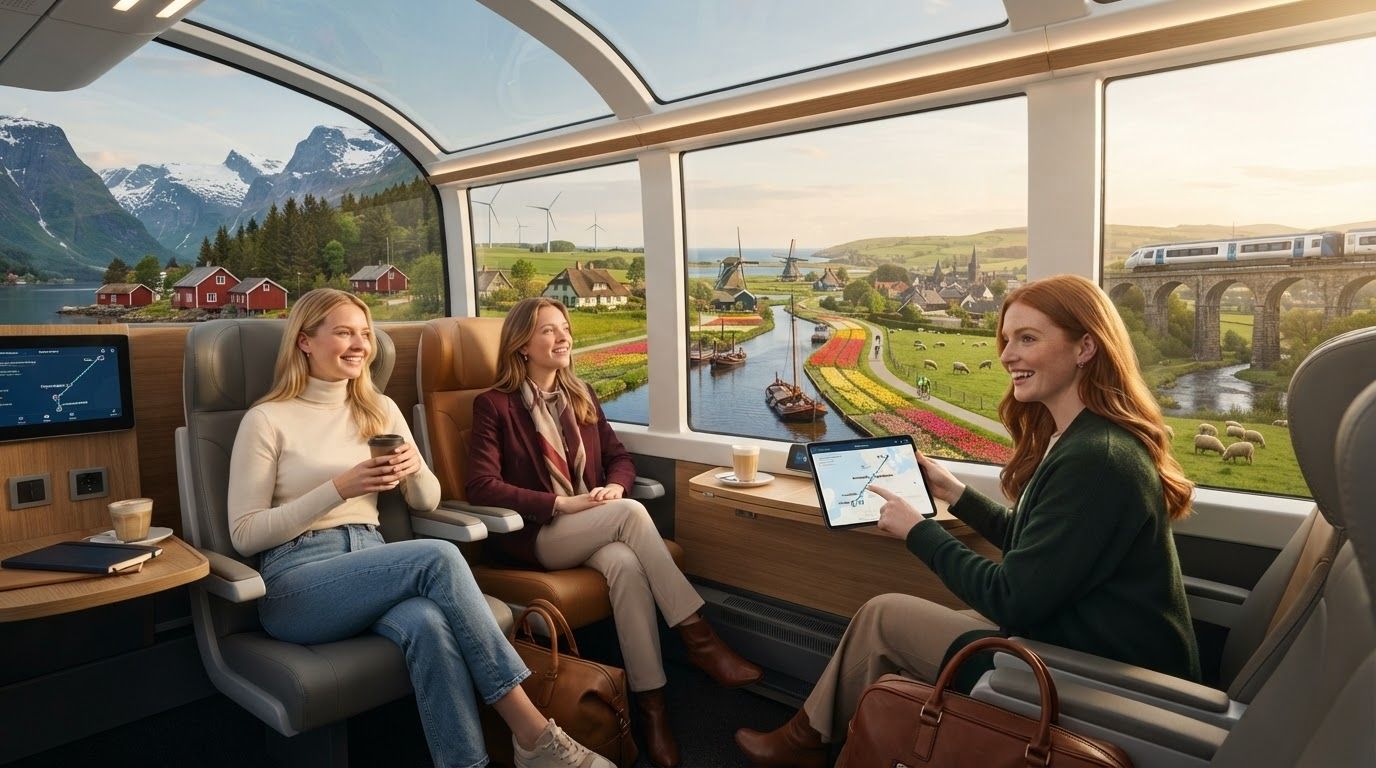
Image generated by AI
Published on July 14, 2026
A major transformation is taking place across Europe as Norway, Denmark, the Netherlands, and England coordinate efforts to promote sustainable rail travel as an alternative to short-haul aviation. This shift is driven by a combination of climate objectives, updated railway connectivity, and evolving traveler habits as flight cancellations and schedule adjustments impact traveler confidence. Holidaymakers are encouraged to consider rail expeditions for cross-border itineraries to minimize airport-related delays and support green transit goals.
Quick Summary
- Aviation Adjustments: Approximately 1,200 passenger flights were cut from UK schedules between May 3 and June 14, 2026, due to operational issues.
- Green Rail Operations: The Netherlands has operated its passenger trains entirely on green electricity since 2017.
- Long-Term Planning: Norway’s national rail strategy outlines development priorities stretching towards 2050 to capture domestic demand.
- Integrated Travel: Denmark is blending cycling infrastructure with rail networks to create cleaner urban and regional connections.
- Cross-Border Platform: The Netherlands-led International Rail Passenger Transport initiative is designing the future network toward 2040.
Context and Background: Reshaping the Continent's Mobility
The coordinated transit strategies of several European administrations reflect a long-term commitment to developing low-impact transportation networks. Aviation continues to play an essential role in long-haul international travel, but short-distance flights are increasingly facing competition from high-speed trains.
Rather than relying on single events, governments are systematically upgrading rail capacity, simplifying cross-border ticketing, and expanding high-speed connections. By doing so, they are transforming train travel from a simple transit option into a complete, scenic travel experience that competes directly with air travel on short-distance routes.
Event and Incident Details: Flight Cancellations and Rail Infrastructure Milestones
Recent data highlights the operational pressures affecting the aviation sector. Reports from the UK Department for Transport revealed that airlines regularly adjusted schedules due to commercial and operational requirements.
Between May 3 and June 14, 2026, carriers removed roughly 1,200 passenger flights from UK schedules. While this represented less than one percent of all planned flights during that timeframe, it highlighted the scheduling volatility that travelers frequently experience at European airports.
In contrast, rail networks are achieving significant sustainability and connectivity milestones:
- Netherlands Green Rail: Dutch passenger trains have been powered entirely by green electricity since 2017, making the country a central hub for low-emission travel.
- Norway's 2050 Vision: The Norwegian Railway Directorate is implementing a comprehensive strategy designed to enhance passenger mobility and compete with domestic aviation over the next few decades.
- Danish Multi-Modal Links: Denmark is focusing on safety and efficiency by coordinating aviation and rail planning under a single authority.
- England's International Gateways: High-speed rail services from London connect directly to Paris, Brussels, and Amsterdam, bypassing traditional airport transfer times.
Risk and Impact: Navigating Volatility in Short-Haul Transit
Travelers choosing short-haul flights in Europe face several operational challenges that can be mitigated by choosing rail alternatives:
- Frequent Flight Adjustments: Airlines regularly modify flight schedules for commercial and operational reasons, leading to unexpected changes in itineraries.
- Airport Congestion and Delays: Security procedures and check-in queues at major European hubs continue to impact travel times.
- Environmental Impact: Short-haul aviation remains a high-emission transit mode compared to electrified rail systems.
- Lack of Flexibility: Flight changes often involve strict fees, whereas train schedules frequently offer more flexible booking policies.
- Transit Disruptions: Minor operational challenges within aviation networks can cascade, leading to larger schedule adjustments across the region.
What Authorities Are Saying: Joint Platforms and National Transport Directives
European authorities are actively collaborating to build a more integrated rail ecosystem. The Netherlands is leading the International Rail Passenger Transport platform, which focuses on enhancing cross-border rail links, expanding passenger capacity, and developing the European network towards 2040.
In Norway, the Norwegian Railway Directorate coordinates infrastructure planning to ensure train travel remains competitive. Similarly, the Danish Civil Aviation and Railway Authority manages both transport systems to optimize safety, environmental performance, and connection efficiency.
These regulatory bodies agree that improving the overall passenger experience—through simpler ticketing and better station accessibility—is essential to encourage a shift toward sustainable transit.
Practical Traveler Advice: How to Plan Multi-Country Rail Journeys
For travelers looking to explore Europe using the region’s expanding railway networks, transport experts recommend the following tips:
- Utilize Key Rail Corridors: Plan itineraries around established international routes, such as the London-Paris connection via the Channel Tunnel, London-Amsterdam services, and Netherlands-Germany routes.
- Combine Cycling with Rail: Take advantage of multi-modal systems, especially in Denmark and the Netherlands, where train stations feature extensive bike rental and cycling infrastructure.
- Monitor Flight Schedules: If you must fly, keep in mind that over 1,200 flights were removed from UK schedules in early summer 2026 alone. Have a backup rail route prepared.
- Book Scenic Journeys: In locations like Norway, choose train travel to experience mountain landscapes and fjords that are invisible from the air.
- Check Eco-Credentials: Travel through the Netherlands to support rail lines operating on 100% green electricity.
Broader Context: The Rise of Slow Tourism and Multi-Country Rail Expeditions
The growing popularity of sustainable rail travel is closely tied to the rise of "slow tourism." Modern travelers are increasingly prioritizing meaningful, low-impact holidays that foster a closer connection with local communities. Rail travel aligns with this philosophy by allowing visitors to experience changing landscapes, local cultures, and regional towns along their route.
This shift also benefits local businesses located outside major city centers. Hotels near regional rail stations, local dining spots, and outdoor activity providers are seeing increased economic activity as tourists explore beyond traditional airport destination hubs.
Looking Ahead: The Future of Europe's Integrated Transport System
As Europe moves toward its climate goals, the expansion of the international rail network is expected to accelerate. Initiatives aimed at the 2040 and 2050 horizons focus on creating a seamless, cross-border network that makes train travel the default choice for journeys under four hours.
Travelers can expect continued improvements in ticketing platforms, increased train frequencies, and better integration between rail, cycling, and local public transport systems. By prioritizing green infrastructure, Norway, Denmark, the Netherlands, and England are helping shape a cleaner, more connected future for European tourism.
Conclusion
In conclusion, Europe is entering a new era of travel characterized by the growth of rail expeditions and sustainable mobility. While aviation challenges continue to affect short-haul flight reliability, investments in railway systems across Norway, Denmark, the Netherlands, and England provide travelers with comfortable, efficient, and environmentally responsible alternatives. Emphasizing preparedness and monitoring transport schedules will ensure a smooth journey across the continent's changing travel landscape.
FAQ: European Rail Networks and Sustainable Travel in 2026
Why are European travelers shifting from short-haul flights to rail?
Travelers are choosing rail due to operational pressures in the aviation sector, environmental concerns, and improved cross-border rail connections. Trains offer city-center departures and fewer airport-related delays.
How did flight schedule adjustments affect travel in 2026?
Between May 3 and June 14, 2026, approximately 1,200 passenger flights were cut from UK schedules. This highlighted the volatility of short-haul aviation and increased interest in more flexible rail travel.
Which countries are leading the green rail movement?
Norway, Denmark, the Netherlands, and England are major players. Notably, the Netherlands has run its passenger trains entirely on green electricity since 2017, while Norway has a long-term development strategy extending to 2050.
What are the most popular international rail corridors?
Popular corridors include services from London to Paris (via the Channel Tunnel), London to Brussels, London to Amsterdam, Netherlands-Germany links, and Nordic routes connecting Norway and Denmark.
Meta Metadata and SEO Specifications
- Suggested Meta Title: Europe Sustainable Rail Travel & Flight Cancellations 2026
- Suggested URL Slug: europe-green-railway-networks-aviation-disruptions-2026
- Suggested Tags: Europe Train Travel, Sustainable Tourism, Aviation Disruptions 2026, Rail Expeditions, Green Mobility
- Suggested Featured Image Alt Text: A high-speed passenger train traveling through a lush green valley with snow-capped mountains in the background.
Related Travel Guides
- How Sri Lanka's Inland Highland Resorts Are Capturing the Global Wellness Tourism Market Through Eco-Conservation at Hunas Falls in 2026
- Sri Lanka Rail Suspends Mannar and Upcountry Train Lines After Monsoon Landslides Block Tracks in 2026
- Sri Lanka Tourism Earnings Decline 12% in First Half of 2026 as Government Cuts Arrival Targets to 2.5 Million Amid Flight Disruptions: New Travel Alert
- Etihad Rail Introduces Pet-Friendly Passenger Travel Across UAE Connecting Abu Dhabi, Dubai, and Fujairah, Shifting Cabin Baggage Rules: New Travel Alert
Disclaimer
This article is for informational and educational purposes only. It does not constitute legal, financial, or professional advice. While we strive to provide accurate and up-to-date information, travel policies, regulations, and conditions change rapidly. Always verify information with official sources before making travel decisions. Nomad Lawyer makes no representations about the accuracy, reliability, completeness, or suitability of the information provided. Readers should consult qualified professionals for advice specific to their circumstances. The views expressed in this article are those of the author and do not necessarily reflect the views of Nomad Lawyer.
Preeti Gunjan
Contributor & Community Manager
A passionate traveller and community builder. Preeti helps grow the Nomad Lawyer community, fostering engagement and bringing the reader experience to life.
Learn more about our team →