
Europe Flight Cancellations Crisis: 13,000 Flights Axed, Fuel Costs Cripple Airlines
13,000 flights canceled across Europe as jet fuel prices double. Istanbul, Munich, London hubs hit hard. UK half-term holidays disrupted by airline schedule cuts and soaring ticket prices.

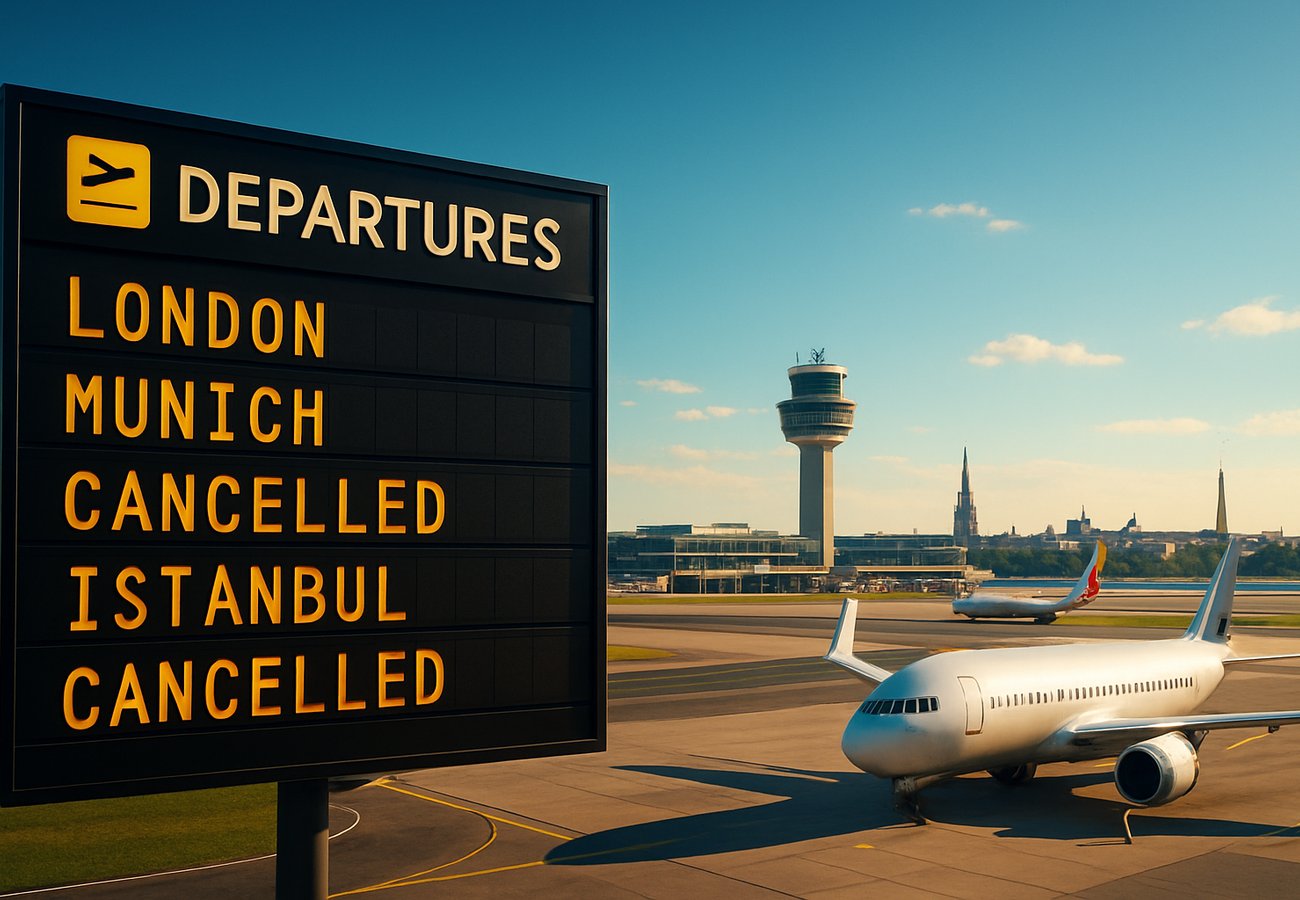
Image generated by AI
Europe Faces Unprecedented Travel Nightmare: 13,000 Flights Canceled as Jet Fuel Costs Skyrocket Across Major Hubs
Aviation Crisis Unfolds: Middle East Conflict Drives Fuel Prices to Record Highs, Forcing Mass Schedule Cuts During Peak Travel Season
The European aviation landscape is experiencing one of its most severe disruptions in recent years as airlines cancel nearly 13,000 flights globally in response to catastrophic jet fuel price increases triggered by Middle Eastern geopolitical tensions. With over two million seats removed from flight schedules, travelers planning trips during the critical UK half-term holidays period are facing a perfect storm of flight cancellations, astronomical ticket price increases, and widespread travel chaos across the continent's busiest airports.
The Scale of Disruption: A Continental Crisis Unfolds
What began as regional fuel market volatility has escalated into a full-blown aviation emergency affecting millions of travelers across Europe, the UK, and beyond. The stark numbers tell the story: jet fuel prices have more than doubled in just three months, surging from $831 per tonne in February to a staggering $1,838 per tonne by early April 2026. This unprecedented cost explosion has forced airlines to make dramatic operational decisions, with major carriers implementing sweeping schedule reductions and implementing dynamic pricing strategies that are pushing ticket costs to unsustainable levels for ordinary travelers.
The timing could hardly be worse. These cancellations coincide precisely with the UK's highly anticipated half-term school holidays—a critical period when millions of families plan their annual getaways to European destinations. Airlines serving major European hubs including London, Munich, and Istanbul are bearing the brunt of the crisis, with cascading flight cancellations and delays creating a domino effect throughout the continent's interconnected air network.
According to Cirium, the leading aviation analytics and intelligence firm, the reductions are disproportionately affecting popular leisure routes and business travel corridors. The data reveals that no major European hub has been spared from this aviation emergency, with passengers now facing unprecedented uncertainty when attempting to book or confirm travel arrangements.
Istanbul Hub: Gateway Under Siege
Istanbul's position as one of Europe's most critical aviation crossroads has made it particularly vulnerable to the current crisis. Serving as the vital nexus connecting Europe with Asia, the Middle East, and beyond, Istanbul's two major airports are now confronting significant flight capacity reductions. For travelers heading to Turkey's renowned coastal destinations, the historic Aegean region, or planning business connections through this strategic hub, the disruptions present serious challenges.
Airlines serving Istanbul are implementing selective route cancellations, prioritizing high-demand routes while trimming less profitable services. The cascading effects extend beyond Turkey's borders—connecting passengers heading to Asia, the UAE, Saudi Arabia, and other Middle Eastern destinations face longer layovers, limited seat availability, and rapidly inflating fares as demand concentrates on remaining flights.
Munich Aviation Hub: Bavarian Tourism Under Threat
Munich, home to one of Europe's busiest and most efficiently operated airports, is similarly reeling from extensive flight cancellations. The Bavarian capital's robust tourism sector, particularly during the lucrative spring and early summer months, faces significant headwinds as airlines reduce capacity on routes serving Southern Germany.
Tourists planning springtime excursions to the Bavarian Alps, the picturesque towns surrounding Lake Neuschwanstein, or Munich's renowned beer gardens and cultural attractions are finding themselves stranded or forced to rebook at substantially higher prices. The airport's role as a major connecting hub for flights to Vienna, Prague, and other Central European destinations compounds the disruption, creating bottlenecks throughout the region's air travel network.
London and UK Airports: Peak Season Becomes Peak Chaos
The UK's major airports—Heathrow, Gatwick, Stansted, and Manchester—are experiencing unprecedented pressure as airlines grapple with rising costs and reduced profitability. Heathrow, already operating at near-maximum capacity constraints, has become the epicenter of the crisis. The concentration of flight cancellations at London's premier hub threatens to severely disrupt business travel, leisure tourism, and connecting traffic throughout the UK and Ireland.
For UK-based travelers, the situation presents a particularly acute challenge: domestic prices for flights have increased dramatically, while international connections face both availability constraints and substantial price premiums.
The Fuel Crisis: Understanding the Economics Behind the Cancellations
The root cause of this aviation emergency lies in the extraordinary surge in jet fuel prices, directly attributable to escalating tensions in the Middle East. This geopolitical instability has disrupted crude oil supplies and sent petroleum product prices spiraling upward, with aviation fuel bearing a particularly acute burden.
Jet fuel price trajectory:
- February 2026: $831 per tonne
- Early April 2026: $1,838 per tonne
- Increase: 121% in approximately 10 weeks
For airlines operating on notoriously thin profit margins—typically 2-3% in normal market conditions—this fuel cost explosion is unsustainable. A single long-haul flight from London to New York, for instance, may burn 70,000 kilograms of jet fuel. With prices having effectively doubled, fuel represents an astronomical portion of per-flight operating costs.
Major Airline Responses: Unprecedented Schedule Cuts
The aviation industry's response has been swift and severe:
- Lufthansa Group has announced plans to cancel up to 20,000 flights between May 2026 and October 2026
- Air France and KLM have implemented significant summer schedule reductions
- Air Canada has trimmed its transatlantic capacity
- Delta Air Lines and other North American carriers have reduced European operations
These are not modest adjustments—they represent a wholesale reconfiguration of European aviation capacity during the peak summer travel season. The cumulative effect of these reductions across the industry has produced a situation where demand vastly exceeds available supply, inevitably driving ticket prices to unprecedented levels.
UK Government Response: Slot Concessions and Contingency Measures
In a significant regulatory shift, the UK government has introduced emergency measures designed to provide airlines with operational flexibility. Transport Secretary Heidi Alexander announced that airlines would be permitted to cancel flights at major airports like Heathrow without risking the loss of their precious take-off and landing slots—a concession that would normally be unthinkable.
This extraordinary measure reflects the severity of the situation and government acknowledgment that the aviation industry faces genuine existential pressures. Under normal circumstances, airlines jealously guard their airport slots; surrendering even one landing slot at Heathrow represents a significant competitive loss. The government's decision to suspend this requirement effectively prioritizes industry stability over slot protection.
However, this policy change also carries implications for travelers: airlines now have stronger incentives to cancel flights rather than operate them at significant losses, potentially accelerating the pace of cancellation notifications during the coming weeks.
Impact on UK Half-Term Holidays: Families Face Disruption and Costs
The UK school half-term holiday period represents one of the most significant annual travel events in British and European tourism. Millions of families have already booked or are planning summer vacations during this traditionally busy period. The convergence of flight cancellations, seat capacity reductions, and ticket price increases is creating a perfect storm for holiday planners.
Key impacts for travelers:
- Missed connections: With capacity constraints tightening throughout Europe's hub airports, connecting passengers face increased risks of missed connections and multi-day delays
- Availability crisis: Popular routes to Mediterranean destinations, Eastern Europe, and leisure-focused regions are experiencing severe seat shortages
- Price explosion: Families budgeting for European holidays based on pre-crisis pricing are discovering ticket costs have increased 40-60% or more
- Rebooking nightmares: Passengers holding canceled tickets face extremely limited options and extended wait times to reach airline customer service representatives
- Insurance implications: Standard travel insurance policies may not adequately cover losses resulting from airline schedule changes
Industry Analysis: Structural Pressures Beyond Fuel Costs
While jet fuel prices represent the immediate catalyst for these cancellations, aviation industry analysts identify deeper structural vulnerabilities that have been exposed by the current crisis.
The global airline industry operates on extraordinarily thin profit margins, with most carriers reporting net profit margins between 2-4%. This lean operational structure, optimized for efficiency in stable market conditions, provides essentially zero buffer for external shocks. When fuel costs double in a matter of weeks, airlines lack sufficient profit cushion to absorb the increases without implementing dramatic cost reductions.
Additionally, the rigid nature of aviation operations—particularly the fixed costs of crew scheduling, ground operations, and airport fees—means airlines cannot simply reduce costs proportionally with capacity reductions. A flight operating at 50% capacity still requires full crew expenses and airspace charges, making such flights economically unviable.
The current crisis also exposes the limitations of airline hedging strategies. Many carriers use fuel hedging contracts to protect against price volatility, but rapid escalations beyond historical precedent can overwhelm these financial protections.
Passenger Impact: Beyond Canceled Flights
The human cost of this aviation crisis extends far beyond simple flight cancellations. Consider the following real-world scenarios now playing out across Europe:
Business travelers: Corporate clients with time-sensitive meetings face impossible choices—pay premium prices for limited available seats or postpone critical business engagements.
Family vacationers: Families who have saved throughout the year for annual holidays discover their planned trips are either canceled or financially unaffordable at inflated new prices.
Medical travel: Patients traveling for necessary medical procedures in other European countries face treatment delays.
Connecting passengers: Travelers on multi-leg journeys face multiplication of risks—each flight cancellation cascades into failed connections and complete itinerary disruptions.
Missed revenue: The tourism industry across European destinations faces significant revenue declines as fewer travelers can access travel during peak season.
Recovery Outlook: When Will Normalcy Return?
The aviation community remains uncertain about when fuel prices will stabilize. Energy market analysts point to several potential scenarios:
- Rapid geopolitical resolution: If Middle Eastern tensions de-escalate quickly, fuel prices could normalize within weeks
- Prolonged instability: Extended geopolitical uncertainty could maintain elevated fuel prices for months
- Demand destruction: If ticket prices remain high enough to suppress demand, fuel consumption may decline, potentially easing prices
Most industry forecasters suggest that aviation capacity and pricing may not return to pre-crisis levels until the fourth quarter of 2026 at the earliest.
Conclusion: Aviation in Crisis, Recovery Path Uncertain
Europe's aviation sector is navigating one of its most severe operational and economic crises in decades. The combination of skyrocketing fuel costs, mass flight cancellations affecting 13,000 flights globally, and astronomical ticket price increases has created a travel environment fundamentally different from historical norms. Major hubs including Istanbul, Munich, and London are experiencing unprecedented disruption at precisely the moment when demand peaks due to school holiday periods.
For travelers, the message is unambiguous: flexibility, preparation, and realistic expectations are essential. The UK government's regulatory concessions and industry contingency measures may stabilize the situation but cannot eliminate the fundamental supply-demand imbalance driving the current crisis.
The aviation industry that emerges from this crisis will likely be permanently altered, with increased emphasis on fuel hedging, fuel-efficient aircraft, and potentially adjusted business models reflecting the new reality of volatile energy costs.
Key Takeaways
- 13,000 flights canceled globally as airlines respond to doubled jet fuel costs ($831 to $1,838 per tonne)
- Two million seats removed from European schedules during peak travel season
- Major hubs affected: Istanbul, Munich, London, and other critical European aviation crossroads
- UK half-term holidays threatened: Families facing steep price increases and limited flight availability
- Airlines trimming capacity: Major carriers like Lufthansa Group, Air France, and KLM implementing widespread operational cuts
- Regulatory flexibility: UK government waiving airport slot rules to support airline operational adjustments
Related Travel Guides
Disclaimer
This article is for informational and educational purposes only. It does not constitute legal, financial, or professional advice. While we strive to provide accurate and up-to-date information, travel policies, regulations, and conditions change rapidly. Always verify information with official sources before making travel decisions. Nomad Lawyer makes no representations about the accuracy, reliability, completeness, or suitability of the information provided. Readers should consult qualified professionals for advice specific to their circumstances. The views expressed in this article are those of the author and do not necessarily reflect the views of Nomad Lawyer.
Kunal K Choudhary
Co-Founder & Contributor
A passionate traveller and tech enthusiast. Kunal contributes to the vision and growth of Nomad Lawyer, bringing fresh perspectives and driving the community forward.
Learn more about our team →