
European Air Travel Disruption 2026: Over 1,800 Delays and 122 Cancellations Strike Major Aviation Hubs

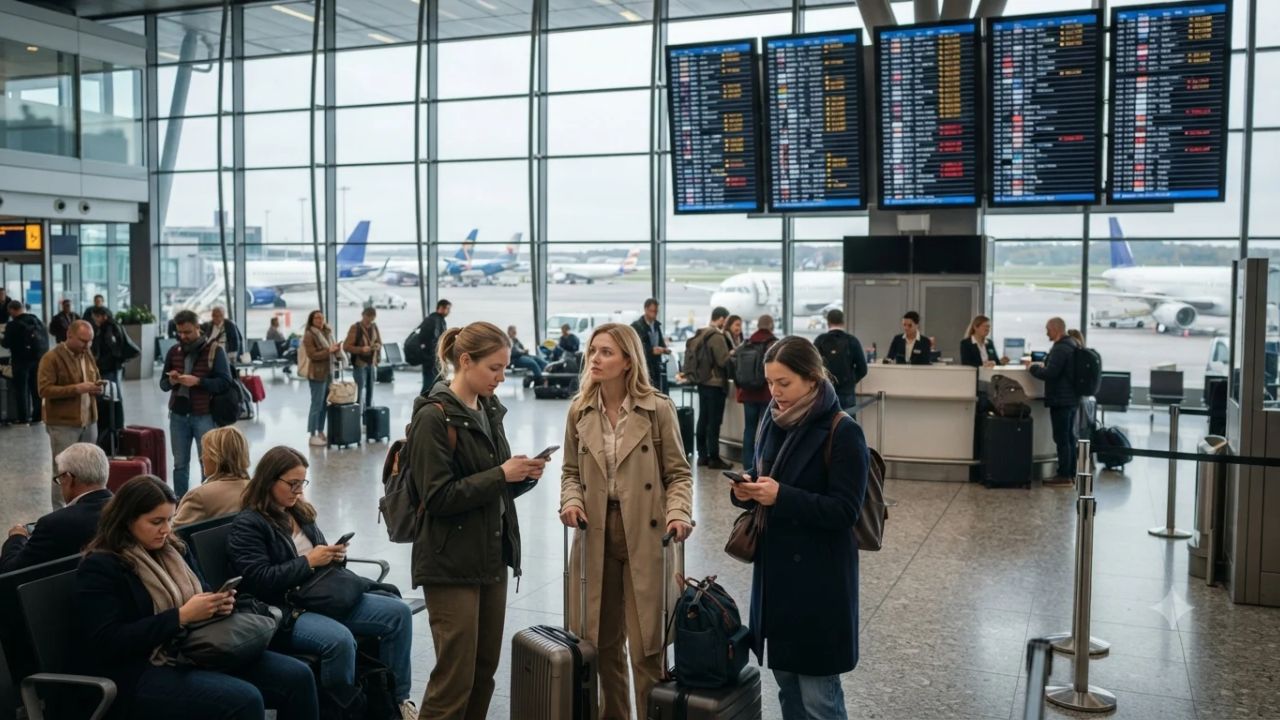
On a single afternoon across Western and Northern Europe, aviation networks logged a staggering 1,845 flight delays and 122 outright cancellations, with Amsterdam Schiphol alone absorbing 286 delayed departures and arrivals. Real-time tracking data verified on September 20, 2026, reveals that schedule disruptions rippled across 16 major airports spanning the United Kingdom, Ireland, France, Italy, the Netherlands, Germany, Portugal, Norway, Finland, and Belgium. Rather than isolated weather events, tight aircraft turnaround times and congested airspace corridors compounded disruptions across low-cost and legacy carriers alike.
Budget giants bore the heaviest volume of passenger impacts: Ryanair registered 464 delays (a 15% delay rate) and 28 cancellations, while easyJet suffered 430 delays (a 21% delay rate) and 21 cancellations. Dutch flag carrier KLM logged 140 delays (an 18% delay rate) and 16 cancellations. For transatlantic and regional flyers, understanding how individual hubs manage slot constraints and passenger rebooking under European Union Air Passenger Rights Regulations is essential to salvaging disrupted itineraries.
Cascading Hub Delays: Schiphol, Charles de Gaulle, and Heathrow Under Pressure
The operational strain on September 20 concentrated heavily within Europe's primary international aviation megahubs. At Amsterdam Schiphol (AMS), where 1% of total flights faced cancellation and 20% of originating services suffered delays, 30 separate flight disruptions involved transatlantic routes to and from the United States. Inbound traffic into Schiphol saw a 17% delay rate alongside a 1% cancellation rate.
In France, Paris Charles de Gaulle/Roissy (CDG) posted 227 flight delays and 6 cancellations, with 21 disruptions hitting U.S.-bound or arriving routes and a 17% destination delay rate. Secondary hub Paris Orly (ORY) recorded 132 delays and 3 cancellations, with 21% of inbound arrivals running behind schedule.
Across the English Channel, London Heathrow (LHR) reported 178 delays and 8 cancellations, with 41 disruptions specifically impacting North American routes. Originating flights from Heathrow experienced a 13% delay rate, while arriving services faced an 11% delay rate. London Gatwick (LGW) logged 169 delays and 2 cancellations (15% destination delay rate), while Manchester Airport (MAN) in northern England saw 177 delays and 14 cancellations. Manchester experienced severe disruption on originating departures, with 2% cancelled and 22% delayed, alongside a 26% delay rate for incoming aircraft.
Southern and Northern European gateways faced parallel friction. Rome Leonardo da Vinci Fiumicino (FCO) registered 179 delays and 5 cancellations, including 13 delays on U.S. routes and a 17% incoming delay rate. Dublin Airport (DUB) in Ireland posted 107 delays and 2 cancellations, with 7 delays on U.S. flights and a 14% arrival delay rate. Further north, Oslo Gardermoen (OSL) logged 74 delays, while Helsinki-Vantaa (HEL) in Finland recorded 66 delays.
What Makes European Air Corridor Delays Unique
Unlike point-to-point domestic networks in smaller nations, Europe's civil aviation framework is governed by tightly packed multinational airspace managed through Eurocontrol. When morning slot restrictions or weather patterns stall rotations at high-density hubs like Schiphol or Heathrow, aircraft and flight crews fall out of legal operational hours. Because ultra-low-cost carriers like Ryanair and easyJet schedule tight 25-to-30-minute aircraft turns between flights, a 45-minute delay on an early-morning rotation cascades into multi-hour delays by late afternoon.
Furthermore, airport-specific operating limits intensify the challenge. Amsterdam Schiphol and Frankfurt operate under strict environmental noise quotas and night-flight bans, meaning delayed evening flights risk outright cancellation if they cannot depart before mandatory curfew hours. Manchester and Paris Orly experience heavy domestic and regional feeder traffic, which compounds runway congestion when international widebodies require extended gate holds.
Transatlantic travelers face distinct vulnerability during these disruption waves. With dozens of U.S. connections delayed out of Heathrow, Charles de Gaulle, Schiphol, and Rome, missed connections at American coastal gateways like New York JFK, Boston Logan, and Chicago O'Hare can strand passengers for 24 to 48 hours during peak autumn travel periods.
Visitor Insider Tips
When navigating European airport hubs during widespread air traffic delays, experienced travelers employ specific defensive strategies:
- Leverage EU261 and UK261 Compensation Rights: If your flight is cancelled or delayed by more than three hours upon arrival—and the disruption is within the airline's operational control rather than extraordinary weather—you may be entitled to statutory cash compensation between €250 and €600 under European passenger legislation.
- Switch to High-Speed Rail for Short Sectors: If facing multi-hour delays or cancellations between major European cities, look to high-speed rail alternatives. The Eurostar connects London with Paris and Brussels in around two hours, while Thalys/Eurostar and Deutsche Bahn ICE trains link Amsterdam with Brussels, Paris, and Frankfurt without airport queue friction.
- Track Inbound Aircraft Tail Numbers: Do not rely solely on terminal departure screens, which often delay posting schedule revisions. Use real-time flight tracking platforms to monitor where your specific incoming aircraft is flying from to anticipate delays hours before boarding announcements.
- Preserve Duty-of-Care Expense Receipts: Under European regulations, airlines must provide complimentary meals, refreshments, and hotel lodging with ground transport if delays stretch overnight. If airline desks are understaffed, book modest lodging yourself and retain all itemized receipts for direct reimbursement.
- Target Morning Flight Rotations: When booking flights across Europe, always reserve the earliest morning departure (between 6:00 AM and 8:00 AM). Early aircraft are already positioned at departure gates overnight, significantly reducing the chance of cascading delays throughout the day.
Cultural and Environmental Context
The recurring wave of flight delays and slot restrictions across Europe highlights the deep ongoing transformation within European transport policy. The European Union and national governments are actively encouraging travelers to transition from short-haul regional flights to electrified rail networks in order to meet binding carbon-reduction targets.
In France, domestic commercial air routes that can be completed by train in under two and a half hours face legal restrictions, while the Dutch government continues to evaluate capacity ceilings at Amsterdam Schiphol to mitigate carbon emissions and regional noise pollution. As major airports cap daily flight volumes to protect local community air quality and reduce noise footprints, airlines face tighter margins for error when schedule irregularities arise.
For global visitors, this changing regulatory environment rewards multimodal travel planning. Pairing international long-haul flights with scenic rail passes not only insulates travelers from airport terminal chaos but also directly supports Europe's transition toward low-emission sustainable mobility.
FAQ: European Flight Delays 2026
What are my rights if my flight is delayed by more than 3 hours in Europe?
Under EU261 and UK261 regulations, passengers arriving three or more hours late due to airline operational issues are entitled to compensation ranging from €250 to €600, plus meals and drinks.
Which European airports experienced the most delays on September 20, 2026?
Amsterdam Schiphol led with 286 delays and 22 cancellations, followed by Paris Charles de Gaulle with 227 delays and Rome Fiumicino with 179 delays.
Does EU261 compensation apply to budget carriers like Ryanair and easyJet?
Yes. EU261 and UK261 regulations apply equally to all commercial airlines departing from European and UK airports, regardless of ticket price or airline business model.
Will the airline pay for my hotel if my flight is delayed overnight?
Yes. Airlines operating in Europe have a legal duty of care to provide hotel accommodation and transport for overnight flight delays, regardless of the cause of the disruption.
Mastering European travel means knowing when to take to the skies and when to let the quiet speed of the rails carry you across the continent.
Related Travel Guides
Disclaimer
This article is for informational and educational purposes only. It does not constitute legal, financial, or professional advice. While we strive to provide accurate and up-to-date information, travel policies, regulations, and conditions change rapidly. Always verify information with official sources before making travel decisions. Nomad Lawyer makes no representations about the accuracy, reliability, completeness, or suitability of the information provided. Readers should consult qualified professionals for advice specific to their circumstances. The views expressed in this article are those of the author and do not necessarily reflect the views of Nomad Lawyer.
Raushan Kumar
Founder & Lead Developer
Full-stack developer with 11+ years of experience and a passionate traveller. Raushan built Nomad Lawyer from the ground up with a vision to create the best travel and law experience on the web.
Learn more about our team →