
EU-Philippines Trade Deal Puts Manila’s Fragile Direct Europe Air Link in the Spotlight
EU-Philippines Trade Deal Puts Manila’s Fragile Direct Europe Air Link in the Spotlight

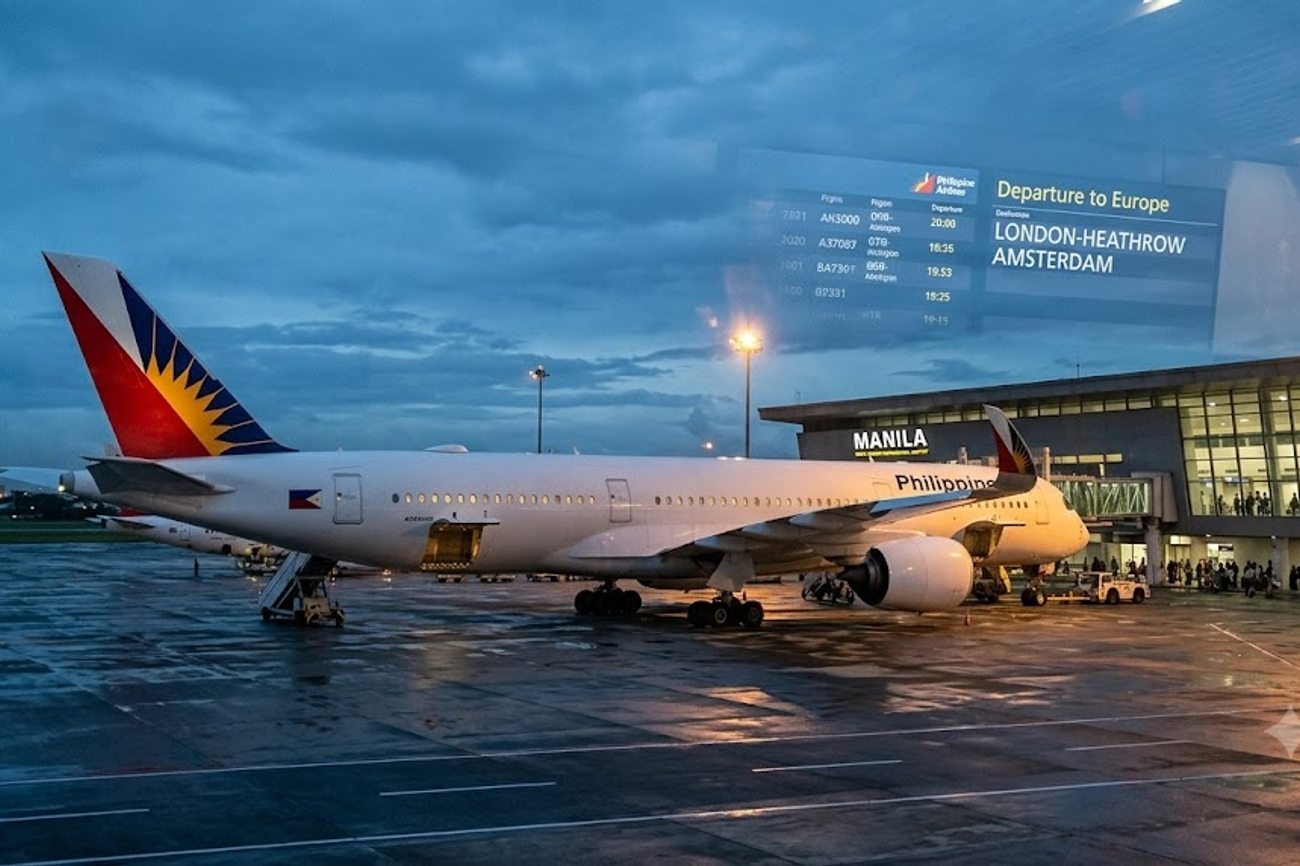
Image generated by AI
[Manila, September 2026] — European Commission President Ursula von der Leyen and Philippine President Ferdinand Marcos Jr. have reached a breakthrough agreement to finalize a Free Trade Agreement (FTA), a move expected to trigger a surge in corporate travel and investment between the two regions.
The announcement followed a high-level telephone conversation on September 21, 2026, confirming that negotiations are nearing completion. While the formal signing is scheduled for 2027 during President von der Leyen’s return visit to the Philippines, the deal aims to modernize trade, digital commerce, and investment frameworks. For the aviation sector, this political alignment signals a potential shift in the commercial viability of direct long-haul flights between Europe and Manila, which currently remain seasonal and irregular.
The Catalyst for Renewed Connectivity
The push for a comprehensive trade deal is the result of a decade-long effort to stabilize economic ties. Initial negotiations began in 2015 but stalled after only two rounds of talks. The process was revived in July 2023 during a visit to Manila by President von der Leyen, leading to the formal resumption of negotiations in March 2024.
Unlike traditional trade pacts that focus solely on the movement of physical goods, this framework is expansive. It encompasses services, intellectual property, public procurement, digital trade, and sustainable development. By lowering barriers to investment and trade, the European Commission and the Philippine government are attempting to create a structural economic dependency that could justify the high operational costs of direct aviation routes.
Impacted Markets and Aviation Hubs
Currently, the lack of consistent direct flights forces the majority of passengers into multi-leg journeys. The following hubs and carriers are the primary conduits for Europe-Philippines traffic:
- Primary Transit Hubs: Doha (DOH), Dubai (DXB), Abu Dhabi (AUH), Istanbul (IST), Singapore (SIN), Bangkok (BKK), and Hong Kong (HKG).
- Direct Service Status: Air France remains the primary provider of nonstop service between Paris and Manila, though these flights operate on a seasonal basis rather than a year-round schedule.
- Secondary Philippine Gateways: While Manila remains the focal point, the airports at Clark and Cebu are identified as potential beneficiaries of future business delegations and regional investments.
Practical Traveler Advisory and Strategic Insights
For the average passenger booking a trip today, this announcement does not result in immediate changes. There are no new flight schedules, no reduced tariffs, and no changes to immigration or passenger rights currently in effect.
Passenger Impact Assessment:
- Flight Availability: Passengers must continue to rely on one-stop connections via the Middle East or Asia. Direct flights remain rare and subject to seasonal timetable shifts.
- Ticket Pricing: There is no immediate evidence that this trade deal will lower airfares. Aviation pricing is driven by demand and fuel costs, not trade agreements.
- Corporate Travel: Business travelers—specifically executives, consultants, and engineers—can expect an increase in corporate-sponsored travel to business districts such as Makati, Bonifacio Global City, and Ortigas as the 2027 signing approaches.
- Cargo and Logistics: The deal may accelerate the movement of time-sensitive shipments, which could eventually make wide-body passenger flights more profitable for airlines by filling belly-hold cargo space.
The Economic Engine and Future Outlook
The urgency for better air links is underscored by the massive role tourism plays in the Philippine economy. According to data from the Philippine Statistics Authority, tourism directly generated PHP2.27 trillion in 2025, accounting for 8.1 per cent of the national GDP.
However, the data reveals a complex landscape. While tourism employment rose 2.5 per cent to 7.70 million people in 2025 (representing 15.7 per cent of total national employment), inbound tourism expenditure actually dropped by 6.4 per cent to PHP698.46 billion in the same period. Conversely, domestic tourism expenditure grew by 3 per cent to PHP3.26 trillion.
This disparity highlights why the FTA is viewed as a critical tool. By attracting high-spending business travelers and corporate investors—who are less price-sensitive than leisure tourists—the Philippines can offset the decline in inbound leisure spending.
The timeline for aviation expansion remains speculative. No European or Philippine regulatory body has mandated new routes, as the FTA does not compel airlines to launch services. Carriers will only expand capacity if they see a sustained increase in premium bookings and cargo revenue. The critical window for monitoring new route announcements will be the period leading up to the formal signing in 2027.
FAQ: Europe-Philippines Travel 2027
Are there new direct flights from Europe to Manila? No. Despite the trade agreement progress, no new routes have been announced. Air France continues to offer seasonal nonstop service, but most travelers must still connect through hubs like Dubai, Doha, or Singapore.
Will the trade deal make flights cheaper? Not directly. The FTA focuses on trade, investment, and services. While increased competition or higher demand might eventually influence pricing, the agreement itself does not mandate lower airfares or remove aviation taxes.
Which Philippine cities will benefit most from the agreement? Initially, business hubs in Metro Manila—specifically Makati, Bonifacio Global City, and Ortigas—are expected to see the first increase in visitor arrivals. Long-term benefits may extend to Clark and Cebu.
When will the trade agreement officially start? The agreement is expected to be signed in 2027 during President von der Leyen's visit to the Philippines. It is not yet ratified or implemented, meaning current trade and travel rules remain unchanged.
Trade deals build the foundation, but airlines hold the keys to the runway.
#EU-PhilippinesFTA2027 #MNL-CDG #EuropeanCommission #PhilippineStatisticsAuthority #ManilaAviation #EuropeAsiaTrade
Related Travel Guides
- Spain and South America Gain Stronger Air Links as Madrid-Barajas Expands European Flight Network
- Riviera Travel Offers Exclusive River Cruise Savings As Travellers Plan 2027 Holiday Adventures
- New York Stands Alongside New Orleans And More As The USA Unveils 20 Iconic Cities Every Traveller Must Discover In 2026
Disclaimer
This article is for informational and educational purposes only. It does not constitute legal, financial, or professional advice. While we strive to provide accurate and up-to-date information, travel policies, regulations, and conditions change rapidly. Always verify information with official sources before making travel decisions. Nomad Lawyer makes no representations about the accuracy, reliability, completeness, or suitability of the information provided. Readers should consult qualified professionals for advice specific to their circumstances. The views expressed in this article are those of the author and do not necessarily reflect the views of Nomad Lawyer.
Kunal K Choudhary
Co-Founder & Contributor
A passionate traveller and tech enthusiast. Kunal contributes to the vision and growth of Nomad Lawyer, bringing fresh perspectives and driving the community forward.
Learn more about our team →