
Security failures strand hundreds at European airports in spring 2026 chaos
EU's new biometric Entry/Exit System has triggered security failures stranding hundreds across European airports during peak spring travel. Milan Linate and regional hubs face unprecedented passport control delays.

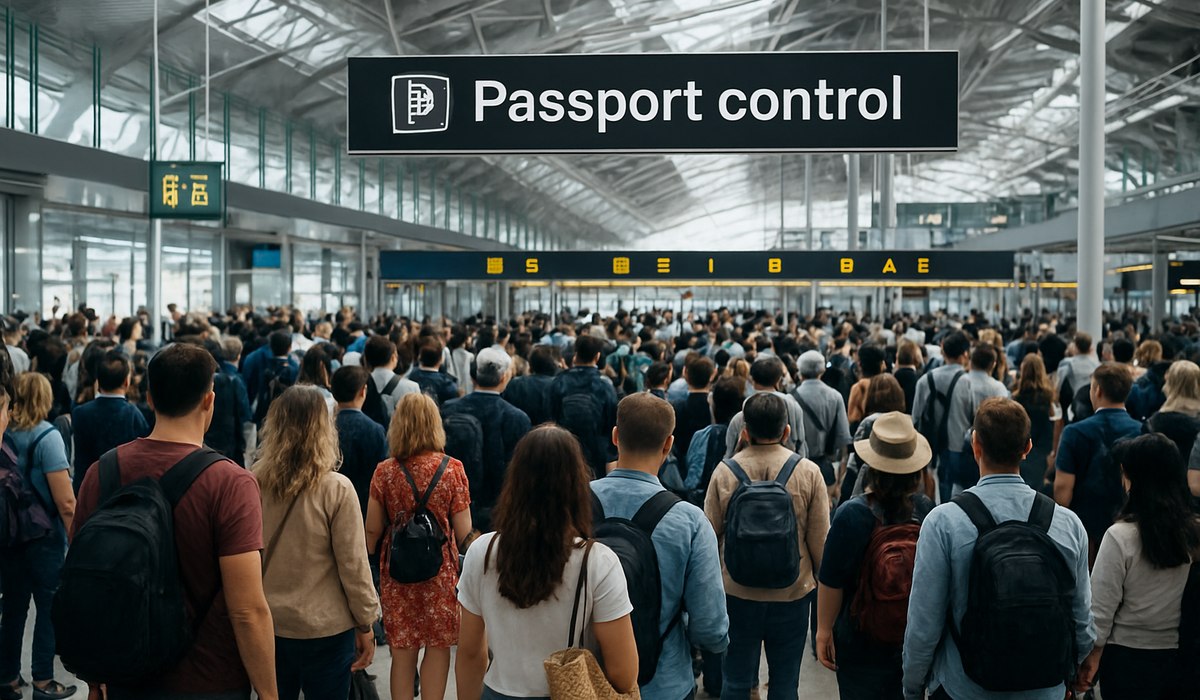
Image generated by AI
EU Biometric System Triggers Cascading Airport Disruptions
Hundreds of travelers remain stranded across European airports following cascading security failures linked to the European Union's newly deployed Entry/Exit System. The biometric border control initiative, which entered full operation at Schengen external boundaries in April 2026, has overwhelmed passport processing infrastructure at major transportation hubs. Peak spring travel demand colliding with understaffed facilities and outdated infrastructure has created unprecedented bottlenecks, leaving passengers stuck in terminal areas for hours and forcing flight departures with significant numbers of no-shows.
The security failures strand passengers on high-traffic UK-Schengen routes particularly hard, where travelers must clear outbound passport verification before boarding. Aviation analysts warn that the crisis exposes critical vulnerabilities in European border management systems during peak season transitions.
New EU Border System Triggers Widespread Delays
The Entry/Exit System represents Europe's most ambitious biometric security upgrade in decades. The technology requires non-EU nationals to register fingerprints and facial biometrics upon arrival and departure through Schengen airports. While the system aims to enhance border security, the April 2026 rollout has revealed fundamental misalignment between infrastructure capacity and actual traveler volumes.
Industry sources indicate that airport operators significantly underestimated processing time requirements during first-time biometric enrollment periods. Border agencies staffed facilities according to historical traffic models, failing to account for the complexity of registering hundreds of thousands of new travelers simultaneously during Europe's busiest travel season.
Queue monitoring data from regional airports shows average processing delays of 90-180 minutes per passenger during peak hours. At some facilities, backlogs have extended beyond security zones into main terminal corridors, creating fire code concerns and passenger confusion. Airlines report that departure delays average 2-4 hours on routes affected by severe passport control congestion. The security failures strand travelers across both origin and destination airports, disrupting downstream connections and forcing cascading cancellations.
Major carriers including EasyJet, Ryanair, and Lufthansa have implemented advisory alerts recommending passengers arrive 4-5 hours before international departures, compared to industry-standard 3-hour recommendations.
Milan Linate Becomes Flashpoint for Border Control Chaos
Milan Linate Airport emerged as the crisis epicenter on April 12, 2026, when more than 100 passengers ticketed on an EasyJet flight to Manchester missed departure due to passport control delays. Security system failures prevented travelers from clearing verification queues before the aircraft's departure window, forcing the airline to release the gate slot with substantially reduced passenger loads.
Stranded travelers reported waiting 6-8 hours within passport control areas with minimal staff communication or estimated processing times. Some passengers remained in Milan for up to four days while negotiating rebooking options, accumulating unexpected accommodation costs exceeding €200-400 per person. Post-incident coverage from regional media outlets documented passengers sleeping in terminal areas, accessing limited food services, and expressing frustration over airline inability to provide alternative transport guarantees.
Subsequent operations at Linate continued experiencing significant delays through mid-April. EasyJet, Air Europa, and connecting carriers all reported cascading impact on their broader European networks. The airport's management issued a public apology and announced temporary staffing increases, but capacity constraints remain evident during peak departure hours between 6:00 AM and 9:00 AM.
The Milan situation illustrates how security failures strand passengers at major transportation hubs despite airline operational competence. Border control bottlenecks fall outside carrier control frameworks, leaving passengers with limited recourse under EU261/2004 compensation regulations.
Infrastructure and Staffing Shortfalls Exposed
Beyond biometric system delays, fundamental staffing failures at regional airports have created additional security vulnerabilities. Vatry Airport in eastern France experienced a complete security checkpoint failure on April 14, 2026, when scheduled personnel did not report for duty. A Ryanair flight to Marrakech departed with 192 ticketed passengers unable to clear security screening, effectively flying empty.
This incident highlights how lean staffing models at smaller European airports create single-point-of-failure risks. Vatry operates with limited security personnel redundancy, meaning illness, scheduling gaps, or labor disputes directly translate to operational shutdowns. Unlike major hubs with multiple security teams and backup protocols, regional facilities lack flexibility to absorb staffing disruptions.
Analysts tracking European aviation operations suggest comparable vulnerabilities exist at 40+ smaller and mid-sized airports across the continent. The April disruption has prompted regulatory bodies to examine minimum service guarantees for critical airport functions including security and border control. Discussions between Eurocontrol, national aviation authorities, and airport operators focus on establishing staffing thresholds that prevent future incidents.
Impact on UK-Schengen Routes During Peak Season
United Kingdom-Schengen corridor routes experienced disproportionate impact from security failures stranding passengers. Travelers departing the UK toward continental Europe encounter outbound passport verification requirements before security screening, creating unique processing bottlenecks absent on purely intra-Schengen flights.
Routes from London Stansted, Manchester, and Gatwick to Milan, Paris Charles de Gaulle, and Amsterdam experienced the heaviest disruption. Daily flight cancellations and delays exceeded 15-20% across these corridors during April 12-18. Low-cost carriers operating point-to-point UK-continental routes reported booking cancellations as travelers delayed or rerouted trips to avoid affected airports.
Spring holiday periods typically see 25-30% passenger volume increases on these routes. The combination of peak demand with inadequate border processing capacity created perfect conditions for systematic disruption. Industry forecasts suggest recovery to normal operations could extend through late May depending on biometric system optimization and staffing augmentation timelines.
Real-Time Flight Status and Passenger Tracking
Travelers affected by security failures strand situations can monitor live flight operations through FlightAware, which provides real-time delay information, equipment assignments, and historical performance data for European airports. Major carriers publish updated advisories on their websites regarding anticipated passport control delays on routes serving Milan Linate, Vatry, and other affected facilities.
Airport authority websites including Milan Linate, Paris-Vatry, and secondary European hubs maintain current queue length estimates during peak hours. Passengers are advised to check airport-specific travel advisories 24 hours before departure and contact airlines directly for rebooking assistance if security delays prevent timely boarding.
Passenger Rights and Compensation Framework
European Union regulation 261/2004 governs compensation for flight delays exceeding three hours caused by "extraordinary circumstances." Security system failures and airport infrastructure breakdowns typically qualify for extraordinary circumstance exemptions, potentially limiting passenger compensation eligibility. However, staffing failures at airport operator responsibility—such as the Vatry incident—may trigger different legal assessment frameworks.
Passengers experiencing security failures strand situations should document delay duration, request written confirmation from airline and border authorities, and file complaints with national aviation enforcement authorities. Individual airline policies regarding rebooking, meal vouchers, and accommodation vary; passengers should request specific support immediately upon missing scheduled departures.
The US Department of Transportation provides detailed guidance on passenger rights frameworks, while FAA documentation on airport operations offers regulatory context for understanding carrier responsibilities during infrastructure disruptions.
Recovery Efforts and System Optimization Timeline
EU border control authorities have initiated emergency staffing deployments to affected airports. Milan Linate received temporary security personnel augmentation during the third week of April, with reported improvements in processing times from 120+ minutes to 60-90 minute average queues. Additional biometric system hardware deployments at major hubs are scheduled through May 2026.
System optimization protocols include streamlined enrollment processes for repeat travelers, expanded biometric enrollment locations in pre-departure areas, and simplified documentation requirements for expedited processing lanes. Airports are implementing queue management software providing real-time processing time estimates to arriving passengers.
The European Union's Internal Security Directorate projects that full biometric system stabilization
Disclaimer
This article is for informational and educational purposes only. It does not constitute legal, financial, or professional advice. While we strive to provide accurate and up-to-date information, travel policies, regulations, and conditions change rapidly. Always verify information with official sources before making travel decisions. Nomad Lawyer makes no representations about the accuracy, reliability, completeness, or suitability of the information provided. Readers should consult qualified professionals for advice specific to their circumstances. The views expressed in this article are those of the author and do not necessarily reflect the views of Nomad Lawyer.
Raushan Kumar
Founder & Lead Developer
Full-stack developer with 11+ years of experience and a passionate traveller. Raushan built Nomad Lawyer from the ground up with a vision to create the best travel and law experience on the web.
Learn more about our team →