
Escalating Iran Tensions Lead to Flight Cancellations, Delays in Middle East
US-Iran tensions escalate in March 2026, triggering major airline suspensions across Middle East airspace. Here's what travelers need to know about cancellations, compensation, and alternative routes.

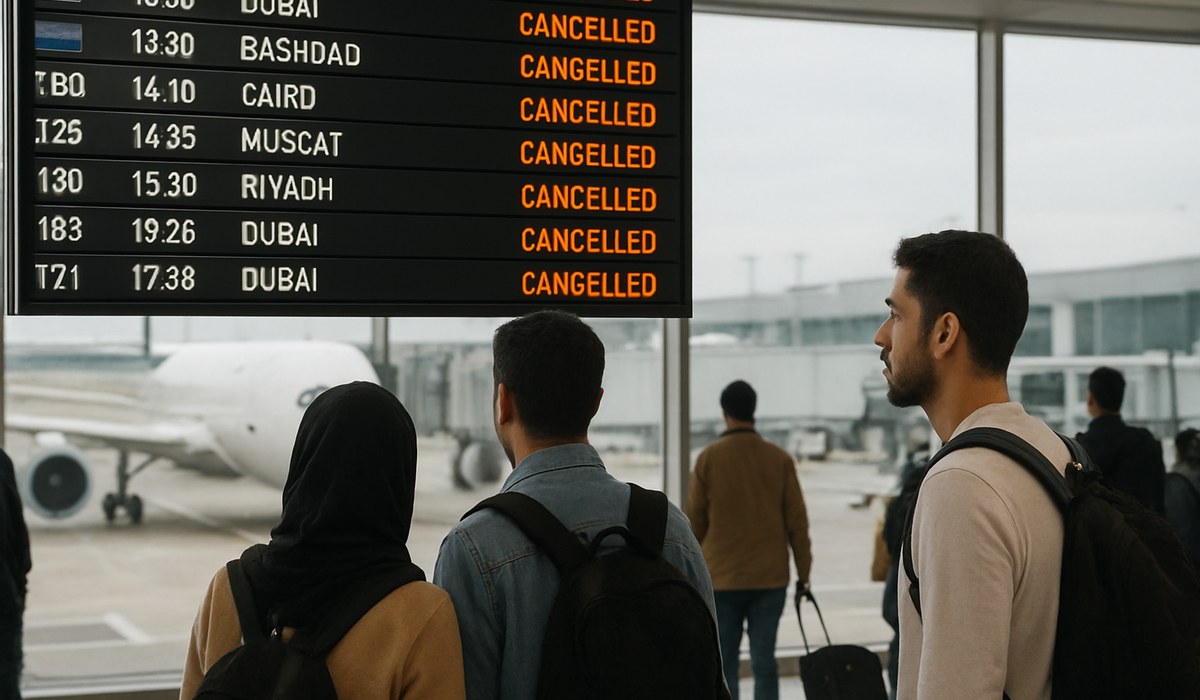
Image generated by AI
Quick Summary
- Major international carriers have suspended or diverted flights across the Persian Gulf and surrounding airspace since late March 2026
- Travelers face significant delays, last-minute rebookings, and potential stranded connections through hubs like Dubai and Doha
- Passengers are entitled to compensation and rebooking under international regulations—know your rights before contacting your airline
- Real-time flight tracking tools and official airline statements are your best resources for immediate updates and alternative routing
The Crisis Unfolding: How Geopolitical Escalation Is Grounding Aircraft
Tensions between the United States and Iran have reached a critical threshold in March 2026, forcing aviation authorities and carriers to take unprecedented action. What began as diplomatic friction has now transformed into concrete operational disruptions affecting thousands of passengers daily across one of the world's busiest aviation corridors.
The escalation is not isolated to political rhetoric—it has cascaded into real-world consequences for travelers. Commercial airlines are making routing decisions measured in minutes, ground crews are scrambling to accommodate sudden cancellations, and booking systems are overwhelmed with rerouting requests. Major international hubs serving the Middle East region are experiencing congestion levels not seen since the 2020 pandemic shutdowns.
According to flight data monitoring services, dozens of scheduled departures and arrivals have been suspended, delayed, or rerouted to alternative airports. Passengers booked on direct routes through affected airspace are now facing multi-hour detours, missed connections, and hotel accommodations at carrier expense. The financial impact on the airline industry alone is estimated in the millions of dollars per day—and that figure continues to climb as the situation evolves.
Which Major Carriers Are Suspending Middle East Flights
Several of the world's largest international airlines have taken action to protect crew safety and comply with airspace restrictions. These carriers operate some of the most frequently used routes connecting Europe, Asia, and North America through Middle Eastern hubs.
Lufthansa and British Airways suspension of UAE flights represents the most visible corporate response to the current environment. Both carriers have temporarily halted operations into Dubai, Abu Dhabi, and other Gulf destinations—routing affected passengers through alternative gateways like European hubs instead.
United Airlines, American Airlines, and Delta Air Lines have issued travel waivers allowing passengers to change flights without penalty, though rebooking onto alternative routes may involve longer travel times. Emirates, Etihad Airways, and Qatar Airways continue operations but with reduced frequency and modified routing to avoid high-risk corridors.
Turkish Airlines and Gulf Air are maintaining reduced schedules while implementing additional security protocols. Air France-KLM has suspended Paris-to-Tehran and Amsterdam-to-Tehran flights indefinitely. Many carriers are now routing passengers through southern European gateways or via Indian and Southeast Asian hubs—adding 8 to 14 hours to total journey time.
Crew fatigue and insurance liability have become major factors in these decisions. Airlines are legally responsible for ensuring crew safety, and airspace closure declarations by aviation authorities leave carriers with little choice.
Real-Time Flight Status & Route Changes: Tools to Monitor Disruptions
Passengers need immediate, accurate information. Relying on airline email updates alone can result in missed rebooking windows and wasted hours at airports. Real-time tracking platforms are essential during this period.
FlightAware live delay statistics{target="_blank" rel="noopener noreferrer"} provides minute-by-minute updates on specific flight status, departure delays, and airspace restrictions. You can search by flight number or route to see whether your booking is affected and what the current ground hold duration is. The platform also displays diversions and cancellations as they occur—often faster than official airline notifications.
FlightRadar24 real-time tracking{target="_blank" rel="noopener noreferrer"} offers a visual map of active commercial aircraft, closed airspace zones, and military activity corridors. This is particularly valuable for understanding why specific routes are unavailable and where flights are being diverted. You can see the exact position of your aircraft and watch the routing decision unfold in real time.
Beyond these tools, official notifications from your airline's customer service portal remain critical. Enable push notifications for your booking reference on airline mobile apps—these often deliver news before email confirmations reach your inbox.
Contact your airline's operations center directly rather than waiting in customer service queues. The direct line often yields faster rebooking information, especially for premium or frequent flyer members. Have your booking reference, passport number, and intended destination ready before calling.
Know Your Rights: Compensation, Refunds & Rebooking Options
The regulatory framework protecting passengers is substantial—but only if you know how to invoke it. Airline cancellations and lengthy delays triggered by external factors (geopolitical events, airspace closures, military activity) occupy a gray zone in compensation law, but you have documented rights regardless.
US DOT passenger rights and compensation rules{target="_blank" rel="noopener noreferrer"} detail what carriers operating in or from the United States must provide. For cancellations, airlines are required to offer a full refund to your original payment method or rebooking on the next available flight at no additional charge. If rebooking results in a significantly longer journey, you may be entitled to compensation depending on the delay length and your ticket type.
International flights fall under different rules. EU Regulation 261/2004 mandates that airlines pay compensation of €250–€600 (depending on flight distance) for cancellations caused by extraordinary circumstances unless the airline can demonstrate they took all reasonable measures to prevent the disruption. Geopolitical escalation and airspace closure orders are often classified as extraordinary circumstances—meaning compensation liability is reduced or eliminated.
However, airlines are still obligated to rebook you at no charge and, in some cases, provide meals and accommodation during extended layovers.
Here are your immediate steps:
-
Document everything: Photograph your boarding pass, cancellation notification, and any communications from the airline. Keep confirmation emails and SMS messages.
-
Contact your airline's customer service team: Do this within 24 hours of learning about cancellation or significant delay. Request rebooking onto the next available flight, alternative routing, or a full refund.
-
Verify your booking class: Premium economy, business, and first-class passengers often qualify for hotel accommodations and meal vouchers; economy passengers may not. However, all passengers have rebooking rights.
-
Request compensation in writing: If delay exceeds 3 hours on arrival (for EU flights) or 7+ hours (for US flights), send a formal compensation claim to the airline's customer relations department. Reference the specific regulation (EU 261/2004 or US DOT rules) in your letter.
-
File a complaint with your national aviation authority: If the airline refuses to process rebooking or compensation, escalate to your country's civil aviation regulator (FAA in the US, DGAC in France, CAA in the UK).
Travel insurance policies may also cover cancellations due to political instability, depending on your coverage terms. Review your policy immediately if you purchased optional protection.
Which Regions & Airspace Are Affected: Updated Flight Corridor Map
The geographic scope of disruption is widening daily. Initial closures focused on Iranian airspace and the Strait of Horm
Disclaimer
This article is for informational and educational purposes only. It does not constitute legal, financial, or professional advice. While we strive to provide accurate and up-to-date information, travel policies, regulations, and conditions change rapidly. Always verify information with official sources before making travel decisions. Nomad Lawyer makes no representations about the accuracy, reliability, completeness, or suitability of the information provided. Readers should consult qualified professionals for advice specific to their circumstances. The views expressed in this article are those of the author and do not necessarily reflect the views of Nomad Lawyer.
Kunal K Choudhary
Co-Founder & Contributor
A passionate traveller and tech enthusiast. Kunal contributes to the vision and growth of Nomad Lawyer, bringing fresh perspectives and driving the community forward.
Learn more about our team →