
ePlane Company Completes Full-Scale e200X Assembly, Advancing Urban Air Mobility
Indian eVTOL startup ePlane Company completes full-scale e200X assembly in 2026, marking a critical milestone toward flight testing and certification for electric urban air mobility across India and emerging markets.

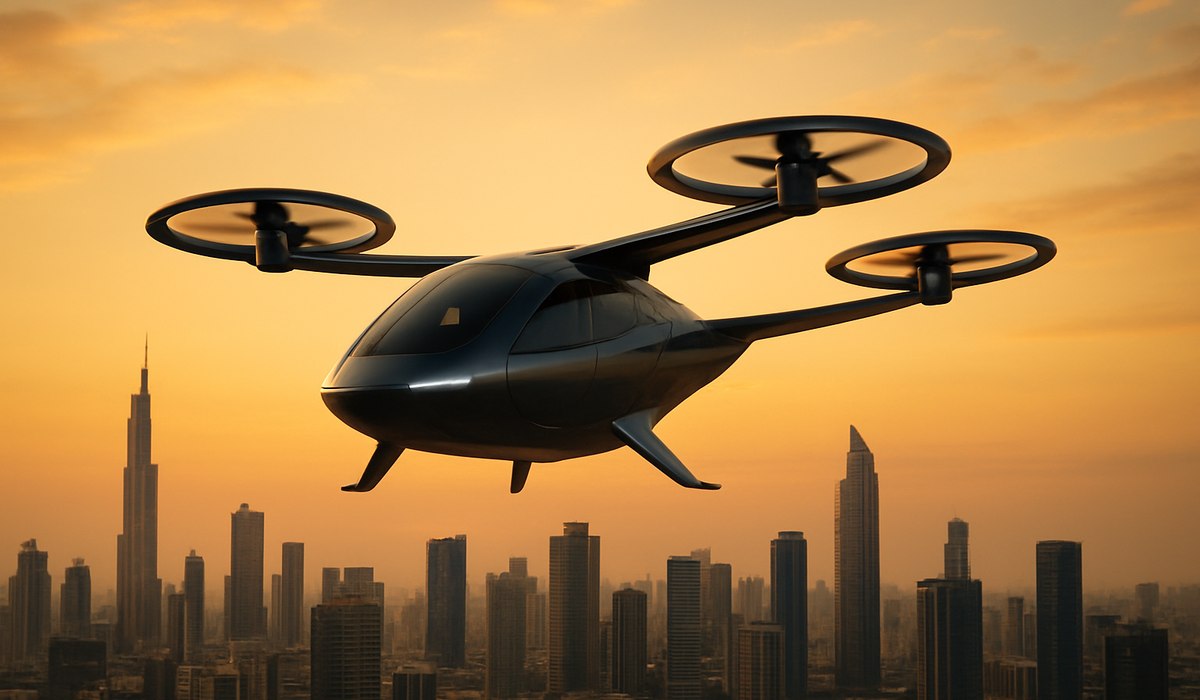
Image generated by AI
ePlane Company Completes Full-Scale e200X Assembly: A Turning Point for Indian Aviation
The ePlane Company has successfully completed assembly of its full-scale electric vertical takeoff and landing (eVTOL) aircraft prototype, the e200X, positioning India as a emerging leader in sustainable aviation innovation. This milestone, achieved in June 2026, represents a significant advancement toward commercial operations and regulatory certification. The completed aircraft now enters critical ground and flight testing phases, bringing the company closer to revolutionizing urban air mobility across India and developing nations worldwide.
The domestically developed e200X aircraft embodies ePlane Company's commitment to designing indigenous aviation solutions for passenger transport, cargo delivery, and emergency medical services. With this completion, the startup advances toward becoming a transformative force in regional and urban air mobility ecosystems.
Assembly Milestone: e200X Ready for Testing Phase
The completion of full-scale e200X assembly represents years of in-house engineering and manufacturing expertise consolidated into a functional prototype. The ePlane Company developed the aircraft largely internally, demonstrating vertical integration across design, fabrication, and systems integration—a strategic advantage in the competitive eVTOL sector.
The fully assembled e200X now transitions into rigorous ground testing protocols, where engineers will validate avionics systems, battery management, propulsion architecture, and structural integrity. This phase precedes actual flight testing, where the aircraft will demonstrate its vertical takeoff capabilities, hover stability, and forward-flight performance under controlled conditions.
Regulatory agencies will scrutinize every component and system before granting type certification. The ePlane Company's methodical approach to assembly and testing reflects industry best practices established by aircraft manufacturers globally. Ground testing typically spans months, providing essential data that informs design refinements before the aircraft leaves the ground.
Design Purpose: Passenger, Cargo, and Medical Operations
The e200X eVTOL aircraft addresses multiple market demands through its versatile platform architecture. Unlike conventional fixed-wing aircraft requiring runway infrastructure, the e200X operates from compact urban locations—rooftops, helipads, and distributed vertiports—making it ideal for congested metropolitan areas across India.
For passenger transport, the aircraft promises to reduce travel time between city centers and peripheral business districts, alleviating traffic congestion while lowering emissions. The cargo variant enables last-mile logistics networks, particularly in regions lacking traditional transportation infrastructure. Air ambulance configuration transforms emergency medical response, delivering critical care to remote or disaster-affected areas within minutes rather than hours.
The ePlane Company's design philosophy prioritizes accessibility for emerging markets where terrain and infrastructure limitations restrict conventional aviation. India's growing urban centers, mountainous regions, and island territories represent prime deployment zones. The aircraft's electric propulsion eliminates dependency on aviation fuel supply chains, reducing operational complexity and cost structures in underserved markets.
Market Opportunity: Urban Air Mobility in India and Beyond
India's urban air mobility (UAM) market represents one of the world's largest growth opportunities. With metropolitan areas facing acute traffic congestion, the government increasingly supports innovative transportation solutions. The ePlane Company positions the e200X within this expanding ecosystem, complementing ground-based mobility rather than replacing it.
Emerging markets across Southeast Asia, Africa, and Latin America face similar mobility challenges—rapid urbanization, limited infrastructure investment, and growing middle-class transportation demand. The e200X's design specifications and operational economics address these realities directly. Electric propulsion reduces noise pollution, meeting stringent urban environmental standards while lowering regulatory friction.
The global eVTOL market is projected to grow substantially through 2030 and beyond. Early movers establishing certification and operational frameworks gain competitive advantages. The ePlane Company's focus on India's certification pathway creates a platform for subsequent market expansion across Asia-Pacific and African regions sharing comparable regulatory structures and geographic characteristics.
Timeline to Certification: Next Steps for Flight Testing
The ePlane Company faces a structured pathway toward regulatory approval. Ground testing typically spans 6–12 months, followed by initial flight testing in controlled environments. Indian aviation authorities, coordinated through the Directorate General of Civil Aviation (DGCA), establish type certification requirements adapted to eVTOL aircraft characteristics.
Unlike conventional aircraft certification processes, eVTOL approval requires novel evaluation frameworks addressing electric power systems, battery safety, redundancy architectures, and autonomous or semi-autonomous flight capabilities. International regulatory bodies, including EASA and FAA, publish standards that inform national frameworks like India's DGCA requirements.
The ePlane Company's assembly completion accelerates the timeline toward Initial Test Flight (ITF), a symbolic and technical milestone demonstrating that the aircraft meets design specifications. Subsequent test flights expand the flight envelope progressively—testing climb rates, forward flight, transition maneuvers, and emergency descent procedures.
Commercial certification typically requires 200+ test flights covering diverse weather conditions, failure scenarios, and operational configurations. The company's in-house development approach potentially shortens this timeline by maintaining design continuity and engineering knowledge throughout testing phases.
Key Facts and Timeline: The e200X Development Journey
| Milestone | Date | Significance |
|---|---|---|
| Full-Scale Assembly Completion | June 2026 | Aircraft ready for ground and flight testing |
| Design Type | eVTOL Aircraft | Vertical takeoff and landing capability |
| Primary Applications | Passenger, Cargo, Medical | Versatile platform for multiple markets |
| Target Markets | India, Asia-Pacific, Emerging Markets | Focus on underserved regions with mobility challenges |
| Propulsion | Electric | Zero-emission operations, reduced noise |
| Development Approach | In-House | Vertical integration across design and manufacturing |
| Regulatory Pathway | DGCA Certification | Indian airworthiness standards adapted for eVTOL |
| Testing Phase Duration | Estimated 12-24 months | Ground and flight testing before commercial operation |
What This Means for Travelers: Urban Air Mobility's Evolution
The ePlane Company's advancement toward flight testing signals the emergence of practical electric aviation for everyday travelers. Within 3–5 years, early adoption routes may debut in India, creating new mobility options for business and leisure travel.
Here are actionable implications for forward-thinking travelers:
-
Monitor emerging vertiport development in major Indian cities—Delhi, Mumbai, Bangalore—as the e200X approaches commercial certification and operators establish landing infrastructure.
-
Expect premium pricing initially, similar to early-stage air taxi services globally; e200X operations will target time-sensitive travelers willing to pay for speed and convenience.
-
Plan connectivity itineraries combining urban air mobility with conventional flights; vertiports will likely co-locate with major airports and business districts.
-
Consider medical evacuation benefits if traveling to remote Indian regions; e200X air ambulance services may become faster alternatives to helicopter evacuation.
-
Stay informed on regulatory timelines through DGCA announcements and ePlane Company updates, as commercial routes depend on certification approval and operator licensing.
-
Evaluate environmental impact when choosing urban air mobility; electric eVTOL aircraft represent lower-emission alternatives to conventional aviation and congested ground transportation.
Frequently Asked Questions: e200X and Urban Air Mobility
What does eVTOL stand for and how does the e200X differ from helicopters?
eVTOL means electric vertical takeoff and landing. The e200X differs from helicopters through electric propulsion (quieter, zero-emission), distributed electric motors (redundancy and efficiency), and optimized aerodynamics for forward flight. Helicopters use fuel combustion engines and produce significantly more noise.
When will the ePlane Company's e200X enter commercial service?
The e200X is currently in assembly completion phase (June 2026). Flight testing and regulatory certification typically require 12–24 months. Commercial operations could begin in 2028–2
Disclaimer
This article is for informational and educational purposes only. It does not constitute legal, financial, or professional advice. While we strive to provide accurate and up-to-date information, travel policies, regulations, and conditions change rapidly. Always verify information with official sources before making travel decisions. Nomad Lawyer makes no representations about the accuracy, reliability, completeness, or suitability of the information provided. Readers should consult qualified professionals for advice specific to their circumstances. The views expressed in this article are those of the author and do not necessarily reflect the views of Nomad Lawyer.
Kunal K Choudhary
Co-Founder & Contributor
A passionate traveller and tech enthusiast. Kunal contributes to the vision and growth of Nomad Lawyer, bringing fresh perspectives and driving the community forward.
Learn more about our team →