
Breaking Airline News: Emirates Executes Massive German A380 Swap to Shield Passengers from Summer Travel Chaos
Breaking airline news: Amidst a terrifying era of severe geopolitical volatility, Emirates aggressively swaps out its Airbus A380s in Germany, deploying agile Boeing 777s and A350s to shield travelers from summer travel chaos.

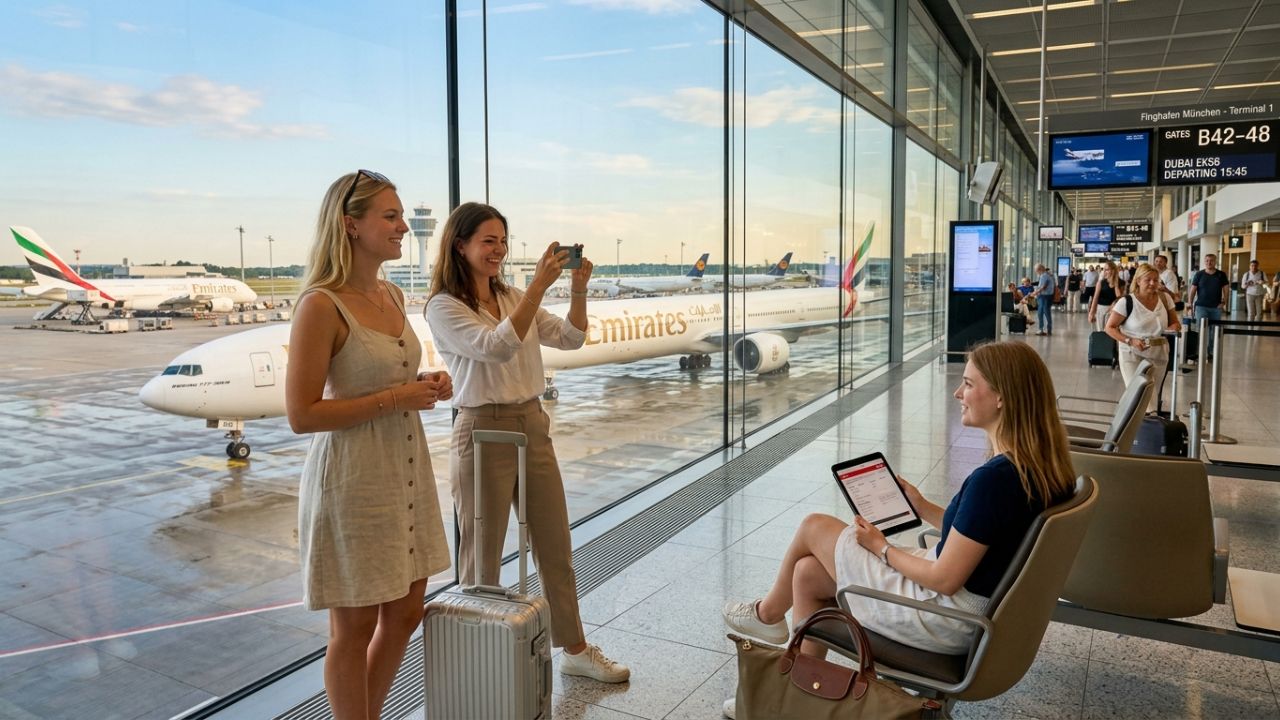
Image representing the intense strategic battle as global aviation authorities desperately deploy tactical aircraft swaps and capacity reductions to combat severe transit friction and bypass paralyzing flight cancellations during peak summer volatility.
Breaking Airline News: Emirates Executes Massive German A380 Swap to Shield Passengers from Summer Travel Chaos
As paralyzing terminal congestion, terrifying geopolitical volatility, and severe operational fragility violently threaten to completely choke highly complex commercial transit networks connecting Europe to the Middle East, Emirates has executed a brilliant high-stakes logistical maneuver. In a desperate bid to physically and psychologically rescue international travelers from the terrifying threat of extreme travel chaos triggered by catastrophic flight cancellations, the Dubai-based carrier has aggressively adjusted its German flight operations. Officially initiating a massive tactical aircraft swap, Emirates is temporarily pausing the deployment of its iconic Airbus A380 superjumbos at Frankfurt Airport (FRA), Munich Airport (MUC), and Düsseldorf Airport (DUS). By aggressively substituting the massive double-decker jets with highly agile Boeing 777 and Airbus A350 aircraft during the critical summer schedule, this massive infrastructural defense deployment allows furious corporate travelers and desperate families to completely bypass the threat of operational meltdowns. This operational paradigm shift is transforming modern intercontinental logistics, proving that actively right-sizing aircraft capacity to match severe seasonal demand fluctuations is the absolute ultimate defense against the agonizing misery historically defining major airport bottlenecks.
In a harrowing display of modern aviation vulnerability, the sheer logistical nightmare of attempting to navigate essential corridors between Germany and Dubai during the scorching summer months has historically forced airlines into terrifying operational scenarios. For decades, flying massive superjumbos half-empty during periods of lower inbound tourism demand created severe financial strain, risking sudden flight consolidations that virtually guaranteed a catastrophic, high-stress ordeal for stranded passengers. However, Emirates is aggressively fighting back against this structural paralysis. Recognizing that forcing an overextended, maintenance-heavy A380 fleet into heavily volatile routing creates a massive vulnerability, the airline is introducing a highly resilient, modern alternative. By rapidly deploying smaller, highly efficient widebody aircraft, travelers now possess the absolute freedom to physically shield themselves from the devastating effects of paralyzed transport networks, ensuring their global itineraries are executed without the threat of last-minute cancellations.
Expanded Overview: The Massive Scale of the Transit Shield
The terrifying crisis of overwhelming passenger stress currently gripping complex intercontinental itineraries brutally exposes the severe limitations of flying massive aircraft when regional geopolitical tensions demand operational agility. Recognizing that aggressively forcing the A380 into suboptimal summer routes leads directly to severe mechanical delays and psychological friction, Emirates has fundamentally rewritten its deployment strategy. The sheer scale of this tactical realignment is immense. Rather than buckling under the weight of maintaining the world’s largest A380 fleet during a low-demand period, the airline is utilizing this tactical pause to execute a massive retrofit program, upgrading cabin interiors to ensure enhanced passenger experiences for future operations. This calculated withdrawal explicitly protects the current flight schedule from cascading maintenance failures.
Section-Wise Breakdown: The Operational Realignment
Breaking the Munich Gridlock: Tactical Frequency Cuts
To survive the terrifying surge in operational volatility without triggering immediate terminal meltdowns, Emirates has anchored its defense through precise capacity reductions in Munich. While one of the airline’s two daily MUC services had previously operated with a Boeing 777, the second daily service has now aggressively transitioned away from the A380 to match it. Furthermore, to explicitly combat low seasonal demand, one Munich route frequency has been violently slashed from seven weekly flights to just four between June 9 and June 23. This calculated reduction completely insulates the airline from the financial and operational chaos of flying empty heavy jets.
Shattering Düsseldorf and Frankfurt Bottlenecks
Looking beyond Munich, the program executes a massive logistical defense strategy across Germany’s other primary hubs. (Hamburg Airport already relies exclusively on Boeing 777 aircraft). At Düsseldorf Airport, Emirates has aggressively replaced A380 aircraft with Boeing 777s from June 9 through June 25. Frankfurt Airport has witnessed the most extensive, high-stakes reshuffling: one daily service has violently transitioned from the Boeing 777 to the advanced Airbus A350-900, a second daily flight was downgraded from an A380 to a Boeing 777, while the third continues with its existing Boeing 777. This establishes a highly robust, multi-aircraft defense grid.
Deploying the Retrofit Defense Protocol
The massive infrastructural shift extends deep into the airline's long-term operational survival strategy. Emirates is currently executing a comprehensive modernization program, violently pulling 32 of its 117 A380 aircraft out of service and parking them for massive retrofits. Simultaneously, extreme summer temperatures in Dubai drastically lower inbound tourism demand. Combined with severe geopolitical tensions across the Middle East, deploying smaller, highly agile aircraft like the A350 and 777 is a vital security and economic necessity, preventing the massive travel chaos that occurs when superjumbos are grounded due to maintenance shortages in hostile operational environments.
Emirates Summer Fleet Realignment Matrix
To fully comprehend the massive logistical and strategic fallout of this terrifyingly efficient network execution, corporate travel managers and affected tourists must review the exact operational metrics defining the Emirates aircraft swap. The following matrix provides a granular breakdown of the specific, officially verified strategic data driving this massive disruption mitigation effort.
| Operational Network Adjustment | Verified Fleet Deployment |
|---|---|
| Operating Carrier | Emirates |
| Hamburg (HAM) Status | Exclusively Operating Boeing 777 (No Change) |
| Munich (MUC) Aircraft Swap | Second Daily Service Transitioned from A380 to Boeing 777 |
| Munich (MUC) Frequency Cut | Reduced from 7 to 4 Weekly Flights (June 9 - June 23) |
| Düsseldorf (DUS) Aircraft Swap | A380 Replaced by Boeing 777 (June 9 - June 25) |
| Frankfurt (FRA) Aircraft Swap 1 | One Daily Service Transitioned to Airbus A350-900 |
| Frankfurt (FRA) Aircraft Swap 2 | One Daily Service Transitioned from A380 to Boeing 777 |
| A380 Retrofit Status | 32 out of 117 A380 Aircraft Currently Parked for Upgrades |
Passenger Impact: Surviving the Intercontinental Aircraft Swap
For the thousands of global tourists attempting to navigate the rapidly shifting intercontinental transit corridors out of Germany, this massive aircraft substitution represents a highly anticipated lifeline against severe delays. The brutal reality of enduring a terrifyingly sudden cancellation due to an A380 mechanical failure inflicts intense psychological stress—leaving the passenger entirely responsible for securing a new ticket across a sold-out summer network. By aggressively booking these substituted Boeing 777 and Airbus A350 flights, passengers drastically reduce their exposure to these terrifying environments, securing a highly reliable connection that aligns perfectly with actual market demand.
Survival Guide for Transit Travelers
Travelers desperately preparing to navigate the modernized global network must immediately execute the following survival protocols:
- Verify Aircraft Configurations: Passengers booked out of Frankfurt must immediately check their itineraries. Transitioning from an A380 to an A350-900 or Boeing 777 violently alters the seating configuration. Aggressively verify your seat assignments to avoid the travel chaos of being separated from your family during boarding.
- Expect Reduced Capacity: With the Munich frequency explicitly cut from 7 to 4 weekly flights in June, total available seats have plummeted. Travelers must aggressively secure rebooking options immediately if their original flight falls within the canceled schedule blocks.
- Acknowledge Global Reductions: Germany is not the only target. Emirates has also executed massive tactical adjustments on flights to Copenhagen, Glasgow, London Gatwick, Manchester, Kansai, Perth, and Washington. Expect widespread aircraft swaps across the global network during this volatile summer period.
Industry Analysis: The Economics of Tactical Downgauging
From a strategic aviation perspective, the travel turmoil currently threatening global hubs highlights the terrifying vulnerability of airlines operating massive superjumbos in volatile markets. Industry analysts confirm that temporarily replacing the A380 with smaller, highly efficient twin-engine aircraft is a highly aggressive, tactical response to summer lulls and geopolitical instability. By pulling the A380s for vital retrofitting during the slow season, Emirates avoids the massive financial bleeding associated with flying empty heavy jets, completely shielding the carrier from the operational meltdowns that paralyze legacy airlines refusing to adapt their capacity.
Conclusion: A Strategic Retreat to Ensure Aviation Survival
As the extremely critical travel seasons accelerate, the massive fleet adjustments executed by Emirates represent a massive warning to legacy carriers attempting to force passengers onto unreliable, poorly-timed mega-jet schedules. The aggressive maneuvering proves that capturing market dominance requires terrifyingly swift and highly optimized capacity deployments, utilizing agile aircraft like the Boeing 777 and A350 to connect passengers safely across continents while shielding them from the brutal reality of mechanical unreliability. For the modern wandering family booking their tickets, utilizing this tactically adjusted routing offers an incredibly secure, highly insulated way to execute flight discovery. By acting aggressively to adapt to these new aircraft types, travelers can successfully survive intense travel surges and completely avoid the paralyzing threat of connection-induced travel chaos.
Key Takeaways
- Massive Tactical Bypass: Emirates is aggressively suspending Airbus A380 operations at Frankfurt, Munich, and Düsseldorf to protect its network from summer travel chaos.
- Crushing the Capacity Bottleneck: The airline is substituting the superjumbos with highly agile Boeing 777 and Airbus A350-900 aircraft to better match lower summer inbound demand to Dubai.
- Strategic Frequency Cuts: Munich is experiencing a violent reduction in flight frequency, dropping from 7 to 4 weekly flights between June 9 and June 23.
- Massive Retrofit Deployment: The tactical pause allows Emirates to aggressively continue its modernization program, with 32 of its 117 A380 aircraft currently parked for cabin upgrades.
- Traveler Advisory: Passengers must aggressively verify their flight schedules and seat assignments, as the transition to smaller aircraft significantly alters cabin configurations and reduces total available seating.
Related Travel Guides
Disclaimer
This article is for informational and educational purposes only. It does not constitute legal, financial, or professional advice. While we strive to provide accurate and up-to-date information, travel policies, regulations, and conditions change rapidly. Always verify information with official sources before making travel decisions. Nomad Lawyer makes no representations about the accuracy, reliability, completeness, or suitability of the information provided. Readers should consult qualified professionals for advice specific to their circumstances. The views expressed in this article are those of the author and do not necessarily reflect the views of Nomad Lawyer.
Kunal K Choudhary
Co-Founder & Contributor
A passionate traveller and tech enthusiast. Kunal contributes to the vision and growth of Nomad Lawyer, bringing fresh perspectives and driving the community forward.
Learn more about our team →