
Emirates and Etihad Face Operational Disruptions as Security Risks Hit Kuwait, Bahrain, and Saudi Arabia in 2026
Emirates and Etihad Airways are adjusting flight operations and suspending routes following security alerts and drone activity in Kuwait, Bahrain, and Saudi Arabia.

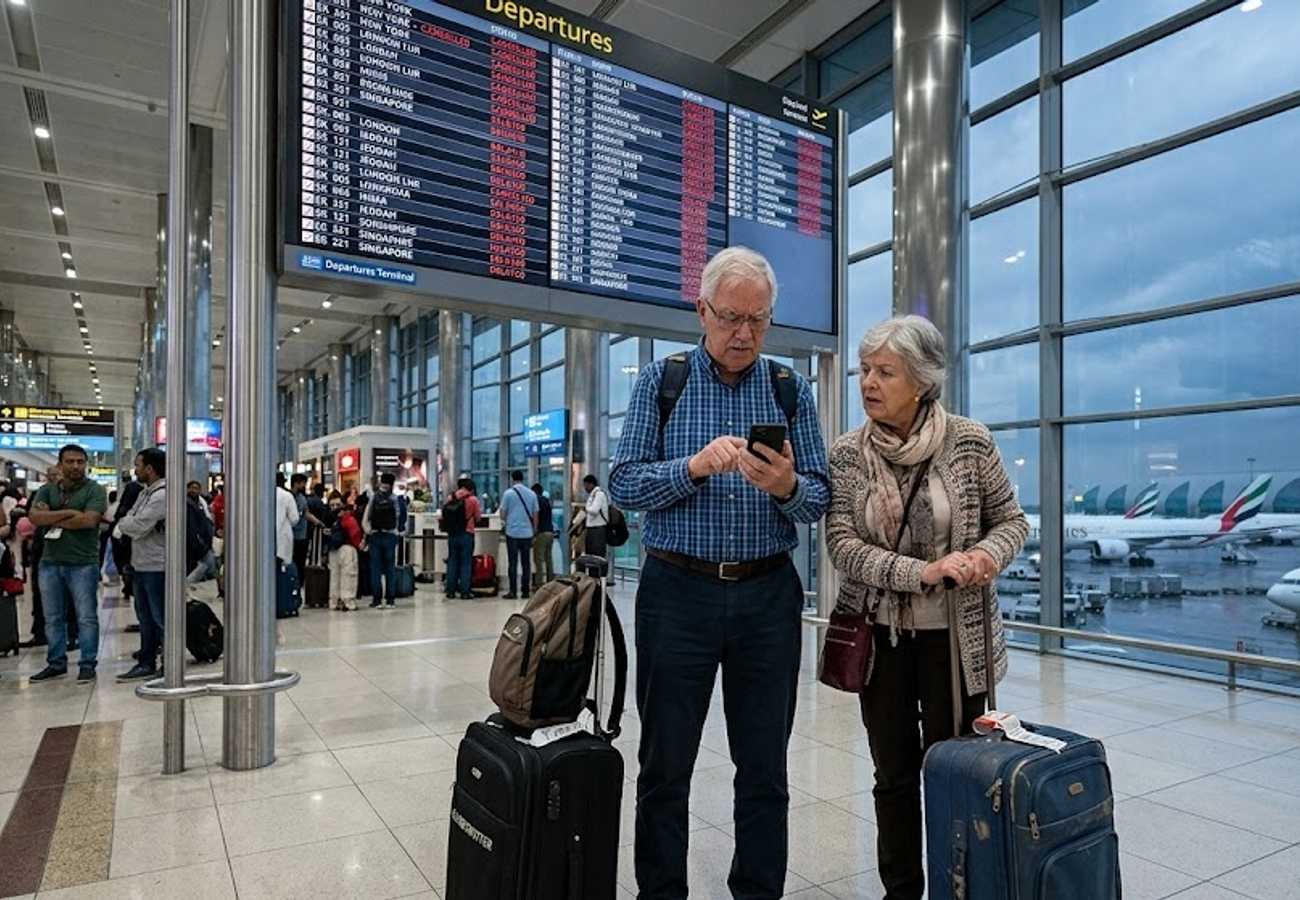
Image generated by AI
Regional security volatility is forcing a reconfiguration of flight paths and schedules across the Middle East, impacting major carriers and global connectivity.
The aviation corridor connecting Europe, Asia, and Africa is currently under significant pressure. Emirates and Etihad Airways are managing a complex operational environment as escalating security risks in Kuwait, Bahrain, and Saudi Arabia trigger flight cancellations and systemic delays. While UAE-based airports remain open, the instability of regional airspace is creating a ripple effect for thousands of international passengers.
The catalyst for the current instability includes a security alert in Kuwait, where air defense systems intercepted hostile drones following an Iranian attack. This development has forced airlines to prioritize safety assessments over scheduled connectivity, leading to the suspension of specific routes and the rerouting of aircraft to avoid high-risk zones.
Regional Operational Adjustments
The impact is most visible in the targeted suspensions of regional services. Etihad Airways has specifically curtailed operations between Abu Dhabi and Kuwait, with flights EY653 and EY654 cancelled until July 26. Additionally, selected services between Abu Dhabi and Bahrain have been suspended from July 23 to July 25.
At Dubai International Airport, the situation is characterized by selective disruption rather than a total shutdown. While the hub remains operational, a pattern of delays has emerged across long-haul and regional sectors.
Dubai International Airport Flight Status Summary
| Airline | Route | Status |
|---|---|---|
| Emirates | New York – Dubai | Delayed |
| Emirates | Jeddah – Dubai | Delayed |
| Emirates | London Heathrow – Dubai | Delayed |
| Emirates | Manchester – Dubai | Delayed |
| flydubai | Almaty – Dubai | Delayed |
| flydubai | Lucknow – Dubai | Delayed |
| flydubai | Dhaka – Dubai | Delayed |
| flyadeal | Riyadh – Dubai | Cancelled |
| flydubai | Dubai – Bahrain | Delayed |
| flydubai | Dubai – Damascus | Cancelled |
| flydubai | Dubai – Jeddah | Delayed |
| flydubai | Dubai – Erbil | Cancelled |
| SpiceJet | Dubai – Pune | Delayed |
| SpiceJet | Dubai – Kozhikode | Delayed |
| SpiceJet | Dubai – New Delhi | Delayed |
In contrast, Sharjah International Airport reports a more stable environment, experiencing only limited delays and no major wave of cancellations, offering a temporary alternative for some regional travelers.
Global Carrier Response and Suspensions
The volatility in the Gulf has triggered a wider retreat by international airlines. Carriers from North America, Europe, and Asia are implementing temporary suspensions based on airspace availability and risk profiles.
International Flight Suspensions and Updates
| Airline | Affected Route/Region | Latest Update |
|---|---|---|
| Aegean Airlines | Dubai | Cancelled until August 31 |
| Air Astana | Almaty/Astana – Dubai | Suspended until August 31 |
| Air Canada | Toronto – Dubai | Suspended until October 24 |
| Air France | Dubai, Riyadh, Beirut | Dubai expected resume July 27; others affected |
| airBaltic | Riga – Dubai | Suspended |
| British Airways | Dubai, Bahrain, Amman, Tel Aviv | Suspended until October 31; others reduced |
| Cathay Pacific | Dubai, Riyadh | Dubai suspended until Oct 24; Riyadh until Oct 25 |
| Finnair | Dubai | Suspended until October 24 |
| ITA Airways | Dubai | Suspended until October 24 |
| KLM | Dubai, Riyadh, Dammam | Suspended until August 23 |
| Lufthansa Group | Dubai and regional routes | Suspended/adjusted until Sept–Oct |
| Philippine Airlines | Manila–Doha | Resumed; Dubai suspended until October 2 |
| Scoot | Singapore–Jeddah | Suspended until August 8 |
| Singapore Airlines | Dubai, Riyadh | Dubai suspended; Riyadh launch delayed to Dec 1 |
| Turkish Airlines | Gulf routes | Dubai, Abu Dhabi resumed; Iran services suspended |
| Wizz Air | Dubai, Abu Dhabi, Amman | Suspended; planned September restart |
Why This Matters: Industry Implication
This situation underscores the fragility of the "hub-and-spoke" model when applied to geopolitically sensitive regions. Because Dubai and Abu Dhabi serve as the primary connective tissue between the East and West, any disruption in neighboring airspace—such as the drone activity in Kuwait—creates a disproportionate impact on global travel.
Industry observers note that the divergence in responses (e.g., Sharjah's stability versus Dubai's selective delays) suggests that airlines are now utilizing "micro-risk" assessments. Rather than blanket bans, carriers are adjusting specific flight numbers and corridors in real-time. This increases operational costs due to longer flight paths and fuel burn, while simultaneously stressing passenger management systems.
Forward Outlook
Expect a phased resumption of services as security assessments stabilize. The critical window for recovery appears to be late August through October 2026, as evidenced by the suspension dates of carriers like Air Canada and British Airways. Until then, the Gulf aviation sector will likely operate in a "high-alert" mode, where schedules remain fluid and subject to immediate change based on air defense telemetry.
Aviation networks remain hostage to regional security shifts, prioritizing safety over schedule integrity.
Related Travel Guides
Disclaimer
This article is for informational and educational purposes only. It does not constitute legal, financial, or professional advice. While we strive to provide accurate and up-to-date information, travel policies, regulations, and conditions change rapidly. Always verify information with official sources before making travel decisions. Nomad Lawyer makes no representations about the accuracy, reliability, completeness, or suitability of the information provided. Readers should consult qualified professionals for advice specific to their circumstances. The views expressed in this article are those of the author and do not necessarily reflect the views of Nomad Lawyer.
Kunal K Choudhary
Co-Founder & Contributor
A passionate traveller and tech enthusiast. Kunal contributes to the vision and growth of Nomad Lawyer, bringing fresh perspectives and driving the community forward.
Learn more about our team →