
Emirates Eyes Berlin and Stuttgart Routes to Shield German Travelers From European Travel Chaos
Breaking airline news: Emirates proposes a massive €100 million expansion into Berlin and Stuttgart, aiming to help German travelers bypass severe travel chaos at congested European transit hubs.

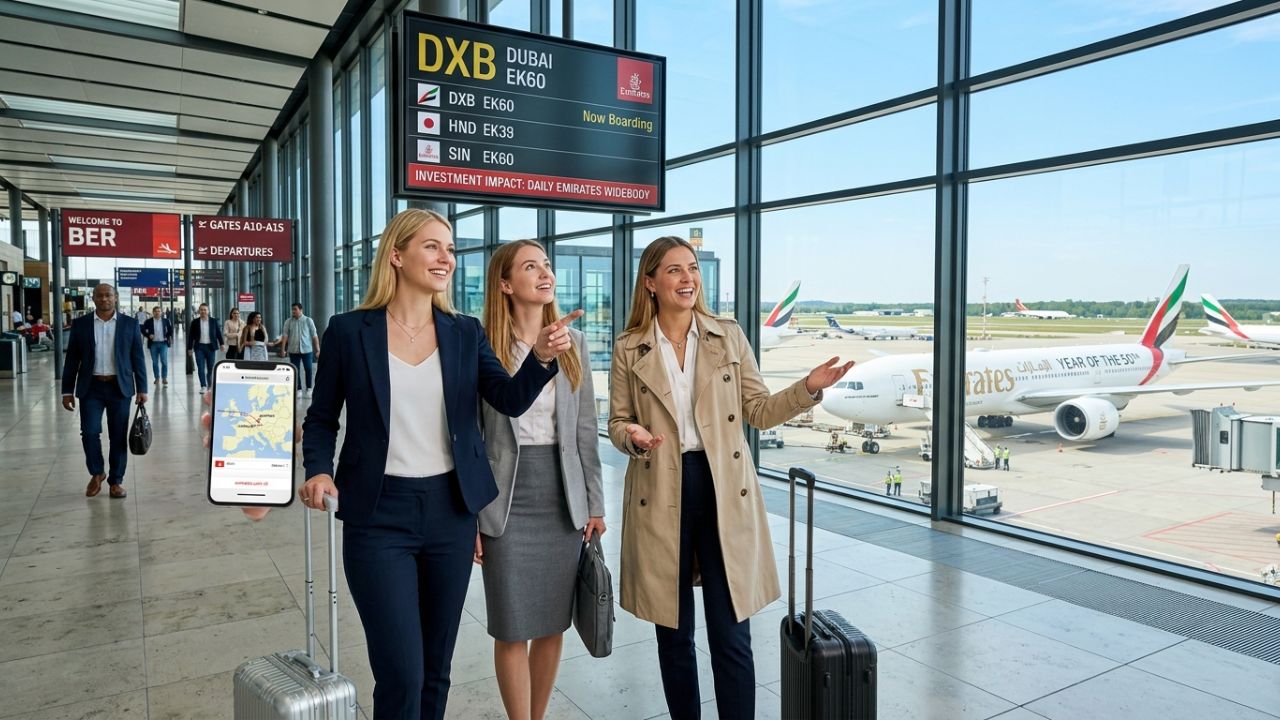
Image representing Emirates' high-stakes proposal to launch daily flights to Berlin and Stuttgart, an operational strategy that would protect German travelers from severe transatlantic and European travel chaos.
Emirates Eyes Berlin and Stuttgart Routes to Shield German Travelers From European Travel Chaos
The High-Stakes Battle for Direct Connectivity
The German aviation sector is currently entrenched in a massive regulatory and connectivity debate that could fundamentally reshape how European travelers navigate global networks. According to the latest breaking airline news, Emirates has officially confirmed a massive proposal to launch daily, widebody flights from Dubai directly to Berlin and Stuttgart. This high-stakes expansion, backed by a staggering €100 million annual investment, is far more than a simple route addition; it is a critical operational defense. For years, passengers originating in Berlin and the export-heavy region of Baden-Württemberg have been forced to funnel through congested, failure-prone legacy hubs like Frankfurt or Munich to access long-haul markets. This outdated transit requirement heavily exposes travelers and critical supply chains to rolling delays, lost cargo, and severe travel chaos.
Currently, the bilateral air service arrangements between the United Arab Emirates and Germany restrict Emirates to serving only four passenger destinations: Frankfurt, Munich, Düsseldorf, and Hamburg. Because this quota is fully exhausted, Emirates is formally requesting that the German Federal Ministry of Transport approve additional access for Berlin and Stuttgart. If cleared, this daily Boeing 777-300ER service would instantly allow millions of travelers to bypass the severe airport disruptions that frequently paralyze Western Europe, offering a seamless, direct bridge to the Middle East, Asia, Africa, and Australasia via the hyper-efficient Dubai hub.
The Scale of the Connectivity Deficit
The urgency behind this Emirates proposal is driven by a massive mismatch between Germany's economic power and its regional aviation infrastructure. Berlin Brandenburg Airport is the third-largest airport in the country, handling roughly 26.1 million passengers in 2025. Yet, despite being a major political, cultural, and start-up center, its long-haul network remains severely restricted. Similarly, Stuttgart Airport—the vital gateway to Germany's highly lucrative automotive and engineering sectors—processed 9.6 million passengers last year but lacks the direct global links necessary to support its massive export economy.
When high-value travelers and critical freight are forced to endure multi-stop itineraries through congested European airspace, the resulting flight cancellations and missed connections inflict massive economic damage. By injecting direct widebody capacity into these underserved regions, Emirates aims to completely neutralize the threat of localized travel chaos, providing a highly reliable transit corridor for both corporate executives and high-value cargo.
Section-Wise Breakdown: Unlocking the German Network
The defense against transit exhaustion is being structured around high-capacity hardware and hyper-efficient routing:
Dubai: The Ultimate Transfer Shield With Dubai International Airport processing a staggering 95.2 million guests in 2025, Emirates offers unparalleled global reach. According to recent aviation updates, Emirates connects to 50 destinations across Africa, the Middle East, Southeast Asia, and Australasia that no German airline currently serves. By linking Berlin and Stuttgart directly to Dubai, German passengers can entirely avoid the grueling airport disruptions of domestic transfers, utilizing a single, highly insulated stopover to reach markets that are otherwise inaccessible without risking severe delays.
Cargo Capacity as an Economic Defense While passenger connectivity dominates the headlines, the cargo aspect of this proposal is an absolute game-changer. A daily Boeing 777-300ER service would inject more than 280 tonnes of weekly belly-hold cargo capacity into these regions. For the advanced manufacturing sectors in Baden-Württemberg and the pharmaceutical and tech industries in Brandenburg, relying on fragmented air freight networks often leads to disastrous supply chain breakdowns. Direct, widebody access ensures that time-sensitive components move swiftly, completely bypassing the massive logistical travel chaos that frequently plagues congested European freight hubs.
Securing High-Value Inbound Tourism The Emirates expansion is not solely focused on outbound transit; it is a critical strategy to capture premium inbound tourism. Gulf states generated 1.2 million overnight stays in Germany in 2025, capturing a 1.5% market share of incredibly high-spending visitors. These premium travelers demand highly convenient, direct air access. By opening Berlin and Stuttgart to direct Gulf flights, Germany can dramatically boost its visitor economy without forcing tourists to navigate the intense flight cancellations that routinely disrupt short-haul European feeder flights.
Operational Infrastructure Details: The Emirates Expansion Matrices
To provide exact, factual clarity on the immense scope of this proposed aviation expansion, industry analysts have compiled the specific economic and operational data surrounding the Emirates bid. The following factual matrices detail the precise breakdown of the proposal, airport metrics, and tourism impact:
Factual Core Proposal Table
| Area | Details |
|---|---|
| Main country | Germany |
| Airline | Emirates |
| Airline base country | United Arab Emirates |
| Proposed German cities | Berlin and Stuttgart |
| Proposed hub | Dubai |
| Service type | Daily passenger flights |
| Approval status | Subject to German Federal Ministry of Transport approval |
| Annual investment | More than €100 million |
| Approximate dollar value | Over $116 million, depending on exchange rate |
| Likely aircraft role | Widebody passenger and belly-cargo service (Boeing 777-300ER) |
| Strategic sectors affected | Tourism, aviation, cargo, trade, business travel and airport growth |
Factual Airport Data Table
| Airport | 2025 passenger figure | Strategic relevance |
|---|---|---|
| Berlin Brandenburg Airport | Around 26.1 million | Capital airport, tourism, politics, start-ups, culture and international events |
| Stuttgart Airport | 9.6 million | Baden-Württemberg gateway, manufacturing, business travel, exports and technology |
| Dubai International Airport | 95.2 million | Global hub for international passengers, transfer traffic and long-haul connections |
Factual Tourism Impact Table
| Tourism factor | Possible impact of Emirates Berlin and Stuttgart flights |
|---|---|
| Gulf inbound tourism | Easier access for high-spending visitors |
| Leisure travel | Stronger one-stop links to Asia, Africa and Australasia |
| Business tourism | More access for corporate trips and MICE demand |
| Regional spread | More visitors beyond Frankfurt and Munich |
| Destination branding | Berlin and Stuttgart gain stronger visibility in long-haul markets |
| Visitor economy | Hotels, retail, restaurants and local transport could benefit |
Factual German Aviation Snapshot
| Year | Boarding passengers at German airports |
|---|---|
| 2019 | 101.3 million |
| 2023 | 86.6 million |
| 2024 | 93.4 million |
| 2025 | 97.3 million |
Passenger Impact: The Era of Direct Access
For the modern traveler residing in Berlin or Stuttgart, the approval of this Emirates proposal would represent the ultimate logistical upgrade. Attempting to travel to Southeast Asia or Australasia currently forces these passengers into intense travel chaos, as they must first fly short-haul to Frankfurt, Munich, or another European mega-hub. A single localized weather event or air traffic control strike during this initial leg often results in devastating flight cancellations, ruining the entire long-haul itinerary.
By deploying daily direct widebody flights, Emirates grants passengers immense peace of mind. Consolidating the journey through a hyper-efficient hub like Dubai exponentially cuts the risk of baggage loss and transit exhaustion. This streamlined mobility system allows travelers to focus entirely on their business objectives or luxury holidays, rather than stressing over the grueling reality of fragmented international transit networks.
Industry Analysis: The Regulatory Bottleneck
According to the latest aviation updates, the primary obstacle to this massive economic injection is regulatory protectionism. While the German aviation sector has recovered significantly—reaching 97.3 million boarding passengers in 2025—it has not fully returned to the 101.3 million peak of 2019. Industry experts argue that restricting Emirates from serving these underserved regions artificially suppresses Germany's recovery. The German Federal Ministry of Transport must now balance the protection of domestic legacy carriers against the desperate need for resilient, high-capacity long-haul links that protect regional economies from European airport disruptions.
Conclusion: A Strategic Crossroads for German Aviation
The Emirates proposal to launch daily Boeing 777-300ER flights connecting Dubai to Berlin and Stuttgart is a monumental, €100 million opportunity for German aviation. By successfully establishing these direct links, the airline would create a highly resilient travel corridor that completely bypasses the severe travel chaos infecting outdated European transit hubs. Driven by immense demand for streamlined access to Asia, Africa, and Australasia, this expansion proves that airlines are actively attempting to utilize direct, widebody routing to guarantee operational stability and protect vital cargo supply chains. However, until the German Federal Ministry of Transport grants absolute approval, the proposal remains grounded. If cleared, German passengers will be permanently shielded from the agonizing airport disruptions and sudden flight cancellations that historically plagued long-haul travel from Berlin and Stuttgart.
Key Takeaways
- Massive Investment: Emirates proposes an annual investment exceeding €100 million ($116M+) to launch daily flights to Berlin and Stuttgart.
- Regulatory Approval Pending: The proposal is strictly subject to clearance by the German Federal Ministry of Transport, as Emirates currently exhausts its 4-city quota in Germany.
- Defeating Travel Chaos: Direct Dubai links would allow regional German travelers and critical air freight to bypass congested, failure-prone European transit hubs.
- Massive Cargo Lift: The Boeing 777-300ER would inject over 280 tonnes of weekly belly-cargo capacity, a critical upgrade for Germany's export economy.
- Tourism Surge: The flights would provide highly lucrative, high-spending Gulf tourists direct access to Berlin and Stuttgart, boosting the regional visitor economy.
🌍 Related Travel Guides & Flight Resources
- Navigate Airport Disruptions Like a Pro Master the art of surviving unexpected travel chaos with our expert strategies.
- Breaking Airline News & Evasion Routes Stay ahead of the delays with our real-time aviation updates and route intelligence.
- Global Flight Cancellation Defense Grid Essential legal rights and compensation tactics when your flight goes down.
⚖️ Disclaimer
The aviation routing intelligence, bilateral agreement analysis, and proposed investment metrics provided in this report are for informational purposes only. The Emirates proposal to serve Berlin and Stuttgart is strictly pending regulatory approval by the German Federal Ministry of Transport and is not a confirmed schedule. Airline flight proposals, specific route frequencies, and international aviation quotas are highly volatile and subject to immediate change based on government negotiations, corporate profitability metrics, and sudden macroeconomic shifts. All passenger volume data, cargo capacity estimates, and tourism statistics have been officially sourced from Emirates, German airport authorities, and Destatis, and remain fluid. NomadLawyer does not guarantee the absolute accuracy or current validity of the information provided and assumes no liability for travel disruptions, flight cancellations, altered itineraries, or any financial consequences resulting from the use of this content. Passengers cannot currently book these proposed routes.
Disclaimer
This article is for informational and educational purposes only. It does not constitute legal, financial, or professional advice. While we strive to provide accurate and up-to-date information, travel policies, regulations, and conditions change rapidly. Always verify information with official sources before making travel decisions. Nomad Lawyer makes no representations about the accuracy, reliability, completeness, or suitability of the information provided. Readers should consult qualified professionals for advice specific to their circumstances. The views expressed in this article are those of the author and do not necessarily reflect the views of Nomad Lawyer.
Kunal K Choudhary
Co-Founder & Contributor
A passionate traveller and tech enthusiast. Kunal contributes to the vision and growth of Nomad Lawyer, bringing fresh perspectives and driving the community forward.
Learn more about our team →