
Emirates Retires A380 on Beijing Route, Shifts to Increased Flight Frequency
Breaking airline news and aviation industry updates for 2026.

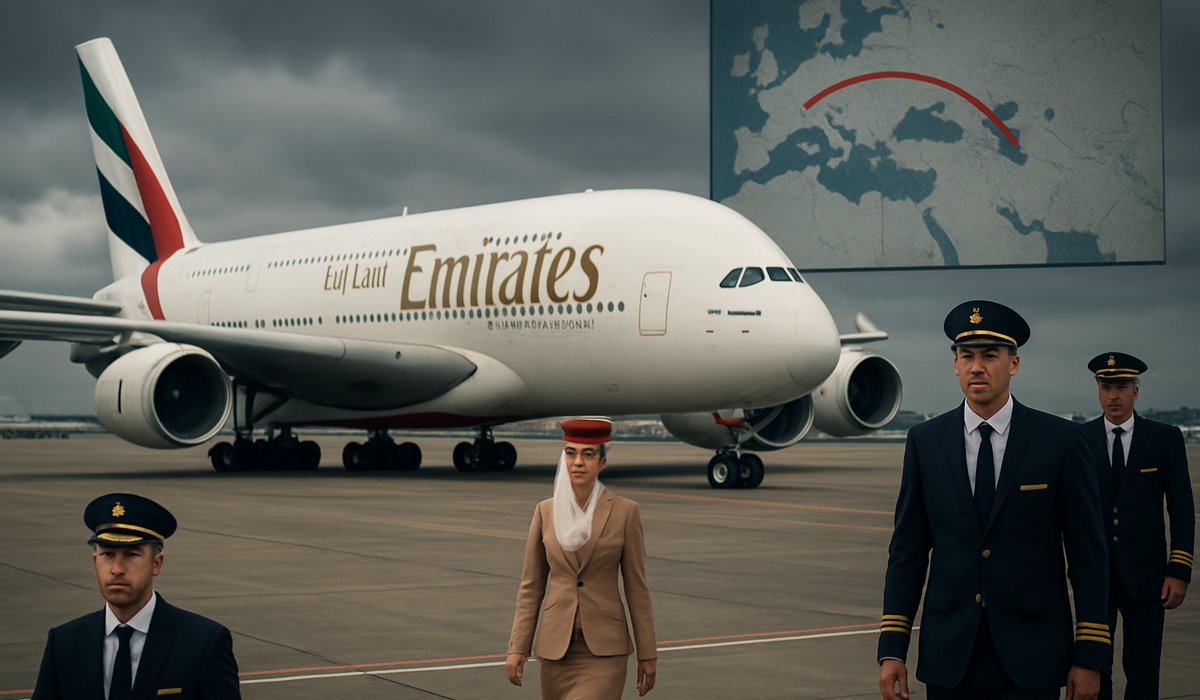
Image generated by AI
Emirates Retires A380 on Beijing Route, Shifts to Increased Flight Frequency
The Gulf carrier prioritizes schedule density over aircraft capacity on critical Asia-Pacific service
Strategic Shift Away From Superjumbo on China's Capital
Emirates has announced plans to withdraw its flagship Airbus A380 aircraft from its Dubai-Beijing service beginning in July, marking a significant operational restructuring on one of the airline's most important Asian gateways. The Dubai-headquartered carrier will replace the iconic double-deck widebody with dual daily frequencies operated by Boeing 777-300ER jets, signaling a broader industry trend toward schedule optimization over pure seat capacity.
Currently, Emirates operates a single daily A380 service on the route. The transition to two Boeing 777-300ER flights will maintain total available seat kilometers while fundamentally altering the passenger experience and operational logistics on this strategically vital corridor connecting the Middle East to mainland China's premier business hub.
Capacity Trade-Off for Market Penetration
The decision reflects evolving priorities within the aviation industry, where carriers increasingly favor frequency over high-capacity aircraft to capture connecting traffic and improve schedule flexibility. While the A380 offers approximately 500 seats per departure, dual 777-300ER operations—each carrying roughly 350 passengers—provide greater scheduling convenience and reduced risk concentration on a single daily flight.
Industry analysts suggest this approach allows Emirates to better accommodate passenger demand across multiple departure times, particularly appealing to business travelers and connecting passengers who prioritize convenient scheduling options over aircraft type.
A380 Operations Remain on Select Chinese Routes
Despite the Beijing withdrawal, Emirates remains committed to A380 operations within China. The airline will continue deploying its superjumbo fleet on daily services to at least two other Chinese destinations, underscoring the strategic importance of the world's second-largest economy to the carrier's long-haul network.
The move coincides with broader fleet optimization discussions across the industry, as carriers balance the operational costs and environmental considerations of superjumbo aircraft against emerging demand patterns and fuel efficiency requirements in an increasingly competitive aviation landscape.
Broader Industry Context
This decision occurs amid persistent discussions about the future viability of ultra-large aircraft in an era of fuel-efficient twin-engine jets and evolving consumer preferences. While some carriers have phased out A380 operations entirely, Emirates maintains one of the world's largest A380 fleets, indicating selective deployment rather than wholesale retirement remains the preferred strategy.
FAQs
Why is Emirates removing the A380 from its Beijing service? Emirates is prioritizing schedule frequency over maximum capacity, replacing one daily A380 flight with two daily Boeing 777-300ER services to better accommodate passenger demand and improve connectivity options.
Will passengers see lower fares with the Boeing 777-300ER replacement? While increased frequency may improve competitiveness, airfare pricing depends on multiple variables including fuel costs, demand, and competitive routes rather than aircraft type alone.
Is Emirates phasing out the A380 globally? No. Emirates continues operating A380s on select Chinese routes and maintains one of the world's largest superjumbo fleets, indicating strategic deployment rather than complete retirement.
How does this affect Dubai-Beijing connectivity? The dual daily service structure may improve scheduling flexibility for transfer passengers while maintaining comparable overall capacity on the route.
What does this reveal about aviation industry trends? The shift demonstrates how modern carriers increasingly prioritize operational efficiency and frequency over ultra-high-capacity aircraft, particularly on competitive long-haul routes.
Related Travel Guides
External Resources
Disclaimer
This article is for informational and educational purposes only. It does not constitute legal, financial, or professional advice. While we strive to provide accurate and up-to-date information, travel policies, regulations, and conditions change rapidly. Always verify information with official sources before making travel decisions. Nomad Lawyer makes no representations about the accuracy, reliability, completeness, or suitability of the information provided. Readers should consult qualified professionals for advice specific to their circumstances. The views expressed in this article are those of the author and do not necessarily reflect the views of Nomad Lawyer.
Preeti Gunjan
Contributor & Community Manager
A passionate traveller and community builder. Preeti helps grow the Nomad Lawyer community, fostering engagement and bringing the reader experience to life.
Learn more about our team →