
Emirates and Qatar Airways Withdraw Airbus A380 Service From Seven Routes Amid Middle East Tensions
Breaking airline news and aviation industry updates for 2026.

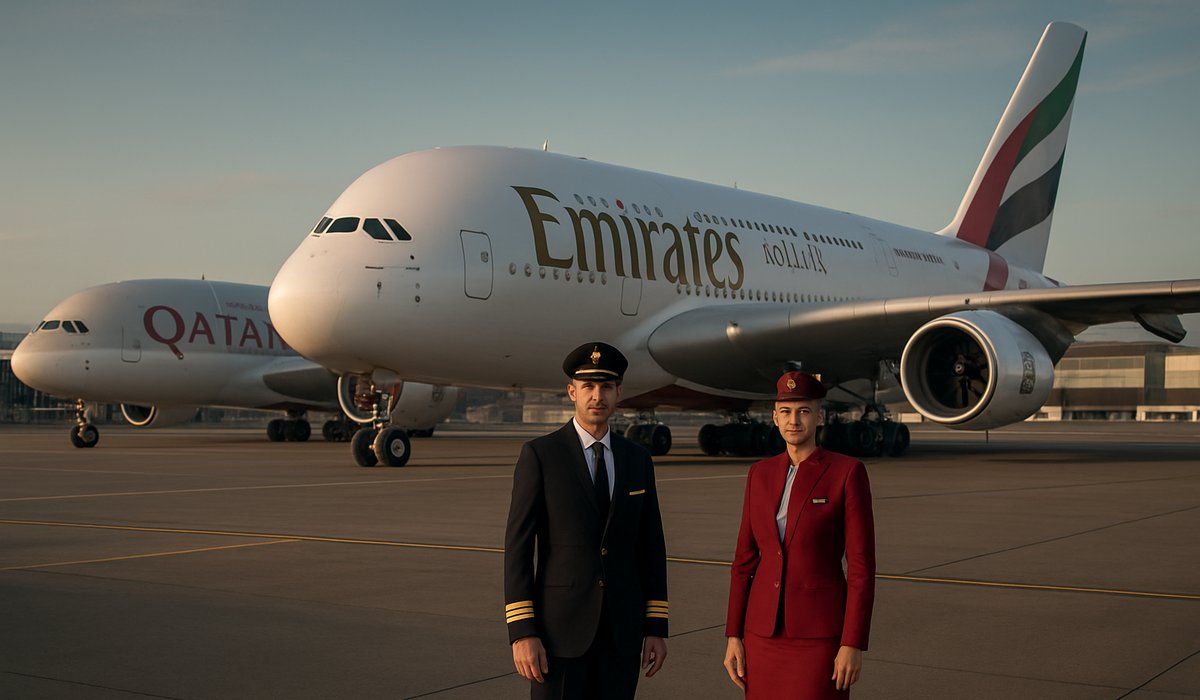
Image generated by AI
Emirates and Qatar Airways Withdraw Airbus A380 Service From Seven Routes Amid Middle East Tensions
Regional instability forces Gulf carriers to restructure flagship aircraft deployment across critical markets
Geopolitical Pressures Force Aircraft Redeployment
Two of the world's largest long-haul carriers have announced significant withdrawals of their Airbus A380 operations across seven destinations, according to the latest scheduling data submitted to aviation tracking platforms Cirium Diio and OAG. Both Emirates and Qatar Airways—major operators of the double-deck superjumbo—are reconfiguring their networks as escalating regional tensions reshape commercial aviation patterns across the Middle East.
The restructuring reflects mounting operational complexities stemming from ongoing geopolitical instability in the region, which has forced airlines to reassess routing protocols, aircraft deployment strategies, and capacity management on affected corridors.
Strategic Network Adjustments in Response to Regional Crisis
The withdrawal of A380 services from these seven routes marks a considerable shift in the Gulf carriers' long-haul strategy. Both airlines have historically positioned the Airbus A380 as their flagship aircraft for premium international services, leveraging the four-class configuration to maximize revenues on high-demand routes.
The decision to redeploy the superjumbos away from these specific destinations signals that airlines are actively managing risk exposure in volatile regions. Rather than canceling services entirely, carriers are rotating in smaller, more flexible wide-body aircraft—a practical approach that maintains market presence while reducing operational complexity.
Industry-Wide Implications for Aviation Networks
This reconfiguration reflects broader challenges facing the aviation sector. Geopolitical disruptions compound existing pressures from volatile jet fuel prices, which have remained elevated following years of global supply chain instability. Airlines globally continue adjusting capacity, route networks, and aircraft allocation in response to unpredictable operating costs and regional security considerations.
The A380—already a niche aircraft operated by fewer than a dozen carriers worldwide—faces mounting pressure as airlines evaluate its economics. High fuel consumption per seat and the specialized infrastructure required at destination airports mean that aircraft redeployments often signal deeper strategic shifts rather than temporary adjustments.
What This Means for Travelers
Passengers on affected routes should anticipate schedule changes and potential adjustments to service configurations. While direct flights may continue under alternative aircraft types, frequent flyer availability and seat availability could shift as airlines rotate equipment. Travelers should monitor booking confirmations and airline announcements for the most current service information.
The A380 withdrawals underscore how geopolitical events translate directly into consumer impact—from flight schedules to seat availability to pricing on alternative routings.
Frequently Asked Questions
Why are airlines cutting A380 flights to specific regions? Geopolitical instability creates operational complications including route restrictions, increased insurance costs, crew concerns, and supply chain disruptions that make deploying expensive superjumbos impractical on uncertain routes.
Will these routes lose service entirely? No—airlines are typically replacing A380 flights with smaller wide-body aircraft (Boeing 777, Airbus A350) that maintain service while offering greater operational flexibility.
How do fuel prices affect A380 operations? The A380 consumes significantly more jet fuel than smaller aircraft. During periods of volatile fuel costs, airlines prioritize smaller, more efficient aircraft to protect margins.
Which airlines still operate the A380? Currently, only Emirates, Qatar Airways, Singapore Airlines, China Southern, Lufthansa, and a handful of others operate the superjumbo, making it increasingly rare on global networks.
When will these changes take effect? Airlines typically implement schedule changes gradually through their normal quarterly scheduling cycles. Affected travelers should check booking confirmations for exact transition timelines.
Related Travel Guides
Disclaimer
This article is for informational and educational purposes only. It does not constitute legal, financial, or professional advice. While we strive to provide accurate and up-to-date information, travel policies, regulations, and conditions change rapidly. Always verify information with official sources before making travel decisions. Nomad Lawyer makes no representations about the accuracy, reliability, completeness, or suitability of the information provided. Readers should consult qualified professionals for advice specific to their circumstances. The views expressed in this article are those of the author and do not necessarily reflect the views of Nomad Lawyer.
Kunal K Choudhary
Co-Founder & Contributor
A passionate traveller and tech enthusiast. Kunal contributes to the vision and growth of Nomad Lawyer, bringing fresh perspectives and driving the community forward.
Learn more about our team →