
Balkan Appeal: Europe's Newest Countries Redefine Modern Travel Maps
Kosovo, Montenegro, Serbia, Czechia, and Slovakia emerge as key travel destinations, blending ancient heritage with fresh European experiences.
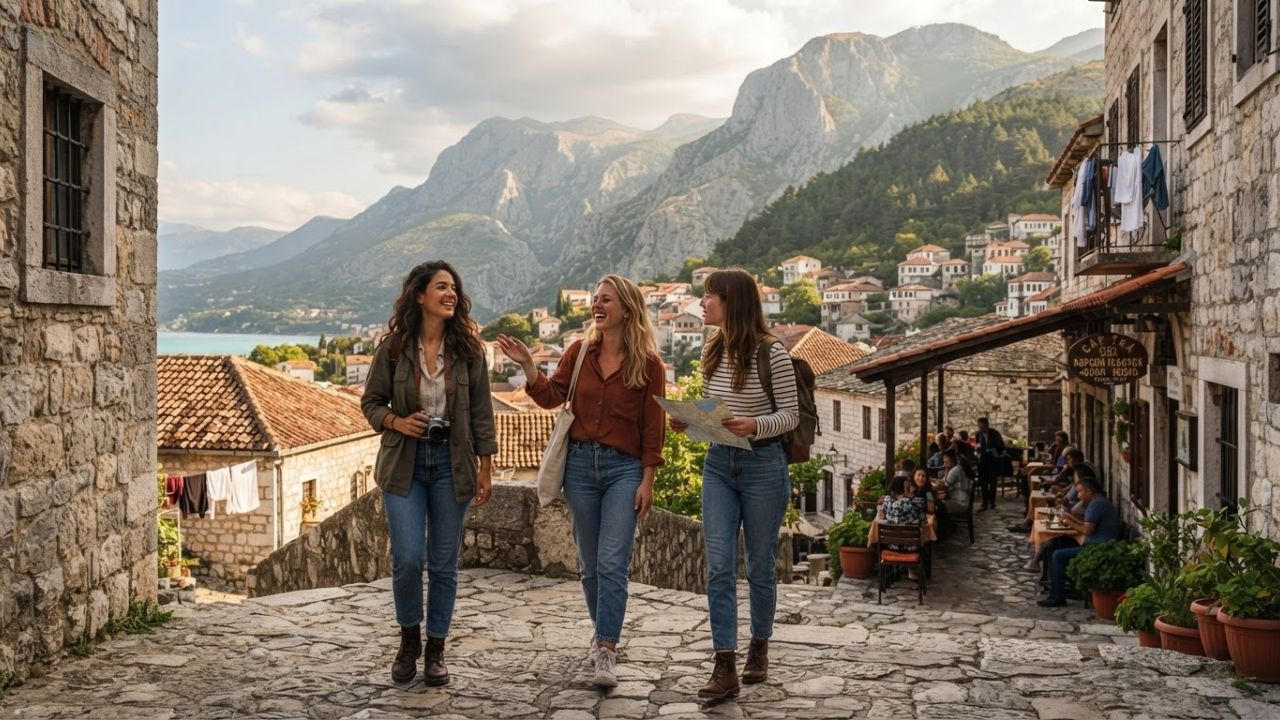
Image generated by AI
Five of Europe's newest sovereign states—Kosovo, Montenegro, Serbia, Czechia, and Slovakia—are emerging as key travel destinations, offering distinct cultural, urban, and nature-focused experiences. These nations combine relatively recent independence with ancient heritage, providing alternative routes for international travelers seeking to bypass traditional, crowded European hotspots.
The Local Trend Revealed
The political geography of Europe changed significantly in the 1990s and 2000s following the dissolution of larger unions. For today's travelers, these younger nations offer highly diverse itineraries:
- Kosovo: Europe's youngest state, which declared independence on February 17, 2008, features mountains across 63 percent of its territory. Popular nature destinations include the Sharr Mountains, Bjeshkët e Nemuna, Rugova Canyon, Mirusha Waterfalls, and the Gadime and Radavc caves.
- Montenegro: Gained independence in 2006, offering a compact geography divided into 6 major tourism clusters, including Durmitor National Park with its 18 glacial lakes and Tara Canyon.
- Serbia: Became a sovereign state in 2006, offering urban gateways like Belgrade and Novi Sad, alongside regions in Vojvodina and southeastern/southwestern Serbia.
- Czechia: Established on January 1, 1993, the country offers 17 UNESCO World Heritage sites, more than 2,000 castles and chateaux, over 40 protected historic towns, 33 spa towns, and more than 25,000 miles of walking trails.
- Slovakia: Also established on January 1, 1993, the country features 180 castles, 9 national parks, 12 caves, and 7 UNESCO World Heritage sites, alongside a 750-kilometer Castle Route.
Regional Visitor Indicators and Travel Data
Recent tourism statistics confirm a strong post-pandemic recovery across these markets, as reported by national statistical departments:
- Montenegro: Recorded 2,728,564 arrivals and 15,367,166 overnight stays in 2025 (with foreign visitors generating 95.8 percent of nights), compared to 2,606,854 arrivals and 15,594,299 nights in 2024 (where foreign tourists represented 96.1 percent of nights), according to MONSTAT.
- Serbia: Logged 2,384,735 foreign arrivals in 2024 (with 6,097,749 foreign overnight stays) and 2,348,495 in 2025 (with 6,072,905 foreign overnight stays). The Statistical Office of the Republic of Serbia (RZS) reported that by May 2026, monthly arrivals reached approximately 470,000 (up 7.4 percent year-on-year) with 1.209 million overnight stays.
- Czechia: Registered 4.1 million accommodation arrivals (up 9.9 percent) and 10.6 million overnight stays (up 7.7 percent) in the first quarter of 2024.
- Slovakia: Welcomed almost 5.9 million guests in the first 11 months of 2025, while 2024 saw 3.8 million tourists (representing almost two-thirds of visitors). The country recorded almost 1.4 million accommodation nights in May 2026.
Cultural & Environmental Value
For the visitor, traveling through these newer nations supports local heritage and community-focused economies. Opting for locally owned guest houses (sobe) and family-run mountain chalets in Durmitor or Rugova ensures that guiding fees and lodging costs directly support Balkan families.
Preserving the natural environment is also a priority. The National Tourism Organisation of Montenegro promotes outdoor recreation clusters to protect regional biodiversity, while the Slovakia Tourism Board directs resources to maintain the country's national parks and cave systems. Travelers are encouraged to follow "Leave No Trace" guidelines in sensitive alpine environments to protect these ecosystems from seasonal overcrowding.
Visitor Insider Tips for Emerging European Destinations
Local destination specialists suggest the following strategies for travelers:
- Observe the Off-Peak Window: Plan your trip during the autumn shoulder season of September to October. You can experience comfortable temperatures, fall foliage, and lower rates before winter ski resorts open.
- Observe Local Tipping and Cash Customs: In small mountain towns across Kosovo, Serbia, and Montenegro, cash is preferred over credit cards. Montenegro and Kosovo utilize the Euro, while Serbia uses the Serbian Dinar. In Balkan taverns (kafanas), it is customary to round up the bill or tip 10 percent for table service.
- Sample Regional Culinary Specialties:
- In Montenegro, try kačamak (maize porridge with cheese and potatoes) or pršut (smoked ham).
- In Serbia, order traditional sarma (stuffed cabbage rolls) or pasulj (white bean soup).
- In Slovakia, eat bryndzové halušky (potato dumplings with sheep cheese and bacon).
- In Kosovo, try flija (layered crepes) or tavë kosi (baked lamb with yogurt).
- In Czechia, sample classic svíčková (sirloin in cream sauce with dumplings).
- Explore Under-the-Radar Spots:
- In Montenegro, visit the quiet village of Rijeka Crnojevića near Lake Skadar to bypass busy coastal towns.
- In Kosovo, watch the sunset from the fortress in the historic town of Prizren.
- In Slovakia, visit the quiet historic mining town of Banská Štiavnica, situated inside a collapsed ancient caldera.
Tourism Outlook
The long-term impact of tourism in these newer states is the creation of a more diversified European travel map. By promoting mountain reserves, historic towns, and wellness tourism, these countries are developing alternative markets that support regional economies throughout the year.
FAQ: Emerging European Destinations
What are the newest countries in Europe? Kosovo (declared in 2008), Montenegro (2006), Serbia (2006), Czechia (1993), and Slovakia (1993) are among the continent's youngest sovereign states.
Why is Montenegro's tourism strongly seasonal? Montenegro relies heavily on summer coastal travel along the Adriatic, though its mountain clusters in Durmitor are growing as year-round adventure hubs.
What are the key nature assets of Slovakia? Slovakia offers 180 castles, nine national parks, 12 caves, and seven UNESCO World Heritage sites, including the High Tatras mountain range.
How much territory do mountains cover in Kosovo? Mountains cover approximately 63 percent of Kosovo's territory, providing extensive trails for hiking and climbing.
Disclaimer
This article is for informational and educational purposes only. It does not constitute legal, financial, or professional advice. While we strive to provide accurate and up-to-date information, travel policies, regulations, and conditions change rapidly. Always verify information with official sources before making travel decisions. Nomad Lawyer makes no representations about the accuracy, reliability, completeness, or suitability of the information provided. Readers should consult qualified professionals for advice specific to their circumstances. The views expressed in this article are those of the author and do not necessarily reflect the views of Nomad Lawyer.