
Economy Cost Premium Soars in 2026: Airlines Widen Cabin Fare Gap
Premium economy fares are surging in 2026, forcing budget travelers to reassess whether economy's cost savings justify sacrificed comfort. Airlines worldwide are widening the gap between basic and upgraded cabin pricing.

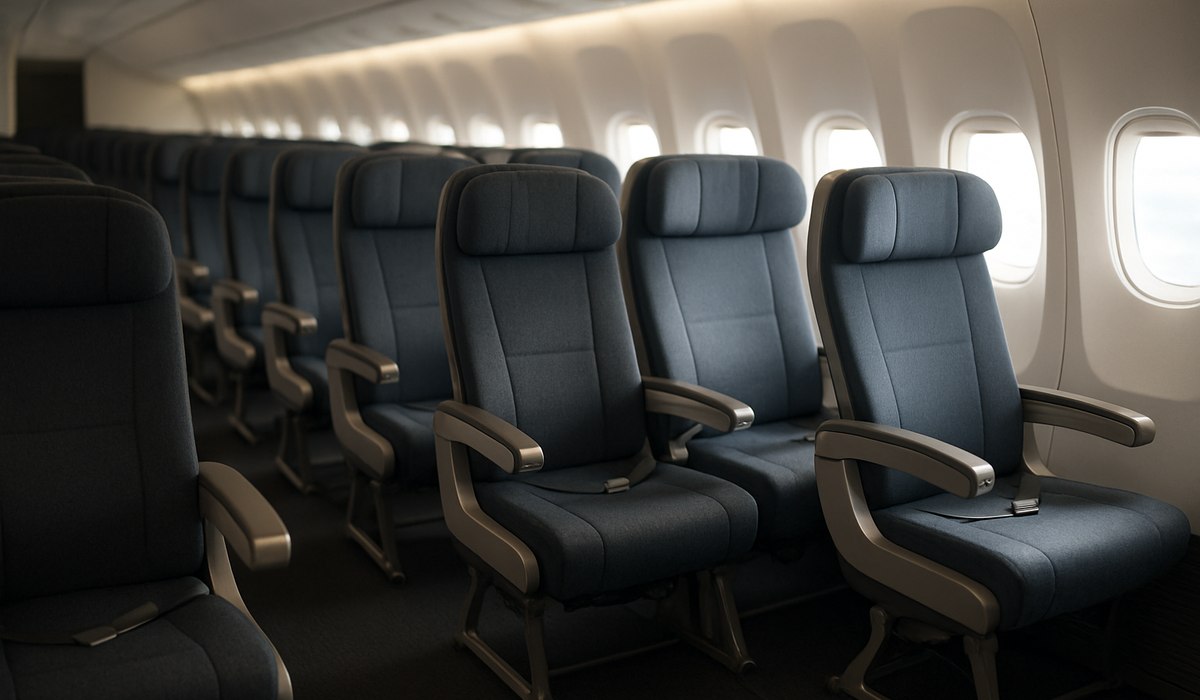
Image generated by AI
Premium Economy Pricing Reaches New Heights in 2026
Airlines worldwide are aggressively raising premium economy fares, creating unprecedented gaps between basic economy and upgraded cabin options. As of April 2026, the economy cost premium difference has expanded dramatically across major carriers, forcing price-sensitive travelers to make difficult choices about comfort versus affordability. Industry data reveals that premium economy pricing now commands premiums 40-80% higher than standard economy on comparable long-haul routes, fundamentally shifting how budget-conscious passengers plan their journeys.
This pricing strategy reflects broader industry trends: airlines are leveraging post-pandemic demand recovery while simultaneously squeezing capacity and maximizing revenue per available seat. The economy cost premium trend shows no signs of reversing, making it essential for travelers to understand exactly what they're paying for in each cabin class.
Economy Class Basics: What Budget Flyers Get in 2026
Standard economy remains the foundation of airline revenue models, offering functional but minimal comfort for cost-conscious passengers. In 2026, typical economy seating provides 17-18 inches of seat width and 31-32 inches of pitch—measurements largely unchanged since the pre-pandemic era. Most carriers include one carry-on bag and personal item at no additional charge, though checked baggage fees typically range from $30-$50 per bag depending on your airline and destination.
Entertainment options on long-haul flights generally include on-demand movies and television through seatback screens or personal device streaming, though quality varies significantly between carriers. Meal services follow a tiered approach: short-haul flights offer minimal refreshments, while long-haul economy typically includes one meal service with limited menu selections. Seat selection remains one of aviation's most profitable ancillary services, with basic seat assignments costing $10-$25 per flight, while premium seat locations command considerably higher fees.
Premium Economy Pricing: The 2026 Cost Breakdown
The economy cost premium differential has become a critical consideration for long-distance travelers. Premium economy cabins offer measurably improved amenities: wider seats (18.5-20 inches), greater legroom (38-40 inches of pitch), and dedicated cabin service with enhanced meal options. Current pricing data shows premium economy typically costs 50-100% more than basic economy fares on transatlantic routes, with some carriers charging premium markups exceeding international standards.
What drives these economy cost premium increases? Airlines cite several factors: increased crew training requirements for premium service, higher-quality catering, dedicated cabin maintenance, and consumer demand for mid-tier comfort options. Premium economy passengers receive priority boarding, complimentary seat selection, enhanced baggage allowances (typically two checked bags), and superior in-flight amenities including better bedding, larger personal screens, and premium meal service. For 2026, the average transatlantic economy cost premium ranges from $400-$900 per passenger depending on routing, season, and advance booking windows.
American Airlines and Competitor Fare Comparisons
Major carriers have standardized their approach to economy cost premium positioning. American Airlines' premium economy offering, like competitors United, Delta, and international carriers, prices consistently above this economic threshold. On popular routes like New York-London, economy fares currently range $500-$1,200 while premium economy occupies the $800-$2,000 range—demonstrating the substantial economy cost premium gap.
European carriers including Lufthansa, British Airways, and KLM structure similar premium economy pricing, often with slightly lower absolute fares but comparable percentage markups compared to economy. Middle Eastern carriers like Emirates and Qatar Airways typically command higher premium economy prices due to superior product differentiation and brand positioning. Budget carriers including Norwegian and Southwest generally avoid premium economy entirely, competing instead through volume-based economy pricing and transparent ancillary fee structures that sometimes exceed traditional carriers' total economy cost premium when fully loaded with add-ons.
Is Premium Economy Worth the Price Difference?
The economy cost premium value proposition depends entirely on your travel priorities and flight duration. For flights under four hours, the marginal comfort improvement may not justify doubling your ticket cost—basic economy often suffices. However, on long-haul flights exceeding eight hours, premium economy's additional legroom, superior meals, and dedicated service can significantly impact passenger satisfaction and recovery quality.
Financial analysis suggests the economy cost premium becomes justifiable when the price differential falls below 30-40% of your total economy fare. A $600 economy ticket with a 50% premium represents $900 for tangible improvements; conversely, a $400 economy fare with an 80% markup to $720 presents weaker value. Business travelers and those flying frequently often find premium economy economically rational through airline loyalty programs, corporate travel policies, or premium cabin status benefits that reduce effective economy cost premium calculations.
Traveler Action Checklist
-
Compare full all-in fares across economy and premium economy on your preferred airline before booking, including all applicable fees and surcharges.
-
Calculate your true economy cost premium percentage by dividing the price difference by your base economy fare; target anything below 40% for value consideration.
-
Check airline loyalty program benefits to determine if existing status, points, or partnerships reduce premium cabin access costs.
-
Evaluate flight duration objectively—reserve premium economy consideration for flights exceeding 6-8 hours where comfort meaningfully impacts recovery.
-
Monitor airline websites and flight tracking services like FlightAware for fare fluctuations, as economy cost premium gaps occasionally narrow during promotional periods.
-
Review premium economy amenities specifically rather than accepting marketing claims; verify included services match your priorities.
-
Consider alternative routing options that might offer better economy cost premium ratios or superior economy products through different carriers.
| Metric | Economy | Premium Economy | Economy Cost Premium | Value Threshold |
|---|---|---|---|---|
| Seat Width | 17-18" | 18.5-20" | 15% improvement | Marginal |
| Legroom | 31-32" | 38-40" | 20-25% increase | Moderate |
| Price Markup | Baseline | $400-$900 | 50-100% increase | Significant |
| Baggage Allowance | 1 checked | 2 checked | 1 additional bag | Valuable |
| Meal Service | Standard | Premium | Upgraded quality | Premium-focused |
| Long-Haul Routes | Adequate | Recommended | 40-80% higher cost | Favorable |
What This Means for Travelers
The expanding economy cost premium gap forces strategic decision-making around cabin class selection. Airlines recognize premium economy fills the profitable middle ground between volume-dependent economy and ultra-premium first-class offerings. Your ticket costs will likely continue rising as airlines rationalize capacity and increase revenue per seat.
Strategic approaches to minimize economy cost premium impact include: booking premium cabin tickets during sales periods or flash promotions, accumulating airline miles through credit card spending to offset cabin upgrades, leveraging airline elite status for complimentary premium cabin access, and selecting routes where economy cost premium markups remain below 35% thresholds. Consider whether your journey genuinely requires enhanced comfort or if strategic layovers and alternative routing options present better overall value propositions despite longer travel times.
FAQ
What exactly is included in premium economy that justifies the economy cost premium?
Premium economy typically includes wider seats (18.5-20 inches versus 17-18 inches), significantly more legroom (38-40 inches versus 31-32 inches), priority boarding, complimentary seat selection, enhanced meal service with premium menu options, improved entertainment systems, better bedding on long-haul flights, and dedicated cabin crew service. The economy cost premium reflects these measurable improvements plus airline revenue optimization strategies.
How much is the typical economy cost premium increase in 2026?
Current economy cost premium markups range 40-100% above base economy fares depending on route length, season,
Disclaimer
This article is for informational and educational purposes only. It does not constitute legal, financial, or professional advice. While we strive to provide accurate and up-to-date information, travel policies, regulations, and conditions change rapidly. Always verify information with official sources before making travel decisions. Nomad Lawyer makes no representations about the accuracy, reliability, completeness, or suitability of the information provided. Readers should consult qualified professionals for advice specific to their circumstances. The views expressed in this article are those of the author and do not necessarily reflect the views of Nomad Lawyer.
Raushan Kumar
Founder & Lead Developer
Full-stack developer with 11+ years of experience and a passionate traveller. Raushan built Nomad Lawyer from the ground up with a vision to create the best travel and law experience on the web.
Learn more about our team →