
EasyJet Passenger Stranded Four Days in Milan After EU Biometric Chaos
An EasyJet passenger spent four unexpected days in Milan after new EU biometric entry checks created three-hour queues at Linate Airport in 2026, leaving 120+ travelers unable to board their Manchester flight.

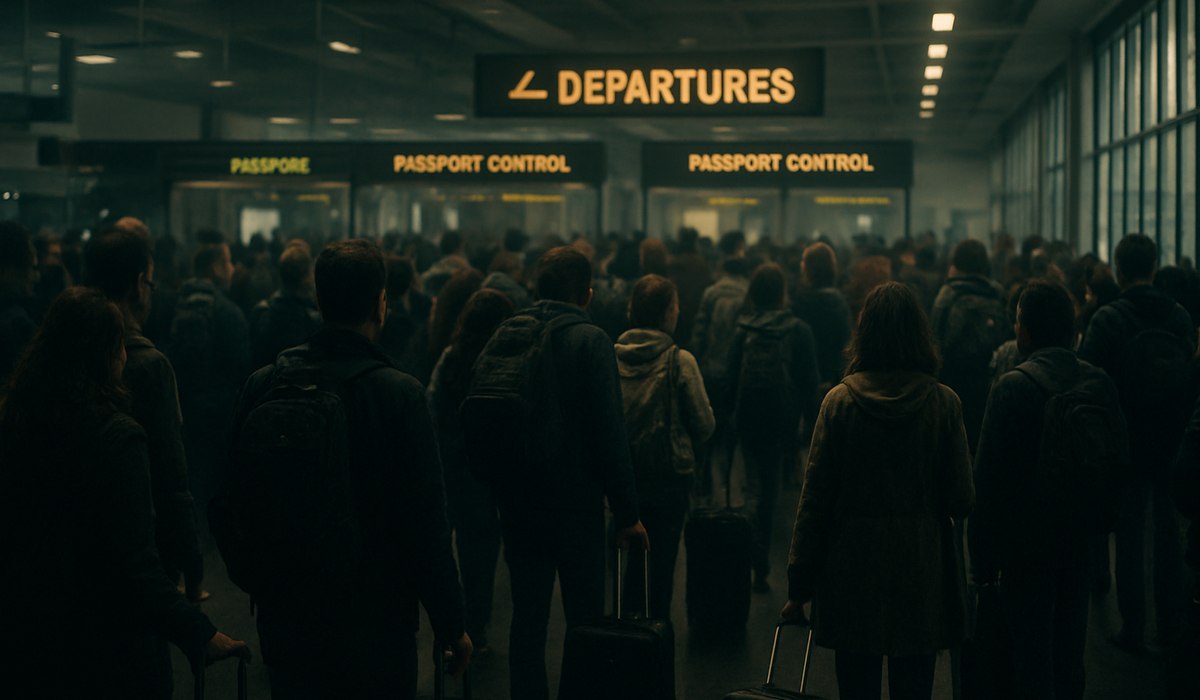
Image generated by AI
EasyJet Passenger Stranded: How EU Biometric Checks Derailed a Manchester Flight
An EasyJet passenger spent four unplanned days in Milan after the European Union's new biometric Entry Exit System overwhelmed border controls at Milan Linate Airport on April 13, 2026. The disruption stranded over 120 travelers in three-hour passport queues, forcing the Manchester-bound aircraft to depart with dozens of empty seats. One UK-based passenger, who had arrived hours before departure, couldn't clear immigration in time and faced a costly four-day ordeal securing alternative transportation home.
The incident marks one of the most significant travel disruptions since the EU Entry Exit System (EES) launched full operations on April 10, 2026. It highlights critical gaps between border security infrastructure and passenger processing capacity across European airports during the system's critical early rollout phase.
Flight Disruption: How Biometric Chaos Stranded 120+ Passengers
The chaos began when Milan Linate's non-Schengen passport desks became severely congested as border officers collected fingerprints, facial images, and detailed passport information from all non-EU nationals, including UK travelers visiting the Schengen area. What officials expected to be a streamlined security enhancement transformed into a bottleneck that paralyzed Sunday afternoon departures.
The EasyJet passenger, who requested anonymity, explained her arrival at the airport well in advance of the Manchester flight. Despite checking in early and proceeding through airline security without incident, she found herself trapped in a slowly-moving immigration line. Each biometric capture sequence—fingerprint scanning, facial recognition verification, and questioning—consumed precious minutes. By the time she approached the booth, boarding had already closed, and her flight had departed without her.
The magnitude of the disruption shocked airport operators and airline staff. With the aircraft assigned to a specific departure slot, controllers couldn't delay takeoff indefinitely. The flight ultimately left with roughly half its booked passengers still processing through border control. Witnesses reported scenes of distress in the crowded hall, with some travelers experiencing medical episodes from prolonged standing and stress.
For more information on EU border procedures, visit the EU Border Control Regulations guide.
Inside Milan Linate's Bottleneck: Three-Hour Queues and Empty Seats
Milan Linate Airport, one of northern Italy's busiest hubs, proved unprepared for the simultaneous biometric processing demands created by the Entry Exit System rollout. Facility planners hadn't anticipated the dramatic slowdown caused by adding fingerprint and facial recognition steps to every single non-EU traveler's journey through passport control.
Three-hour wait times became routine within days of the system's activation. Passengers who had previously cleared Italian immigration in 15-20 minutes suddenly faced marathon queues snaking through the terminal. The bottleneck wasn't limited to peak hours—delays persisted throughout Sunday's schedule, affecting multiple airline operators attempting Manchester, London, and other UK routes.
Border officer staffing levels remained inadequate to handle the increased workload. While Italy had received advance notice of the April 10 launch date, hiring and training additional officers hadn't scaled fast enough. The result was predictable: too many travelers, too few booths, and an impossible situation for both passengers and airlines managing scheduled departures.
The EasyJet Manchester service became the visible symbol of this systemic failure. Passengers who had followed all guidance—arriving early, completing check-in, moving through security promptly—still found themselves unable to reach their gate. When the boarding window closed, the airline faced an operational choice: depart and leave customers behind, or delay indefinitely while border services remained overwhelmed.
Passenger Account: One Traveler's Four-Day Ordeal
The stranded EasyJet passenger's experience reveals the cascading consequences of a single missed flight during the early phases of a major system transition. After boarding closed without her, she faced an immediate problem: finding alternative transportation home within a reasonable timeframe.
Available flights back to the United Kingdom were limited and expensive. Rather than paying premium last-minute rebooking fees, she found herself forced to remain in Milan while searching for affordable options. Four days elapsed before she secured a new flight, during which she incurred unexpected costs for accommodation, meals, ground transportation, and her eventual rebooking charges.
The passenger's situation exemplified a gap in passenger protection frameworks. EU Regulation 261/2004 offers compensation for flight delays and cancellations caused by airline or technical failures, but typically excludes disruptions stemming from government-operated border controls. Border delays fall into a regulatory gray zone where responsibility remains ambiguous.
The stranded traveler attempted to seek assistance from EasyJet, citing the extraordinary circumstances. The airline acknowledged the situation but referenced pre-travel communications advising passengers to arrive earlier than usual and expect extended processing times during the EES bedding-in period. This response, while technically defensible, offered the passenger little practical relief for the financial burden she had absorbed.
Learn more about [EU Regulation 261 passenger rights on FlightRadar24's explainer](https://www.[FlightRadar24](https://www.flightradar24.com).com).
EU Entry Exit System Rollout Faces Early Growing Pains
The European Union launched its Entry Exit System on April 10, 2026, to digitally record entries and exits for non-EU nationals staying short-term in the Schengen area. For first-time users, the system requires submission of biometric data—fingerprints and facial images—at border entry points. While the security and immigration-tracking objectives remain sound, implementation has revealed critical infrastructure and staffing shortcomings.
Early reports from Italian, French, German, and Spanish airports documented similar patterns: queues stretching multiple hours, passengers missing connections, and airlines forced to manage disrupted schedules while hundreds remained trapped in immigration halls. Popular vacation hubs and major business centers felt the impact most acutely during the rollout's first two weeks.
Travel analysts and airport operators had warned the European Commission and member states about these exact risks. Industry groups submitted detailed reports emphasizing that biometric capture, while necessary for security purposes, required additional physical booth space, specialized equipment, and substantially more trained personnel than traditional passport scanning alone.
The Milan incident occurred during the system's debut full week of operation, making it particularly significant. Rather than isolated technical glitches, the disruption reflected systemic undersourcing across the border control infrastructure. Similar scenarios would likely recur at other busy airports until staffing and facilities caught up with processing demands.
The EES ultimately aims to improve border management and identify visa overstays, but the implementation timeline created a predictable collision between ambition and operational readiness. For the EasyJet passenger stranded in Milan and 120+ others on that Sunday, the transition period came with substantial personal cost.
Key Data Points: Understanding the Disruption
| Metric | Details |
|---|---|
| System Launch Date | April 10, 2026 (EU Entry Exit System full operation) |
| Disruption Date | April 13, 2026 (Sunday, first full week of operation) |
| Affected Passengers | 120+ stranded on EasyJet Manchester service from Milan Linate |
| Queue Duration | Up to 3 hours at non-Schengen passport desks |
| Flight Departure | Manchester-bound EasyJet service departed with dozens of empty seats |
| Stranded Passenger Duration | 4 additional days in Milan |
| Cost Components | Hotel accommodation, meals, ground transport, flight rebooking fees |
| Contributing Factor | Inadequate border officer staffing and biometric processing booth capacity |
What This Means for
Disclaimer
This article is for informational and educational purposes only. It does not constitute legal, financial, or professional advice. While we strive to provide accurate and up-to-date information, travel policies, regulations, and conditions change rapidly. Always verify information with official sources before making travel decisions. Nomad Lawyer makes no representations about the accuracy, reliability, completeness, or suitability of the information provided. Readers should consult qualified professionals for advice specific to their circumstances. The views expressed in this article are those of the author and do not necessarily reflect the views of Nomad Lawyer.
Kunal K Choudhary
Co-Founder & Contributor
A passionate traveller and tech enthusiast. Kunal contributes to the vision and growth of Nomad Lawyer, bringing fresh perspectives and driving the community forward.
Learn more about our team →