
East Midlands Airport CalmPod: New Sensory Pod Sets Travel Standard
East Midlands Airport (EMA) debuts CalmPod sensory pod in March 2026, offering inclusive quiet room experiences for neurodivergent and anxious travelers, setting accessibility standards across UK airports.

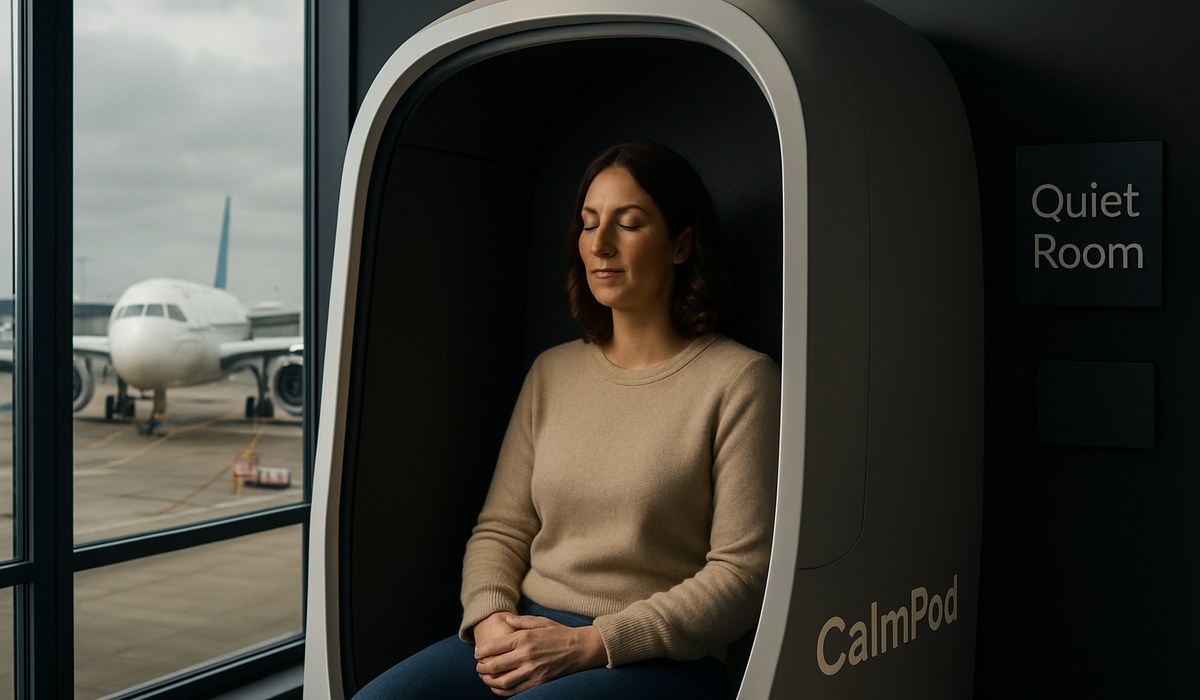
Image generated by AI
East Midlands Airport (EMA/EGNX) has unveiled a groundbreaking CalmPod sensory pod facility, marking a significant advancement in accessible travel infrastructure for UK airports. The new quiet room experience launched in March 2026, designed specifically to support neurodivergent passengers, anxiety-prone travelers, and individuals requiring sensory regulation during their airport journey.
CalmPod Sensory Pod: Redefining Airport Accessibility Standards
The CalmPod at East Midlands Airport represents a pioneering approach to inclusive air travel design. This dedicated sensory space provides passengers with a controlled, low-stimulation environment featuring adjustable lighting, sound dampening technology, and ergonomic seating. The facility addresses a critical gap in airport amenities, recognizing that 1 in 7 UK adults experience neurodivergence and travel anxiety frequently disrupts their airport experience.
The sensory pod installation follows extensive consultation with autism advocacy organizations and accessibility experts. East Midlands Airport intentionally designed the space to accommodate diverse sensory needs without stigmatization. Passengers can access the CalmPod at no additional cost, integrated seamlessly into the terminal's standard navigation flow. The facility's placement near major gate areas reduces walking distances for passengers requiring immediate sensory breaks.
FlightAware tracking shows EMA handled over 4.2 million passengers annually, making accessibility upgrades particularly impactful. The airport's commitment to inclusive design extends beyond the CalmPod, positioning it as a leader among regional UK airports.
Quiet Room Features: What Travelers Will Experience
The quiet room at East Midlands Airport prioritizes comfort through carefully curated environmental controls. Users encounter dimmed, tunable lighting systems allowing personal adjustment from cool whites to warm ambers. Sound insulation walls reduce ambient noise by up to 40 decibels, creating a sanctuary from terminal announcements and crowds.
Sensory features include weighted blankets, fidget tools, and weighted lap pads available to all guests. The space accommodates wheelchair users with accessible seating arrangements and ample turning radius. Privacy screens maintain dignity while preventing visual overstimulation from passing foot traffic. Temperature controls let users customize comfort, addressing sensory sensitivities common among anxious and neurodivergent travelers.
Staff training ensures compassionate, judgment-free access protocols. Passengers simply request access at airport information desks without disclosing medical details. Sessions accommodate flexible duration—whether five-minute resets or 30-minute respite periods before flights. This accessibility advancement influences how other UK regional airports approach sensory accommodation, potentially setting industry benchmarks.
East Midlands Airport's Accessibility Expansion Strategy
East Midlands Airport's investment in sensory infrastructure forms part of a broader terminal improvement initiative announced in 2025. The airport operator plans additional quiet rooms in secondary terminals by early 2027, anticipating increased demand for mental health-focused travel amenities. Senior leadership has publicly committed to accessibility as a competitive differentiator among regional UK airports.
The CalmPod rollout includes staff development programs ensuring all customer-facing employees understand sensory needs and accommodation protocols. Training emphasizes dignity-first approaches, moving beyond traditional accessibility frameworks toward neurodivergent-affirming practices. Airport management consulted IATA accessibility guidelines during implementation, aligning the facility with international standards while exceeding baseline requirements.
Financial projections indicate modest operational costs relative to passenger satisfaction improvements. Early feedback from accessibility advocates suggests the CalmPod addresses previously unmet passenger needs, particularly among families traveling with sensory-sensitive children.
Inclusive Travel Standards: Implications for UK Airports
This CalmPod initiative signals shifting expectations regarding airport accessibility beyond wheelchair ramps and mobility assistance. Mental health and sensory accommodation represent emerging priorities reshaping how airports conceptualize inclusive travel. The quiet room experience directly supports the UK Civil Aviation Authority's evolving accessibility framework, which increasingly recognizes neurodivergence and anxiety disorders as legitimate accommodation needs.
Competing regional UK airports now face competitive pressure to implement similar sensory facilities. London Stansted, Birmingham Airport, and Luton Airport face implicit benchmarking against East Midlands Airport's advances. The CalmPod success may accelerate national rollout timelines for sensory pods across UK aviation hubs, potentially becoming standard infrastructure within five years.
Industry observers note that traveler demand for mental-health-conscious airport design far exceeds current supply. The quiet room experience at East Midlands Airport taps underserved passenger segments—particularly post-pandemic anxiety travelers and neurodivergent families—whose purchasing power airports historically overlooked.
Travel Experience Impact: Why Sensory Pods Matter Now
Airports manage sensory chaos daily. Terminal crowds, repetitive announcements, harsh fluorescent lighting, and security procedures overwhelm sensitive nervous systems. The CalmPod directly addresses this environmental mismatch, enabling previously anxious passengers to complete flights comfortably. For neurodivergent travelers, sensory regulation spaces transform airport navigation from distressing to manageable.
Parents traveling with autistic or ADHD children particularly benefit from accessible quiet rooms. Children requiring sensory regulation before boarding no longer face binary choices: suffer through overstimulation or miss flights. This accommodation removes invisible barriers that previously forced vulnerable families toward vehicle travel despite safety concerns.
Anxiety disorders affect 8.2 million UK adults annually, with air travel commonly triggering panic responses. Pre-flight sensory regulation in dedicated, validating spaces reduces cortisol levels and improves flight outcomes. Airlines increasingly recognize that passengers arriving calm demonstrate improved in-flight behavior, lower flight cancellation rates, and higher repeat bookings—creating a business case beyond inclusive principle.
| Feature | CalmPod Specification | Traveler Benefit |
|---|---|---|
| Sound Insulation | 40-decibel reduction | Reduced auditory overload during sensory breaks |
| Adjustable Lighting | Cool white to warm amber spectrum | Personalized visual comfort before flight |
| Seating Types | Standard, weighted lap pad, wheelchair-accessible options | Accommodates diverse physical and sensory needs |
| Availability | No cost, no advance booking required | Reduces travel anxiety and eliminates financial barriers |
| Location | Near major gate areas at East Midlands Airport | Minimal walking distance reduces physical exhaustion |
| Session Duration | Flexible from 5 to 30+ minutes | Supports varied sensory regulation timelines |
What This Means for Travelers
The CalmPod at East Midlands Airport provides tangible relief for passengers navigating sensory-sensitive air travel. Here's how to benefit from this facility:
-
Identify your sensory needs before arriving at the airport. Recognize whether you require auditory, visual, or tactile regulation during travel.
-
Arrive 15 minutes early at airport information desks near terminal entrances to request quiet room access without time pressure.
-
Budget 15-20 minutes for sensory regulation as part of your pre-flight routine, allowing adequate reset time before boarding gates.
-
Bring comfort items—many passengers combine the CalmPod experience with personal headphones, eye masks, or weighted items for enhanced effectiveness.
-
Communicate with flight staff about sensory needs during check-in; cabin crew can coordinate boarding timing to minimize crowd exposure.
-
Consider the CalmPod advantage when booking flights through East Midlands Airport, particularly if you travel with anxious family members or manage anxiety disorders independently.
FAQ: East Midlands Airport CalmPod and Sensory Facilities
What exactly is the CalmPod at East Midlands Airport? The CalmPod is a dedicated quiet room facility launched March 2026 at East Midlands Airport (EMA), offering low-stimulation environments with adjustable lighting, sound dampening, and sensory tools. The facility accommodates neurodivergent passengers, anxious travelers, and anyone requiring sensory regulation before flights at no additional cost.
How do I access the quiet room at airport east midlands? Request quiet room access at any East Midlands Airport information desk near terminal entrances. Staff will direct you to the CalmPod without requiring medical documentation. Access is free and available on a first-come basis without advance reservations necessary.
Is the airport east midlands CalmPod only for autistic passengers? No. The sensory pod at East Midlands Airport serves all passengers experiencing sensory overload, anxiety, ADHD, PTSD, or other conditions benefiting from low-stimulation environments. The facility operates judgment-free, welcoming anyone needing sensory regulation regardless of diagnosis.
Will other UK airports implement similar sensory pods soon? Competing regional UK airports face competitive pressure following the CalmPod success at East Midlands Airport. While no official timelines exist, industry experts predict similar facilities will expand across major UK airports within 2-3 years as passenger demand demonstrates clear business value.
Related Travel Guides
- Etihad Airways Launches Five New Direct Routes to China: 28 Weekly Flights Boost Abu Dhabi-China Tourism Network Through 2027
- EU Entry System Chaos: Four-Hour Airport Queues Devastate Summer Travel Across Europe's Biggest Hubs
- British Airways Defends Against European Travel Chaos by Launching an Exclusive Direct Route from London City Airport to Toulon, Unlocking the French Riviera: Latest Airline News
Disclaimer
This article is for informational and educational purposes only. It does not constitute legal, financial, or professional advice. While we strive to provide accurate and up-to-date information, travel policies, regulations, and conditions change rapidly. Always verify information with official sources before making travel decisions. Nomad Lawyer makes no representations about the accuracy, reliability, completeness, or suitability of the information provided. Readers should consult qualified professionals for advice specific to their circumstances. The views expressed in this article are those of the author and do not necessarily reflect the views of Nomad Lawyer.
Kunal K Choudhary
Co-Founder & Contributor
A passionate traveller and tech enthusiast. Kunal contributes to the vision and growth of Nomad Lawyer, bringing fresh perspectives and driving the community forward.
Learn more about our team →