
Aviation Updates: Massive 95.2 Million Passenger Surge Threatens to Trigger Unprecedented Travel Chaos Across Dubai's Mega-Hubs
As a staggering 19.6 million tourists flood Dubai, severe infrastructure strain at DXB threatens to trigger massive global airport disruptions unless Al Maktoum expansion accelerates.

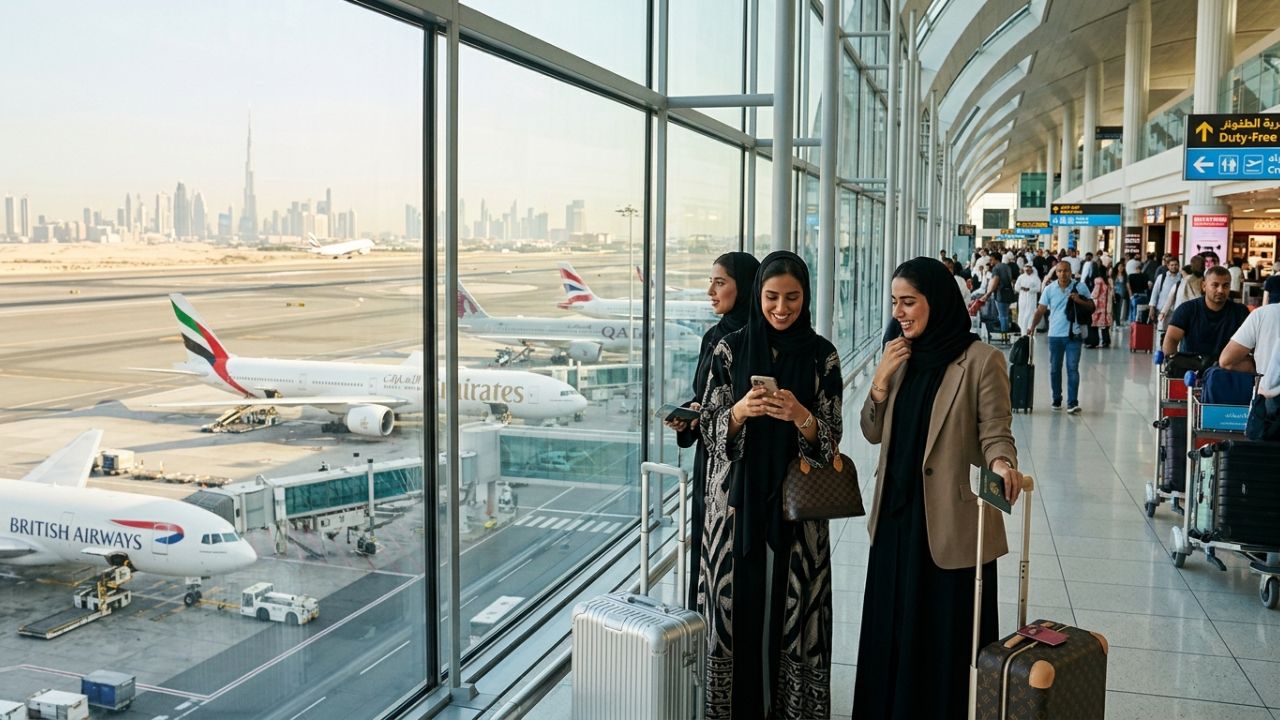
Image generated by AI
Aviation Updates: Massive 95.2 Million Passenger Surge Threatens to Trigger Unprecedented Travel Chaos Across Dubai's Mega-Hubs
As an incredibly severe tidal wave of global tourists completely saturates Dubai International Airport, aviation experts issue a massive warning: without immediate structural expansion, the world's busiest transit hub faces an absolute collapse into terrifying travel chaos.
While incredibly exhausted global passengers desperately navigate an incredibly brutal summer defined by rolling flight cancellations and severe, localized airport disruptions, a massive, highly critical infrastructure crisis is actively unfolding at the absolute epicenter of international aviation. According to the absolute latest breaking airline news, Dubai is officially bracing for an unprecedented, system-shocking tourism surge that threatens to violently strain global transit networks. Driven by a massive influx of demand from Saudi Arabia, the UK, the USA, France, Australia, India, China, Germany, and Russia, official projections confirm an astonishing 19.6 million international tourists will flood the city in 2025. Consequently, Dubai International Airport (DXB) is desperately attempting to process a staggering 95.2 million passengers, pushing legacy terminal infrastructure to the absolute brink of total systemic failure.
This highly critical congestion crisis explicitly positions the United Arab Emirates at the absolute center of global travel optimization. As massive carriers—including Emirates, flydubai, Qatar Airways, Etihad, British Airways, Lufthansa, and Air India—aggressively dump unprecedented fleet capacity into the Gulf, the sheer volume of arriving aircraft threatens to trigger massive travel chaos. Because traditional immigration and baggage systems at DXB are already heavily saturated during peak periods, the global aviation community is desperately looking toward the massive Al Maktoum Airport expansion. Without this critical future mega-hub immediately absorbing the massive overflow, the terrifying reality of severe, unannounced airport disruptions will completely cripple international travel itineraries connecting the East and the West.
Aviation Updates: The Threat of Mega-Hub Gridlock
This massive, highly structural strain on regional transit perfectly illustrates the intense, incredibly fragile nature of modern intercontinental mobility.
According to highly detailed, official aviation updates, this strategic capacity crisis is explicitly driven by an unprecedented post-pandemic recovery that has rapidly permanently transformed into hyper-growth. With over 90 million total international arrivals utilizing the broader UAE transit ecosystem, DXB is suffering from incredibly high aircraft slot utilization and limited terminal expansion capabilities. Because connecting flights through deeply congested hubs frequently suffer from severe security bottlenecks and sudden flight cancellations, the sheer density of passengers passing through Dubai threatens to completely destroy the premium luxury experience the city relies upon. By actively monitoring this incredibly vital commercial strain, analysts explicitly warn that the incredibly lucrative hotel and airline markets are rapidly entering a phase of extreme volatility, forcing passengers to combat skyrocketing prices and terrifying logistical breakdowns.
Section-Wise Breakdown: Navigating the Global Demand Drivers
The sudden, massive evolution of these critical transit routes actively impacts several incredibly distinct, highly sensitive regional and international tourist sectors heavily contributing to the congestion.
The Asian and Subcontinent Influx
At the absolute core of this massive operational pivot is the strategic dominance of the Indian and Chinese markets. India currently operates as the absolute largest volume market, heavily driving massive family travel and intensive corporate business trips directly into DXB. Simultaneously, a massive recovering outbound tourism wave from China is aggressively consuming luxury retail and group travel inventory. Because these high-volume corridors are incredibly susceptible to sudden geopolitical shifts leading to rolling travel chaos, the sheer scale of narrowbody and widebody capacity required to service these nations completely overwhelms standard immigration halls.
The Western Premium Demand Surge
The ultimate destination for premium leisure capacity heavily targets the incredibly lucrative Western markets. The United Kingdom and the USA continue to drive highly intensive premium leisure and business demand, consuming massive blocks of luxury hotel inventory. Furthermore, Germany and France are aggressively contributing to stable, long-stay European demand, while Australia leverages Dubai for critical long-haul stopover travel. By heavily utilizing the massive Emirates and British Airways networks, these passengers actively guarantee highly reliable, massively profitable transcontinental flows, but their sheer volume during peak winter seasons severely exacerbates terminal gridlock and premium lounge overcrowding.
Flight Details and Verified Disruption Impact Matrix
To fully understand the exact structural parameters of this massive global surge and how the anticipated Al Maktoum expansion must navigate complex capacity limits, the following matrix explicitly details the operational mandate and regional impact.
Confirmed Dubai Mega-Hub Disruption Impact Matrix
| Global Source Market | Strategic Travel Role & Capacity Profile | Anticipated Hub Disruption Impact |
|---|---|---|
| Total Global Output | 95.2M passengers at DXB; 19.6M tourists. | Pushes peak scheduling at DXB toward absolute systemic failure. |
| India | Absolute largest volume market. | Massive narrowbody frequency causing severe regional terminal congestion. |
| Saudi Arabia | Regional short-haul powerhouse. | Generates massive, highly volatile weekend tourism spikes. |
| United Kingdom | Premium leisure market (High spending). | Completely saturates luxury lounges and premium cabin capacity. |
| China | Recovering outbound tourism. | Massive group travel blocking crucial hotel and transit infrastructure. |
| USA & Australia | Business, luxury, and long-haul stopover. | Forces massive widebody slot utilization, reducing overall runway availability. |
| Germany & France | Stable European demand (Long stays). | Consistently absorbs crucial winter tourism inventory. |
| Russia | Seasonal winter tourism. | Triggers high occupancy spikes, violently driving up peak accommodation costs. |
Data explicitly reflects the massive, highly structural operational strain designed to force the acceleration of the Al Maktoum Airport mega-hub to prevent total international passenger gridlock.
Passenger Impact: The Escape from Mega-Hub Paralysis
For the highly demanding passengers actively engaged in this massive Gulf mobility shift, traditional, highly congested transit structures are frequently viewed as completely terrifying.
The massive influx of 95.2 million travelers significantly degrades long-term travel convenience for thousands of incredibly exhausted corporate executives, transit workers, and luxury tourists. Instead of relying absolutely solely on deeply congested, highly unpredictable peak-hour flights—where sudden immigration bottlenecks and massive flight cancellations can completely ruin a grueling multi-leg journey—travelers must now execute highly advanced, completely rigid planning strategies. Because premium seating is more competitive than ever and central area hotel costs are skyrocketing, passengers are desperately forced to book travel accommodations months ahead of time. To actively bypass the terrifying, anxiety-inducing reality of severe, rolling airport disruptions, travelers are strictly advised to schedule flights arriving outside of peak banking hours and aggressively utilize flexible ticketing to survive sudden airline schedule adjustments.
Industry Analysis: The Economics of the Al Maktoum Transition
Aviation structural analysts strictly point out that this massive, multi-national operational crisis perfectly illustrates the extreme, highly vital importance of the Al Maktoum International Airport expansion.
Aviation data explicitly indicates that massive national carriers like Emirates and flydubai are absolutely desperate to secure massive future terminal capacity to actively combat the terrifying reality of DXB saturation. Industry observers strongly view the Al Maktoum project as the absolute ultimate catalyst for long-term global connectivity. However, a massive scaling mismatch currently exists between required future infrastructure, rapid airline fleet growth, and the immediate transit ecosystem. If the transition to this future mega-hub is delayed, the lack of overflow capacity will completely destroy the passenger experience. By aggressively pushing this operational foundation, Dubai absolutely ensures that it maintains a highly lucrative grip on global transit, completely insulating its tourism economy from the unpredictable delays that violently plague older, over-capacity European and North American competitor networks.
Conclusion: A Highly Insulated Transit Future
The massively evolving infrastructure dynamics directly defining Dubai's integration into the Al Maktoum master plan violently reflect a much broader, highly critical structural transformation currently dominating how global aviation is physically structured in 2026.
Rather than violently forcing massive international traffic through deeply congested, highly restricted legacy terminals, the Dubai aviation network must incredibly increasingly function as a dual-hub, strategically scalable ecosystem. As the city aggressively attempts to process 19.6 million international visitors, travelers actively navigating the incredibly busy Gulf sector must absolutely remain highly vigilant. To actively survive potential travel chaos during this massive winter phase, passengers must aggressively monitor all breaking aviation updates, actively secure premium hotel and flight inventory immediately, and perfectly understand that escaping modern airport disruptions fundamentally requires navigating DXB with highly flexible, disruption-proof itineraries until the Al Maktoum expansion is fully operational.
Key Takeaways
- Massive Passenger Surge: Dubai International Airport (DXB) is actively battling to process a staggering 95.2 million passengers and 19.6 million international tourists.
- Global Capacity Crisis: Massive fleet expansion from Emirates, flydubai, Qatar Airways, Etihad, BA, Lufthansa, and Air India is severely straining legacy terminal and runway slots.
- The Al Maktoum Mandate: The future of Dubai transit relies entirely on the rapid expansion of Al Maktoum International Airport to absorb massive DXB overflow and prevent global travel chaos.
- Skyrocketing Travel Costs: The massive surge from India, Saudi Arabia, the UK, China, and the USA is causing hotel prices to violently spike and premium airline cabins to sell out months in advance.
- Systemic Failure Warning: Aviation analysts warn that peak scheduling at DXB is nearing a systemic failure, leading to severe immigration and baggage airport disruptions.
- Passenger Survival Strategy: Global transit passengers are strictly advised to aggressively book flexible tickets, secure downtown accommodations immediately, and actively avoid arriving during peak DXB banking hours to prevent severe flight cancellations and missed connections.
Related Travel Guides
Massive UAE Visa Bombshell: Strict New 30-Day Escape Window Announced
Travel Chaos Cripples Spain as Iberia and Ryanair Suffer 1,079 Delays
Disclaimer
This article is for informational and educational purposes only. It does not constitute legal, financial, or professional advice. While we strive to provide accurate and up-to-date information, travel policies, regulations, and conditions change rapidly. Always verify information with official sources before making travel decisions. Nomad Lawyer makes no representations about the accuracy, reliability, completeness, or suitability of the information provided. Readers should consult qualified professionals for advice specific to their circumstances. The views expressed in this article are those of the author and do not necessarily reflect the views of Nomad Lawyer.
Preeti Gunjan
Contributor & Community Manager
A passionate traveller and community builder. Preeti helps grow the Nomad Lawyer community, fostering engagement and bringing the reader experience to life.
Learn more about our team →