
Global Travel Chaos Erupts as Dubai and Sharjah Airports Suffer 156 Delays and 11 Cancellations, Crippling Emirates, IndiGo, and Qatar Airways: Latest Airline News
As the UAE's massive aviation hubs collapse under severe operational pressure, thousands of international passengers are trapped in brutal travel chaos across Dubai and Sharjah.

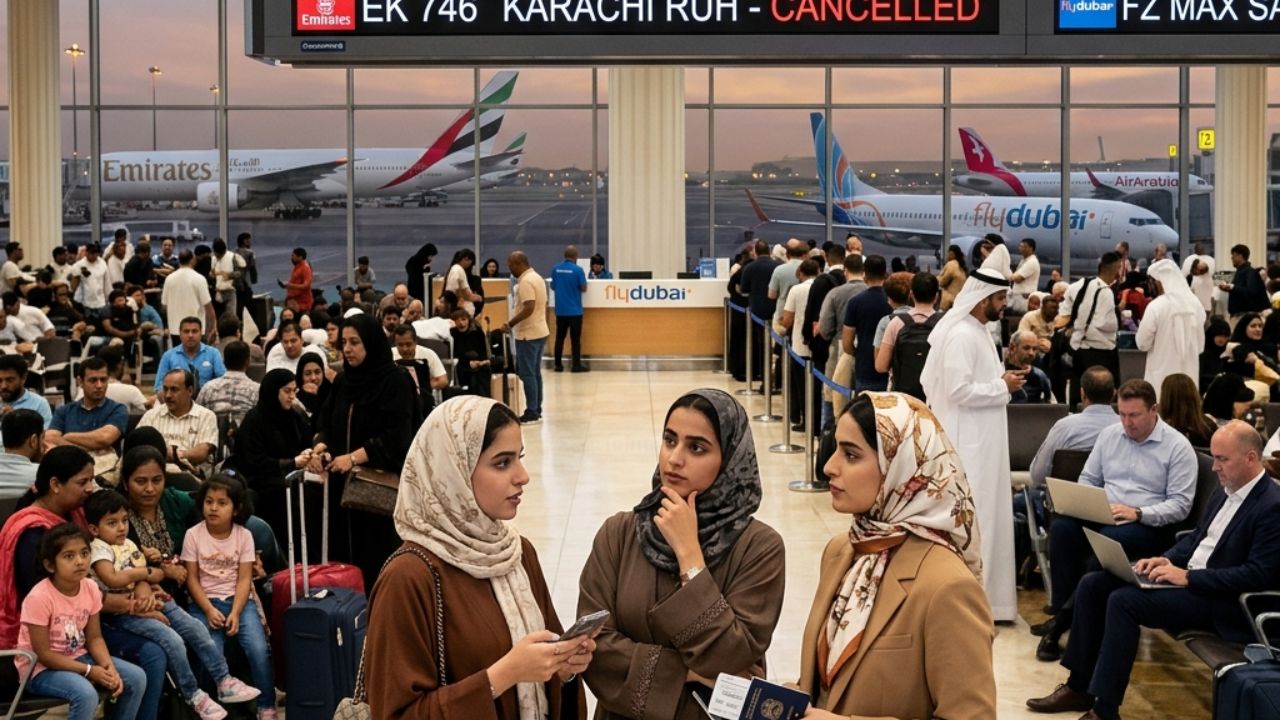
Image generated by AI
A Catastrophic Breakdown of the UAE Mega-Hubs
While the international passenger network relies heavily on the Middle East for seamless global connectivity, this highly critical transit corridor has just suffered a terrifying, systemic operational collapse. Delivering highly urgent, critical airline news, verified data confirms that thousands of desperate travelers are currently trapped in severe travel chaos after Dubai International Airport and Sharjah International Airport reported a massive combined total of 156 delayed flights and 11 outright cancellations. While desperate passengers attempt to navigate this massive wave of airport disruptions, these exclusive aviation updates reveal that major carriers—including Emirates, Flydubai, Air Arabia, IndiGo, and Qatar Airways—are fiercely battling to stabilize their networks. With highly lucrative routes to London, Mumbai, Riyadh, Istanbul, Cairo, and Bangkok violently thrown off schedule, this localized UAE breakdown has instantly triggered a massive, uncontrollable chain reaction, plunging the global aviation sector into unprecedented logistical paralysis.
Expanded Overview: The Scale of the Disruption
The strategic execution of recovery operations at these mega-hubs serves as a massive, undeniable test of the UAE's aviation infrastructure. Historically, when a massive transit hub like Dubai suffers even a minor slowdown, the ripple effects are devastating. However, the sheer volume of this current disruption—totaling 167 affected flights across two major airports—has pushed ground handling, air traffic control, and airline logistics teams to the absolute brink of failure.
By aggressively attempting to manage the terrifying backlog, airlines are being forced to alter crew schedules, delay aircraft rotations, and hold thousands of connecting passengers in increasingly crowded terminals. Dubai International Airport, globally recognized as the absolute busiest hub for international passenger traffic, serves as the critical bridge between Europe, Asia, Africa, and the Americas. When this bridge fractures, the resulting flight cancellations do not merely inconvenience local residents; they instantly destroy the carefully planned itineraries of families, corporate executives, and international tourists scattered across six continents.
Section-Wise Breakdown of the Hub Collapse
The Dubai International Meltdown
The absolute epicenter of this operational nightmare is Dubai International Airport. According to official operational figures, the mega-hub suffered a brutal 128 delayed flights alongside four total cancellations. Because Dubai operates on a highly complex, tightly coordinated schedule designed entirely around transit traffic, these delays were catastrophic. A massive percentage of passengers stranded in the terminals were not ending their journey in the UAE; they were holding boarding passes for highly critical onward connections to London, Istanbul, and Bangkok. As the departure boards violently shifted to red, the airport’s ecosystem—from baggage handling to immigration processing—was instantly crushed under the terrifying weight of displaced human traffic.
Sharjah Airport Operations Under Fire
Simultaneously, Sharjah International Airport—a highly critical gateway for regional and budget travel—suffered its own severe operational breakdown. The airport recorded 28 severe delays and a terrifying seven cancellations. In recent years, Sharjah has aggressively expanded its operations, serving as the primary fortress for low-cost carriers like Air Arabia and accommodating massive passenger flows from IndiGo. The sudden disruption at Sharjah heavily penalized budget-conscious travelers seeking affordable connections across the Middle East, Asia, and Africa, leaving thousands stranded without access to the premium lounges or extensive rebooking networks available at larger legacy hubs.
The Global Network Chain Reaction
From a macroeconomic and industry operations perspective, the combined failure of Dubai and Sharjah perfectly illustrates the extreme fragility of the modern aviation network. A single delayed departure in the UAE instantly translates to missed landing slots in Mumbai, expired crew duty hours in Cairo, and stranded aircraft in Riyadh. Airline operations teams are currently executing highly desperate contingency measures, violently attempting to secure alternate routing and manage furious passengers while battling the terrifying reality that major hub recovery often takes days, not hours, to fully resolve.
UAE Airport Disruption Metrics & Affected Operations Table
To fully comprehend the highly severe operational parameters and massive logistical breakdown dictating this crisis, the following table explicitly details the core disruption metrics, affected carriers, and paralyzed global routes:
| Operational Metric / Airport | Verified Disruption & Logistics Data |
|---|---|
| Combined UAE Disruption Total | 156 flight delays and 11 outright cancellations |
| Dubai International Airport (DXB) | Suffered 128 delays and 4 cancellations |
| Sharjah International Airport (SHJ) | Suffered 28 delays and 7 cancellations |
| Major Airlines Directly Affected | Emirates, Flydubai, Air Arabia, IndiGo, Qatar Airways |
| Severely Paralyzed Global Routes | London, Mumbai, Riyadh, Istanbul, Cairo, Bangkok |
| Primary Passenger Impact | Missed international connections, extended terminal stays |
| Systemic Aviation Consequence | Violent chain reaction across global aircraft rotations |
Passenger Impact: Stranded in the Transit Trap
For the modern international commuter and global tourist, the passenger impact of this massive hub collapse is financially and emotionally devastating. The modern demographic is increasingly demanding absolute logistical speed, actively turning away from travel itineraries crippled by heavily delayed flights.
Passengers trapped in Dubai and Sharjah immediately experienced the massive terror of missing highly critical onward connections. Families traveling for expensive vacations and professionals heading to non-negotiable business meetings found themselves subjected to extended, exhausting airport stays. With customer service desks completely overrun and airline applications crashing under the weight of rebooking requests, passengers were forced to endure hours of extreme uncertainty, heavily highlighting the severe emotional toll exacted when a global mega-hub suddenly stops functioning.
Industry Analysis: The Fragility of the Mega-Hub Model
From an industry operations perspective, the UAE delays highlight a highly terrifying reality for global aviation planners. Travel analysts fiercely argue that while the "mega-hub" model—funneling millions of global passengers through a single geographic point—is highly lucrative during normal operations, it is completely indefensible during a crisis.
By relying entirely on Dubai and Sharjah to process massive volumes of transit traffic, global airlines expose their entire networks to localized disruptions. When these hubs falter, the airlines cannot simply reroute aircraft mid-flight. This massive disruption forces carriers to recognize that investing heavily in aviation infrastructure must be matched by equally aggressive investments in operational resilience and highly advanced, AI-driven crisis recovery systems.
Conclusion: A Highly Volatile Horizon for UAE Aviation
The sudden, violent wave of 156 delays and 11 cancellations across Dubai and Sharjah is exponentially more than a routine bad day at the airport—it represents a massive, highly visible failure of the global transit network. By completely paralyzing flights to critical destinations like London, Mumbai, and Bangkok, this disruption has proven that even the most advanced aviation infrastructure in the world remains terrifyingly vulnerable to operational collapse. As airport teams and airline staff work desperately behind the scenes to restore schedules and reconnect broken journeys, the global aviation sector is fiercely reminded that preventing severe travel chaos requires constant, absolute vigilance.
Key Takeaways
- Massive UAE Hub Collapse: Dubai and Sharjah airports suffered a combined catastrophic total of 156 flight delays and 11 cancellations.
- Dubai Takes the Brunt: Dubai International Airport recorded 128 delayed flights, completely shattering its tightly coordinated transit schedule.
- Major Carriers Crippled: Top-tier airlines including Emirates, Flydubai, Air Arabia, IndiGo, and Qatar Airways were heavily impacted.
- Global Routes Paralyzed: Critical, high-revenue corridors to London, Mumbai, Riyadh, Istanbul, Cairo, and Bangkok suffered violent disruptions.
- Chain Reaction Chaos: The localized UAE delays instantly triggered a massive global logistical breakdown, displacing aircraft and crews across six continents.
Disclaimer: The delay metrics, specific cancellation numbers, and affected airline routing data presented in this report are based on official operational figures from Dubai and Sharjah airport authorities at the time of the incident. Network capacity, specific flight recovery timelines, and carrier rebooking protocols are highly volatile and subject to continuous operational change. International travelers are urgently advised to monitor their specific booking status directly via their airline's official mobile application and avoid traveling to the airport without a confirmed departure time.
Disclaimer
This article is for informational and educational purposes only. It does not constitute legal, financial, or professional advice. While we strive to provide accurate and up-to-date information, travel policies, regulations, and conditions change rapidly. Always verify information with official sources before making travel decisions. Nomad Lawyer makes no representations about the accuracy, reliability, completeness, or suitability of the information provided. Readers should consult qualified professionals for advice specific to their circumstances. The views expressed in this article are those of the author and do not necessarily reflect the views of Nomad Lawyer.
Kunal K Choudhary
Co-Founder & Contributor
A passionate traveller and tech enthusiast. Kunal contributes to the vision and growth of Nomad Lawyer, bringing fresh perspectives and driving the community forward.
Learn more about our team →