
Dubai's Pocket Forest at Expo City Transforms Desert Tourism Into Thriving Biodiversity Hub Using Miyawaki Method in 2026
Expo City Dubai's Terra pocket forest uses the Miyawaki method to create a dense 500+ native tree ecosystem in the desert, pioneering sustainable urban tourism and ecological restoration as a visitor attraction.

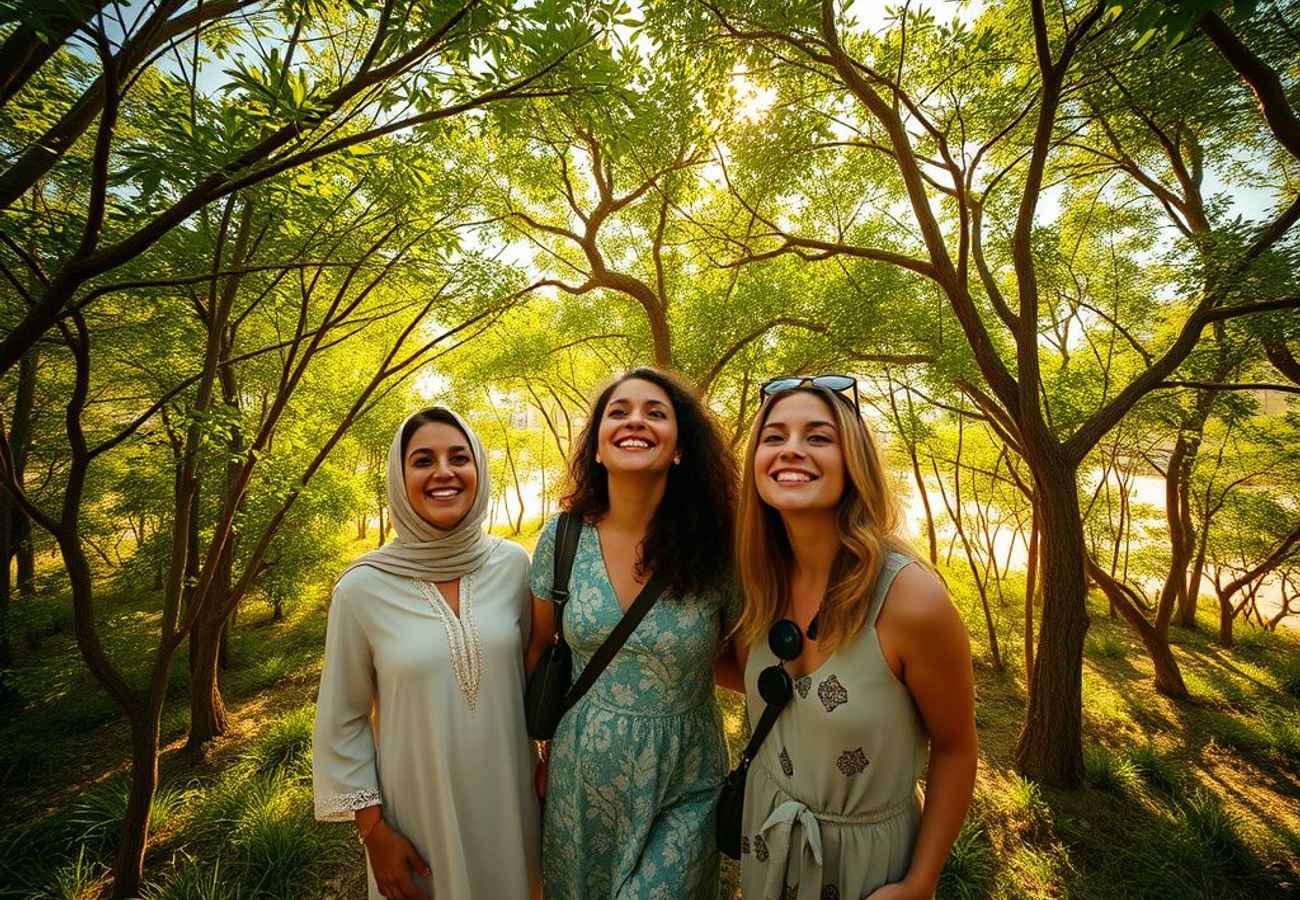
Image generated by AI
A Desert Transforms: Inside Dubai's Revolutionary Pocket Forest Tourism Experience
I arrived at Expo City Dubai expecting polished pavilions and architectural statements. What I discovered was far more compelling—a living, breathing ecosystem thriving in one of the world's harshest environments. The Terra pocket forest isn't just an attraction. It's a statement that sustainable tourism and urban biodiversity aren't contradictions; they're innovations.
This compact ecological zone has quietly sparked conversations about how modern destinations can integrate nature restoration directly into visitor experiences. And it's working in ways that challenge everything we thought we knew about tourism development in desert climates.
The Miyawaki Method: Desert Forest Science Meets Urban Tourism
The pocket forest's engineering is surprisingly elegant. Rather than traditional slow-growth landscaping, Expo City Dubai employed the Miyawaki method—a scientifically developed technique that accelerates forest development by decades.
Here's how it works: native species are planted densely together, creating competition for sunlight and resources. This seemingly counterintuitive approach triggers rapid vertical growth, complex soil interactions, and multi-layered vegetation structures that mimic natural forests. The Miyawaki method has gained traction globally as cities recognize its potential for urban greening in challenging environments.
In the UAE's unforgiving desert conditions, this method proved transformative. The pocket forest demonstrated what seemed impossible: a functioning, thriving ecosystem emerging from sand and heat.
Reddit: "This is exactly what urban planning needs—nature that actually works in extreme climates instead of plastic trees." — r/sustainable_tourism
Native Flora: Building Authentic Ecological Resilience
The forest's backbone consists entirely of native UAE plant species—ghaf trees, sidr, frankincense-associated flora, and over 500 additional native trees and shrubs packed into the compact Terra zone.
This deliberate choice wasn't aesthetic; it was ecological strategy. Indigenous species require minimal water intervention, demonstrate superior survival rates in desert conditions, and create authentic habitat networks that support local microorganisms and small fauna.
The result? A self-sustaining system that reduces maintenance burden while establishing a replicable model for desert cities worldwide. Each native species pulls resources adapted to regional climate patterns, meaning the forest operates with genuine efficiency rather than artificial life support.
Real-Time Biodiversity: Visitors Witness Ecology in Action
What distinguishes this pocket forest from conventional green spaces is its transformation into a living laboratory. Embedded environmental monitoring systems track soil health, moisture levels, microbial activity, and plant growth rates in real time.
Visitors don't just walk through a forest. They witness ecological development as it happens. Soil data reveals expanding fungal networks. Plant growth metrics show accelerating biomass. Microbial counts demonstrate the forest's shift toward complete ecological independence.
This transparency converts a green space into an educational experience. Travelers witness tangible evidence that degraded environments can regenerate, that deserts can support biodiversity, that urban development and ecological restoration aren't opposing forces.
Smart Monitoring Transforms Nature Into High-Tech Data
The integration of IoT sensors throughout the pocket forest creates what amounts to an ecological command center. Early observations have already validated the Miyawaki method's effectiveness in extreme climates.
Microbial activity in the soil has increased measurably. Plant growth rates exceed conventional projections. The fungal networks—critical for nutrient cycling and tree health—are expanding faster than anticipated. The forest isn't just surviving; it's thriving with measurable, documented success.
This data-driven approach means Expo City Dubai can continuously optimize conditions, share findings with urban planners globally, and prove that pocket forests represent genuine ecological restoration rather than symbolic gestures.
Positioning Expo City as the Global Benchmark for Eco-Tourism
The pocket forest elevates Expo City Dubai beyond a post-exposition real estate development into a genuine sustainability destination. It merges nature-based tourism with technological innovation—the combination contemporary travelers increasingly demand.
Visitors experience immersive ecology. Developers gain proven models for climate-appropriate urban greening. Environmental scientists access real-world data from an extreme climate zone. The pocket forest serves multiple constituencies simultaneously, each extracting different value from the same space.
This multi-functionality is what distinguishes pioneering destination development from standard tourism infrastructure.
UAE's Broader Urban Greening Movement Accelerates
The pocket forest isn't isolated innovation; it reflects the United Arab Emirates' strategic commitment to integrated green-urban expansion. Micro forest models like Terra demonstrate that small land areas can deliver substantial ecological benefits—carbon absorption, soil restoration, microclimate regulation—within rapidly developing cities.
The UAE's long-term vision acknowledges that sustainable tourism requires visible, functional environmental regeneration, not aspirational messaging. The pocket forest operationalizes this vision.
The Future: Permanent Ecological Attraction Reshaping Tourism Models
As the Terra pocket forest matures, it's expected to become a permanent fixture within Expo City Dubai—a prototype for how future tourist destinations can integrate ecological restoration into the visitor journey itself.
This represents a fundamental shift in tourism development philosophy. Rather than separating nature from urban infrastructure, or treating green spaces as aesthetic additions, modern sustainable destinations embed functioning ecosystems into the travel experience.
Expo City Dubai has proven this approach generates authentic value—for ecology, for education, for tourism appeal, and for urban climate resilience.
The pocket forest isn't a footnote to Dubai's tourism story; it's the story itself.
Related Travel Guides
Disclaimer
This article is for informational and educational purposes only. It does not constitute legal, financial, or professional advice. While we strive to provide accurate and up-to-date information, travel policies, regulations, and conditions change rapidly. Always verify information with official sources before making travel decisions. Nomad Lawyer makes no representations about the accuracy, reliability, completeness, or suitability of the information provided. Readers should consult qualified professionals for advice specific to their circumstances. The views expressed in this article are those of the author and do not necessarily reflect the views of Nomad Lawyer.
Raushan Kumar
Founder & Lead Developer
Full-stack developer with 11+ years of experience and a passionate traveller. Raushan built Nomad Lawyer from the ground up with a vision to create the best travel and law experience on the web.
Learn more about our team →